guide
Sagrada Familia Facade, Nave, and Tower Visit Notes
Start outside with the facades
The best architectural visit begins outside. Do not rush to treat Sagrada Familia as one total image. Start with one facade, then compare it with another. Look for density, figure work, surface depth, tower alignment, and how light changes the stone. The facades prepare the visitor for the building's main lesson: structure, symbolism, and craft are inseparable here.
Give the Nativity facade time
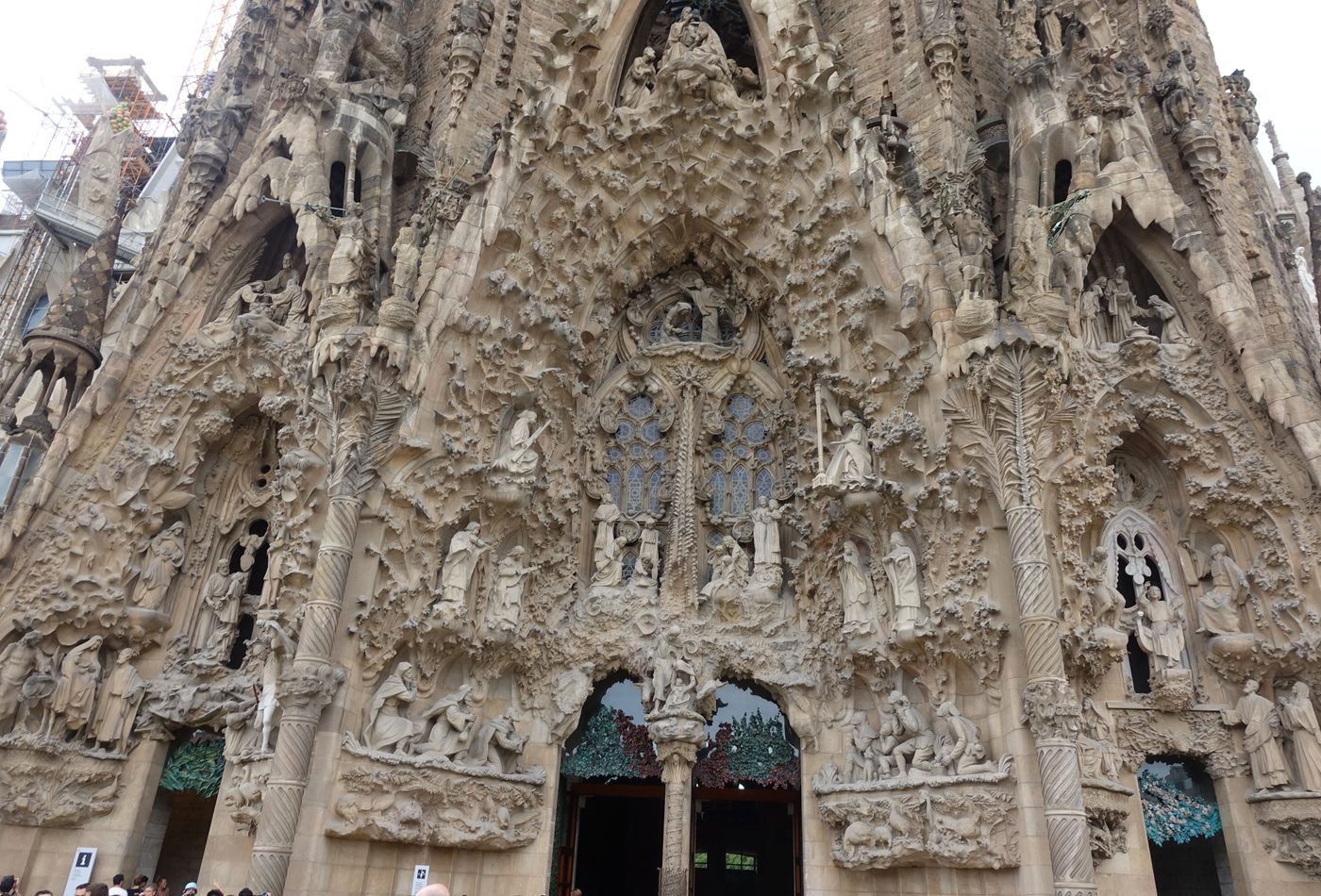
The Nativity facade rewards slow looking because it is dense with carved life, religious story, and organic surface. Step back first to understand the full composition, then move closer to separate figures, plants, openings, and shadows. The goal is not to identify every symbol. The goal is to see how abundance becomes architectural atmosphere rather than surface decoration alone.
Read the interior from column to light
Inside, begin with the branching columns before looking at the stained glass. The columns explain how the space stands and why it feels organic. Then look at how colored light changes the nave. A quick interior visit can become only a visual shock; a better visit connects support, height, vaulting, and light into one reading.
Use distance changes
Sagrada Familia changes dramatically with distance. From far away, the towers and skyline role dominate. From the street, the facades and crowds shape the experience. Up close, carving, joints, glass, and column profiles become the evidence. Moving between those distances helps prevent the building from becoming either a skyline icon or a collection of details with no structure.
Photograph with a purpose
Make photographs that answer architectural questions. One wide image should show tower hierarchy and the city setting. One facade image should capture surface depth and symbolic density. One interior image should connect columns with stained glass. One detail image should record material texture. Those four studies create a stronger record than repeating only the most familiar exterior view.
Compare it while still in Barcelona
After studying Sagrada Familia, compare it with Casa Batllo or Casa Mila if those pages are part of the same trip or study session. The comparison is useful because Gaudi's ideas shift across program and scale. The basilica is symbolic, vertical, and collective; the houses are domestic, tactile, and urban. Seeing that difference makes Gaudi's range clearer.
Do not let the first view settle the visit
The first view is usually too strong. After the initial impression, deliberately choose one smaller question: how a column branches, how a facade shadow creates depth, how a tower profile differs from its neighbor, or how colored glass changes the nave. This habit keeps the visit from becoming only awe. It turns the building into evidence that can be compared, remembered, and explained later.
Slow-looking route
Use a simple route: one facade from distance, one facade close up, the nave columns, the stained glass, then a final exterior view. That order keeps the visit architectural. It lets the reader connect city image, symbolic surface, structural system, and atmosphere. Sagrada Familia is too complex for one glance, but it becomes readable when each stage has a question.