why it matters
Why this building matters
It makes a single tower act as a city marker, transit landmark, and vertical mixed-use symbol.
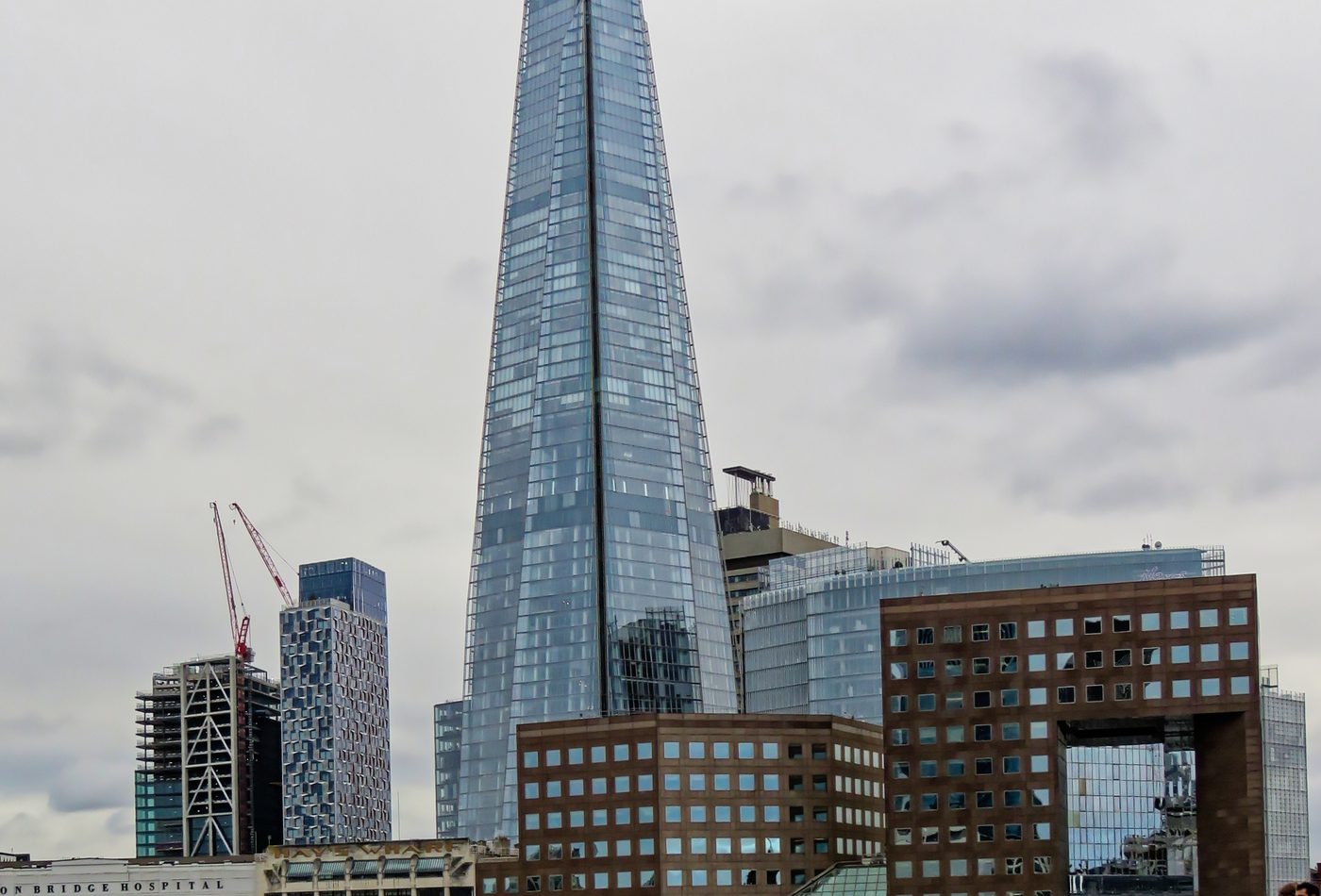
building detail
A tapered glass skyscraper that reshaped London's skyline around London Bridge.
Photo credit: Wikimedia Commons contributor / CC BY-SA 4.0.
why it matters
It makes a single tower act as a city marker, transit landmark, and vertical mixed-use symbol.
what to notice
explore by place and style
map notes
Use the coordinates as anchors for reading the buildings in relation to streets, water, skyline, and nearby landmarks.
51.5045, -0.086525.1972, 55.274448.8606, 2.3522Map coordinates are listed with provider attribution handled through the source records.
architecture guide
A fuller reading of the building's history, setting, form, materials, and public role.
The Shard is a skyscraper at London Bridge, completed in 2012 and designed by Renzo Piano Building Workshop. The first fact to hold onto is not only its height or its glass skin. It stands in one of London's oldest and busiest crossing districts, beside rail, Underground, hospital, market, river, and bridge routes. That setting makes the tower read as infrastructure as much as object: it gathers views, movement, commercial address, hotel use, restaurants, and observation into one vertical marker.
The building's tapered form is made from sloping glass planes that narrow as they rise. The top does not close into a neat cap, which is why the tower appears splintered rather than sealed. That incomplete-looking crown is central to the identity of the building. It lets the profile feel lighter than a flat-topped office slab, while still making a strong silhouette from the river, from London Bridge, and from distant parts of the city.
The recorded material palette is glass and steel, but glass carries most of the public reading. It reflects grey weather, sunset, blue sky, nearby roofs, and night light, so the tower changes more than a stone monument would. The surface also makes the building both visible and elusive: it dominates many views, yet its edges can dissolve in cloud or haze. That dual effect is why the material fact matters.
The Shard is not a single-purpose office tower. Its vertical stack includes workplace, hotel, restaurants, viewing functions, and service systems. That matters because the tower is experienced at several levels: commuters read it from the base, visitors read it as a view machine, and the city reads it as a skyline event. The building's architecture is therefore not only the facade. It is a section of uses pulled upward over a transport node.
The Shard belongs to a continuing London debate about tall buildings in a historically layered city. It is much taller than many neighboring structures and can be seen from far beyond Southwark. That visibility is not a side effect. It is part of the project. A useful fact page should make readers ask how a new tower negotiates old routes, river views, protected sightlines, financial pressure, tourism, and the desire for a recognizable contemporary skyline.
Start with three visible clues: the tapering glass planes, the open-looking crown, and the contrast with older London roofs and masonry. Those details explain the building faster than a height statistic. The taper makes the tower legible from far away; the crown gives the silhouette its name-like force; and the skyline contrast shows why the project is both memorable and contested.
The Shard is useful for this atlas because it teaches how a contemporary skyscraper can operate as transit landmark, real-estate signal, tourist device, and skyline argument at the same time. Compare it with Burj Khalifa for taper and height spectacle, 30 St Mary Axe for London tower identity, and Centre Pompidou for architecture that turns a public building into an urban signal.
The Shard works first as silhouette. Many towers are remembered as height plus address, but this one is remembered as a sharp vertical figure. Its design uses sloping glass facets to make the mass narrower, lighter, and more directional as it rises. The result is not a neutral stack of floors. It is a tower that wants to be recognized from a train window, bridge crossing, river walk, office district, or postcard skyline.
The upper part is one of the most important design decisions. Instead of finishing as a flat roof, the glass planes rise unevenly and stop with a sense of incompletion. This prevents the tower from reading as a sealed commercial block. It also reinforces the shard metaphor without needing literal decoration. The name and the form support each other because the top looks like fragments continuing into the sky.
The facade is not interesting only because it is glass. It is interesting because the glass turns the building into a changing edge. On a bright day, the tower can look pale and sharp. In cloud, it can become almost grey. At night, it shifts toward vertical light. That instability helps the building feel thinner than its size would suggest, but it also makes the tower hard to ignore in historic views.
The skyline image is simple; the ground condition is more complicated. The building touches London Bridge Station, surrounding streets, service routes, retail, security, and heavy pedestrian flow. A good design reading should therefore move from top to bottom. The top gives identity, but the base tests whether that identity can survive real urban pressure. The Shard is strongest when the tower is read together with the movement around it.
The Shard belongs near high-tech architecture, but it is not high-tech in the same way as Centre Pompidou or Lloyd's Building. It does not put colorful services on the outside. Its technical expression is more restrained: glass enclosure, steel logic, vertical systems, tight mixed-use stacking, and a precisely controlled profile. That makes it a useful counterexample. High-tech influence can appear as smooth performance and infrastructure coordination, not only as visible pipes.
Some buildings reward close detail more than distant view. The Shard does both, but the distant reading is unusually important. From across the Thames, the building becomes a single mark. From nearby streets, it breaks into glass facets, lobby edges, station pressure, and reflections. The design asks to be judged at multiple distances because its public effect changes with every scale.
Compare The Shard with Burj Khalifa and 30 St Mary Axe. Burj Khalifa uses setbacks and extreme height to stage a metropolitan image. 30 St Mary Axe uses a rounded diagrid form to create compact tower identity. The Shard uses taper, glass planes, and an unfinished crown to make height feel sharp rather than smooth. Those differences make the tower a study in how high-rise identity can be produced without heavy ornament.
The Shard matters historically because it is a recent tower inserted into a city whose architectural memory is much older than the project. London is not a blank high-rise field. It is a layered city of churches, bridges, stations, markets, government buildings, industrial remnants, and financial towers. In that context, a 2012 glass skyscraper becomes more than a commercial development. It becomes evidence of how London chooses to absorb height.
The site changes the historical reading. London Bridge is a crossing point, transport district, and long-running threshold between the City, Southwark, river, rail, and markets. Building upward here gives the tower a public intensity it would not have on an isolated business park site. The Shard enters history partly because so many people encounter it indirectly: passing through the station, crossing the bridge, or seeing it from the river.
London has argued for decades about how tall buildings should relate to historic views and civic identity. The Shard inherits that debate and makes it more visible. Its sharp profile can clarify orientation, but it can also dominate views that once relied on church domes, river edges, and lower rooflines. The historical question is therefore not whether the tower is simply good or bad. It is what kind of city image London was willing to make public.
The Shard also records a development pattern: vertical mixed use near major transport. Offices, hotel, restaurants, and viewing spaces are stacked into one tower so that economic value, tourism, and metropolitan visibility reinforce each other. That historical pattern is important because many contemporary cities now use towers as both real-estate engines and identity devices. The Shard is one of London's clearest examples.
Renzo Piano's authorship matters because the tower is not only a developer object. Its profile, facets, crown, and public image are architectural decisions, not merely zoning outcomes. Piano's wider work often pays attention to lightness, material legibility, and civic setting. At The Shard, those concerns are compressed into a high-rise form that has to be commercially efficient while still making a memorable public figure.
The building's legacy is still being formed, but its effect is already clear. It changed how the London skyline is recognized in photographs, tourist views, and everyday orientation. It also helped normalize the idea that contemporary London could be represented by tall glass markers as well as by historic domes, bridges, and stone institutions. That normalization remains open to debate.
A useful history page should make the tower look less like an isolated object. The Shard should be seen as a product of station redevelopment, skyline politics, global capital, tourism, design authorship, and London's uneven relationship with height. If those forces stay visible, the building becomes a sharper historical document than a simple tall-building fact sheet.
The best first read of The Shard is from London Bridge or the nearby river approaches. From there the tower is neither a remote skyline image nor an abstract object. It rises out of a working transport district and appears against water, bridges, older masonry, and dense street movement. This first view helps explain why the tower is powerful and controversial at the same time.
Do not start only at the entrance. The Shard is most legible from a little distance, where the taper and crown can be seen together. Step back enough to see the whole vertical figure. Notice how the glass planes narrow upward and how the top refuses to become a simple roof. That distant reading gives you the diagram before the base becomes complicated.
After the skyline view, move closer to London Bridge Station and the surrounding streets. The base is where the project has to stop being only an image. Look for how pedestrians, entrances, service edges, neighboring buildings, and street crossings meet the tower. The design question here is practical: can a dramatic vertical landmark still handle a dense ground-level city?
The facade changes with light and weather, so a visit should not treat the surface as one color. On overcast days the tower can become pale and grey. In low sun, it can catch warm reflection. At night, it becomes part of London's illuminated skyline. These changes are not cosmetic. They explain why glass is the building's primary architectural language.
Make one wide river or bridge view that shows the tower in the city, one close view of the glass planes near the base, and one distant skyline view from another part of London. Those three images prevent the visit from becoming only a height souvenir. They record context, material, and public visibility, which are the main evidence needed to understand the building.
Before leaving, compare The Shard with St Paul's Cathedral, Tower Bridge, and 30 St Mary Axe if those views are available in your route. The point is not to decide which landmark is better. It is to see how different eras use height, profile, material, and public memory. The Shard's sharp glass identity becomes clearer when measured against domes, bridges, and older civic forms.
Use a simple order: bridge view, river view, base condition, glass close-up, then a distant skyline check. That route keeps the visit architectural. It moves from image to evidence and back to city scale. The Shard is easy to recognize quickly, but it becomes more useful when you can explain how its taper, crown, material, transport setting, and skyline role reinforce one another. If time is short, choose two opposite distances instead of trying to cover every angle. A close street view shows the pressure of the station district, while a remote view from the Thames or another skyline point shows whether the shard-like profile actually clarifies orientation. Holding those two readings together is the best way to avoid treating the tower as only a view deck or only a controversy.
continue reading
related buildings
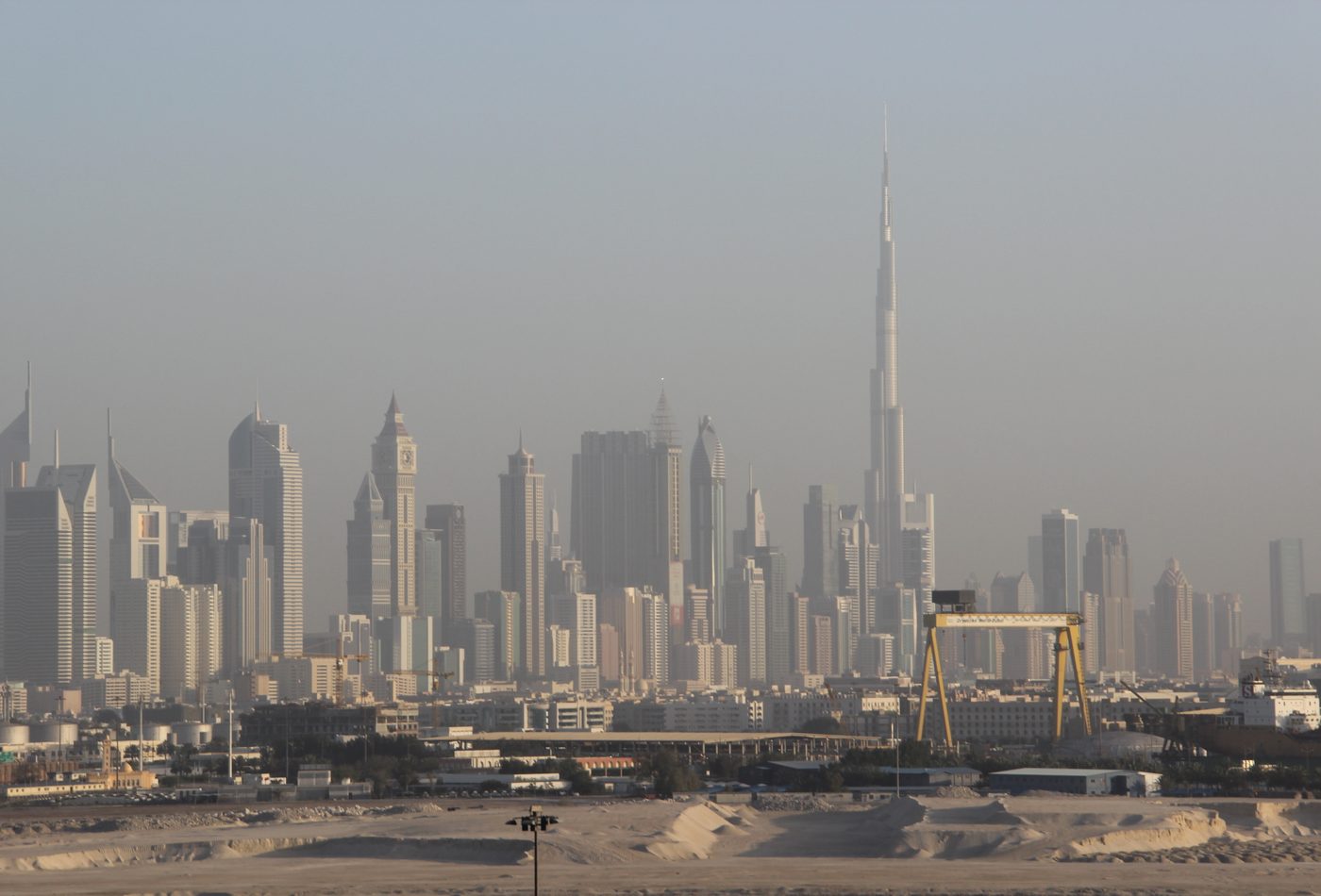
A supertall skyscraper known for its height, tiered form, and Dubai skyline role.
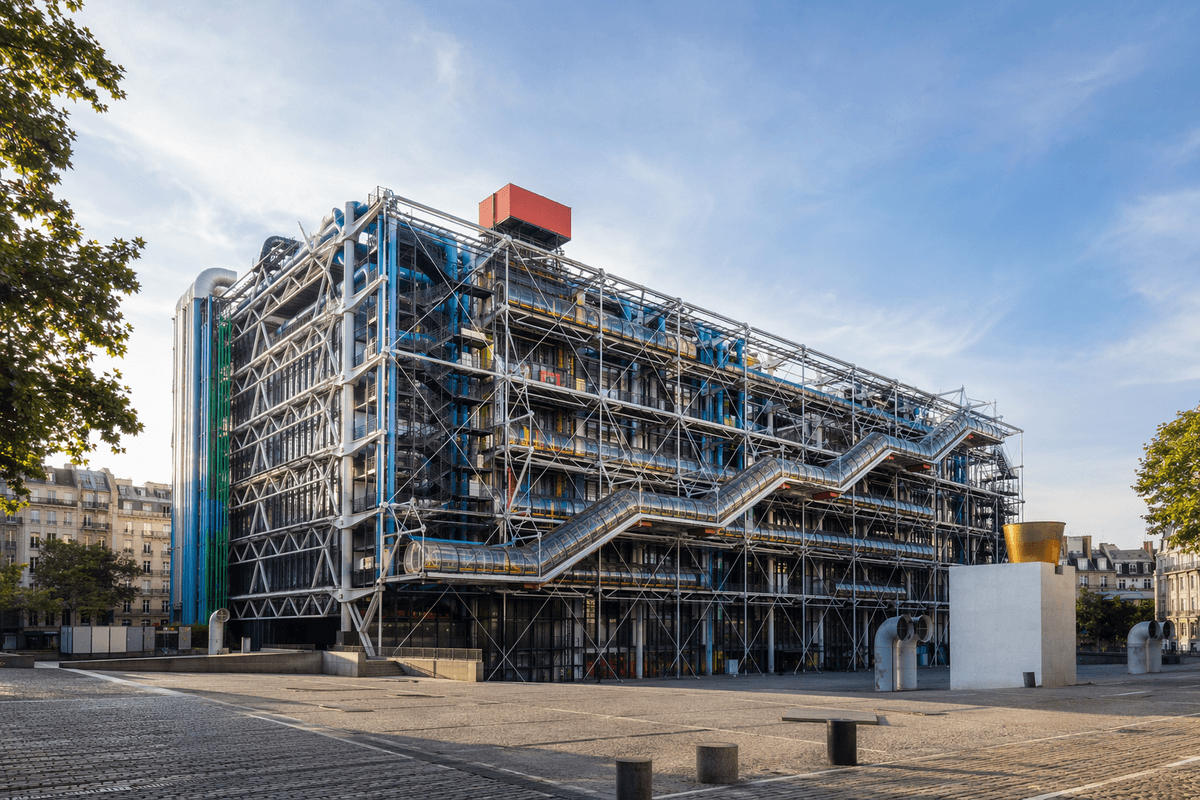
A cultural center famous for putting structure, escalators, and services on the outside.
References used for facts, location data, image credits, and architectural context on this page.