guide
Casa Batllo Facts: Barcelona Facade and Interior Clues
The first fact is that it is a remodel
Casa Batllo is a house museum in Barcelona completed as a remodel in 1906, and that fact matters more than a simple date label. The building did not begin as a blank-site monument. Gaudi transformed an existing urban house into a surface, interior, roofscape, and light system that feel almost biological. That makes the project a study in how renovation can become invention.
The facade is the public argument
The building is known for its ceramic facade, curved openings, mask-like balconies, and scale-like roof. Those are not separate decorative facts. They work together to make the street elevation feel alive, as if the house has skin, bones, and movement. A reader should start with the facade because it explains how a domestic building became one of Barcelona's most recognizable public images.
Materials make the form readable
The material palette includes ceramic, stone, glass, and iron. Ceramic gives color and surface vibration. Stone shapes the lower levels and openings. Glass brings reflection and changing light. Iron makes balconies and details feel both crafted and skeletal. The facts are useful only when tied to what those materials do: they break ordinary residential repetition and turn the facade into a crafted field.
The blue lightwell is not a side detail
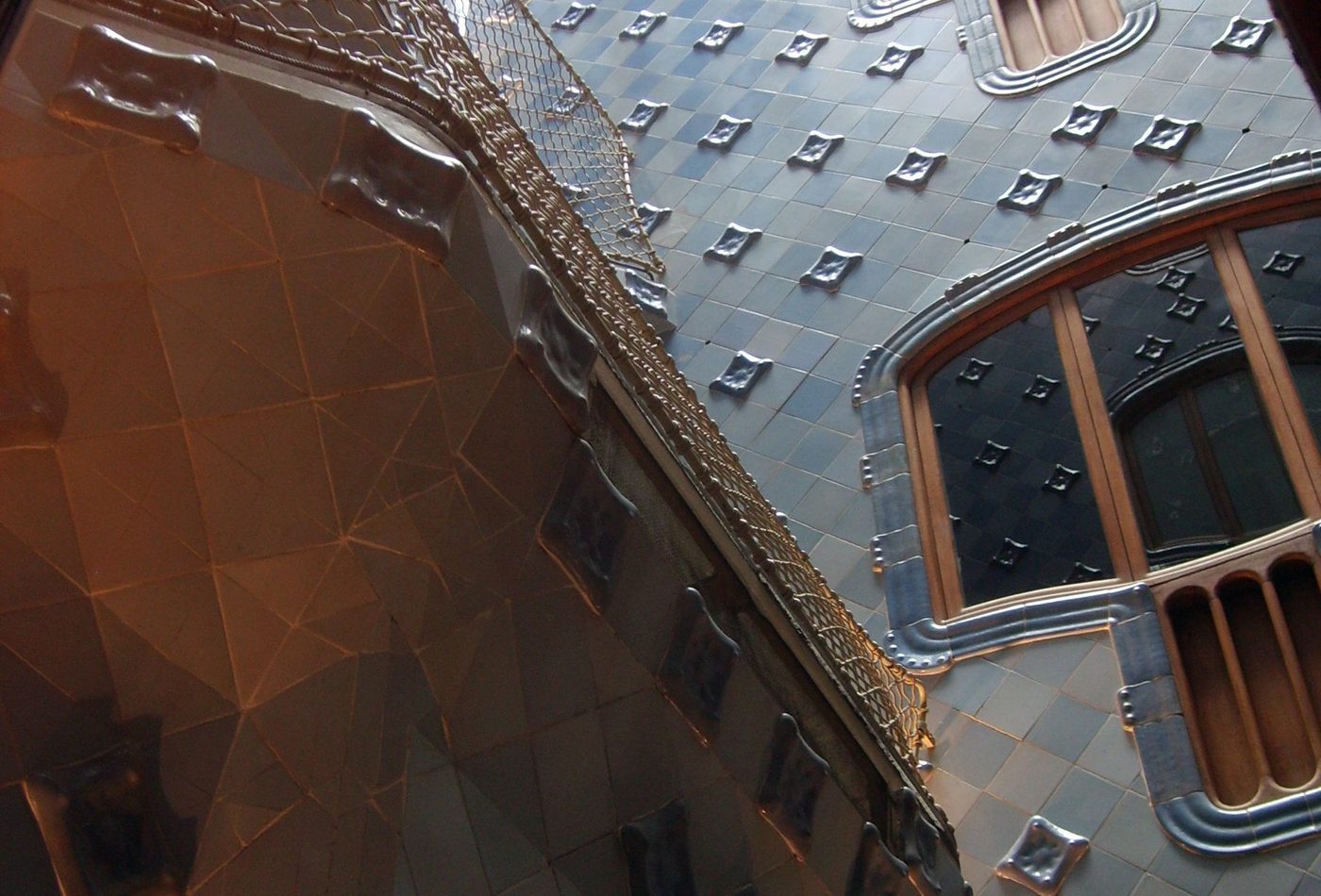
Casa Batllo is often remembered from the street, but the blue lightwell is essential to the architectural facts. It shows Gaudi working with light, color, and domestic interior conditions rather than only exterior fantasy. The graded blue surfaces help organize daylight inside the house, reminding the reader that the project is a lived building transformed through craft, not only a theatrical facade.
The roof changes the house into a figure
The scale-like roof gives Casa Batllo a profile that is easy to remember without making the building symmetrical or monumental. It turns the top into a creature-like surface, while the balconies below suggest masks or bones. That relationship between roof and facade is why the house feels animated from the street. The building's public memory depends on silhouette and close material texture at the same time.
Why the facts matter
The basic facts should prevent a shallow reading of Casa Batllo as merely colorful or whimsical. The year places it within Barcelona Modernisme; the type explains its domestic origin; the materials explain its tactile power; and the visible details show how craft reorganizes an urban house. The important lesson is that a small city building can become architecturally intense without needing monumental scale.
What to verify visually
Use the facts as a checklist against the house. The remodel fact should make you look for how an ordinary urban frontage was transformed. The material list should make you separate ceramic shimmer, carved stone, reflective glass, and iron balcony edges. The house museum type should remind you to connect exterior image with interior light and movement.
Fact reading check
A useful fact page should leave the reader ready to identify four things: the ceramic surface, the mask-like balconies, the scale-like roof, and the blue lightwell. Those details connect public image with construction, interior light, and street presence. If they stay connected, Casa Batllo reads less like fantasy and more like a precise exercise in domestic transformation.