guide
Burj Khalifa Downtown Dubai Viewing Notes
Start farther away than feels natural
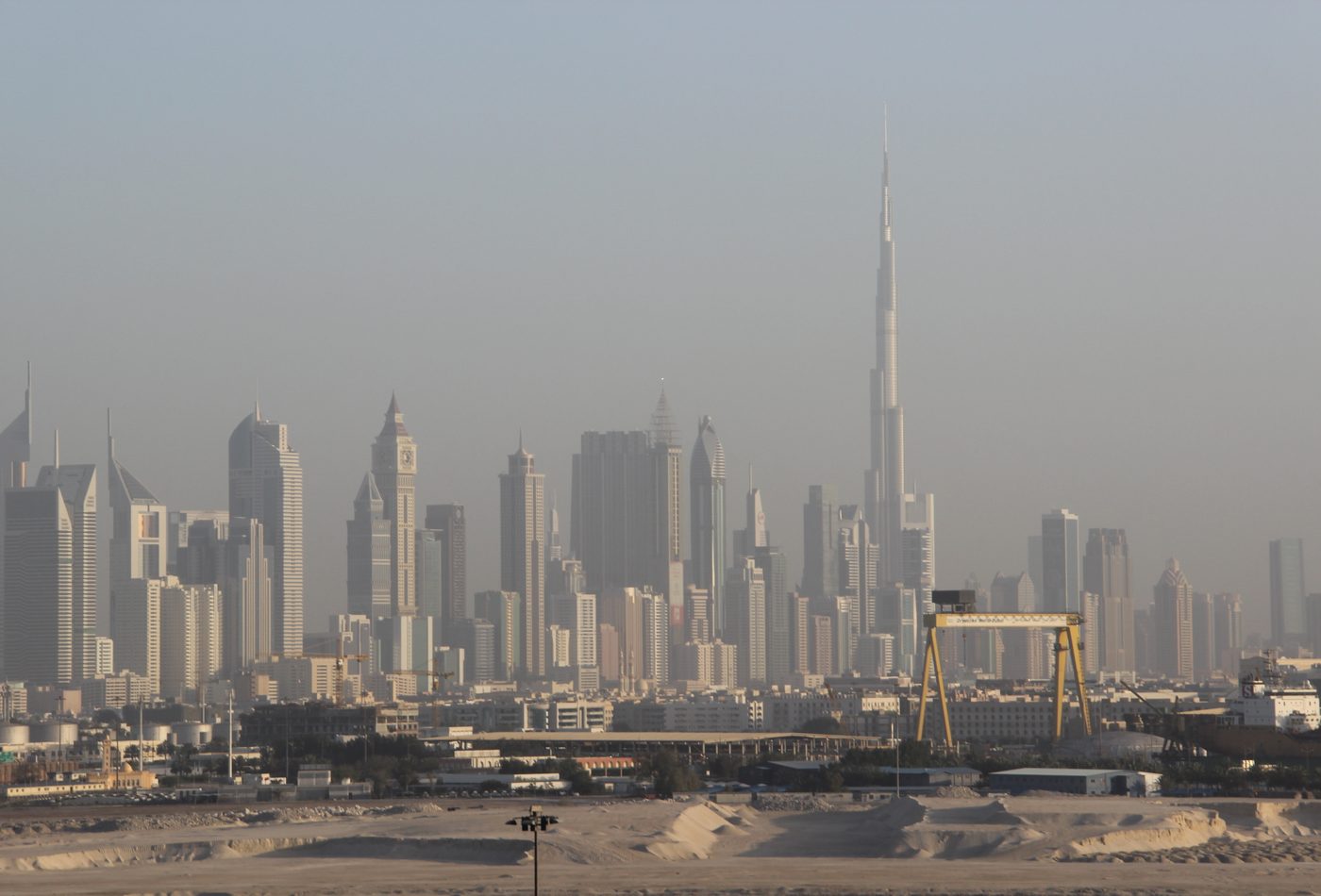
The best first read of Burj Khalifa is from a distance, not from directly under the tower. Step far enough back to see the full taper, setbacks, and relationship to surrounding towers. From too close, the building becomes mostly height and glass. From farther away, the Y-plan logic, spiraling profile, and skyline role become easier to read. Distance turns the tower from a number into an architectural diagram.
Use the water edge and district frame
Downtown Dubai's water features and promenades are useful observation tools. They let the tower be seen with reflection, landscape, retail frontage, and public movement in the same view. This matters because Burj Khalifa is not only a standalone skyscraper. It anchors a district designed around arrival, walking, shopping, hotels, and spectacle. The best visit asks how the tower organizes that whole scene.
Look for the stepped profile
Before focusing on the spire, follow the setbacks upward. The tower changes width as it rises, and that changing edge is one of the main design facts to observe. The setbacks make the building read as a sequence of vertical chapters. They also prevent the tower from looking like a single extruded shaft. A good photograph should show those steps clearly rather than cutting the building into an anonymous glass crop.
Test the base condition
After the wide view, move closer and study the base. Look for how entrances, water, landscape, pedestrian routes, security edges, hotel arrival, and retail approaches meet the tower. This is where a supertall building has to become usable city space. The base will not have the same purity as the skyline silhouette, and that is the point. Architecture has to negotiate crowds, cars, services, shade, and orientation.
Use the view carefully
If you go up to an observation level, treat the view as an architectural tool rather than only a spectacle. Look down to understand the Y-shaped plan, the surrounding district, the road network, water edges, and the difference between the tower's symbolic image and the city fabric around it. The view helps explain why the building is both object and instrument: it is looked at from the city, but it also turns the city into a framed panorama.
Make three useful photographs
Make one distant skyline photograph that includes the entire tower, one base photograph that shows arrival and district context, and one detail photograph of facade, setback, water reflection, or spire transition. Those three images prevent the visit from becoming only a record of height. They capture the main architectural evidence: overall profile, ground negotiation, and material or structural detail.
Compare after the visit
After studying Burj Khalifa, compare it with The Shard and Marina Bay Sands. The Shard helps clarify how a taper works in a historic city; Marina Bay Sands shows a different way to make skyline spectacle through a horizontal top; Burj Khalifa shows how structural plan, mixed-use stacking, and district branding can make extreme height feel intentional. That comparison keeps the visit architectural rather than purely touristic.