guide
Burj Khalifa History in Dubai's Urban Ambition
A tower that records Dubai's city-making moment
Burj Khalifa is historically important because it condensed a period of Dubai's global ambition into one vertical marker. The tower opened in 2010, but its meaning belongs to a larger story of real estate, tourism, finance, infrastructure, and image-making. It gave Downtown Dubai a clear center and made the city instantly legible in global skyline culture. That historical role is why the building cannot be understood only as an engineering record.
SOM and the supertall tradition
The building also belongs to the history of the Chicago-based high-rise tradition extended into the Gulf. SOM brought long experience with tall buildings, structural coordination, and commercial towers, while Adrian Smith's design role gave the project a strong architectural identity. Burj Khalifa shows how late twentieth-century skyscraper expertise was pushed into a new scale and a new development context. The tower is therefore both local symbol and global professional product.
The structural record changed expectations
Historically, the buttressed core system made the tower more than a height race. It showed how a three-winged plan and central core could produce a stable platform for unprecedented vertical ambition. Later supertall projects have had to answer the precedent that Burj Khalifa set: height must be supported by a convincing structural narrative, not by spectacle alone. The tower made structural explanation part of public skyscraper culture.
Mixed use and branded urbanism
The tower's history is also a history of mixed-use urban branding. Hotel, residential, office, observation, retail adjacency, water features, and surrounding development reinforce one another. This is different from an older office tower that simply adds floors above a business district. Burj Khalifa became a vertical anchor for a destination district. Its public meaning depends on how architecture, entertainment, property value, and tourism were tied together.
Spectacle is the main debate
The project raises the recurring question around supertall architecture: when does height produce real urban value, and when does it become a symbol of excess? Burj Khalifa can be admired for engineering discipline and criticized as part of spectacle-driven city-making. Both readings are necessary. The historical importance of the tower comes partly from this tension, because it forces architecture to account for climate, labor, energy, capital, tourism, and public image.
A skyline before and after
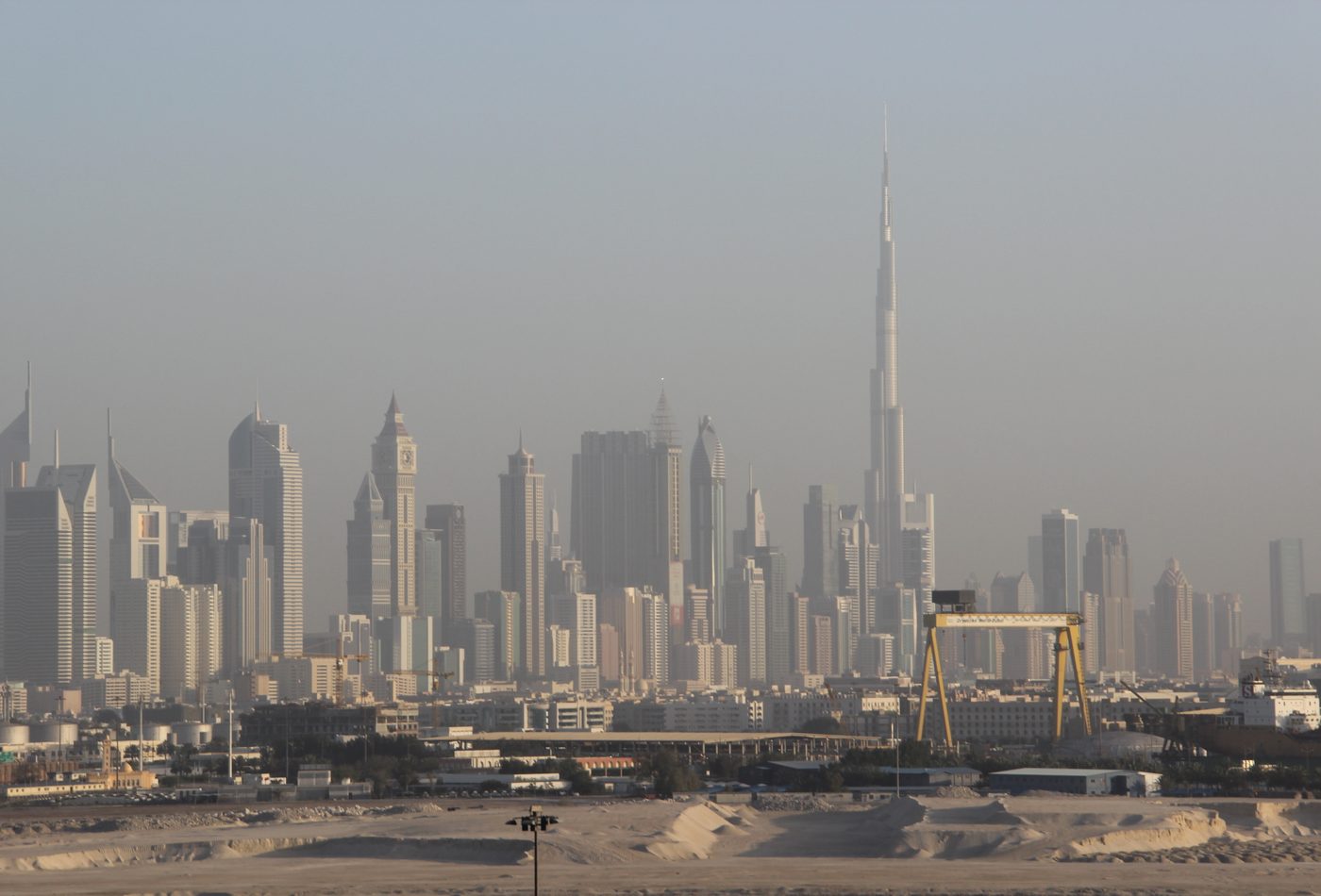
After Burj Khalifa, Dubai's skyline could be summarized by one unmistakable marker. That kind of symbolic compression is rare. The tower changed photographs, maps, travel memory, and the way later buildings around it are read. It did not create Dubai alone, but it gave a fast-changing city a vertical sign that could be repeated globally. The building's historical power comes from that repetition as much as from its physical height.
Historical reading check
A useful history page should leave the tower more complicated than a record-holder. Burj Khalifa should be read as supertall engineering, district anchor, mixed-use stack, desert-climate envelope, tourist image, and development argument. If those layers stay visible, the building becomes a sharper historical document. It shows how twenty-first-century cities can use architecture to turn technical achievement into a public story about growth.