guide
Tower Bridge Thames and Walkway Visit Notes
Start from the river edge
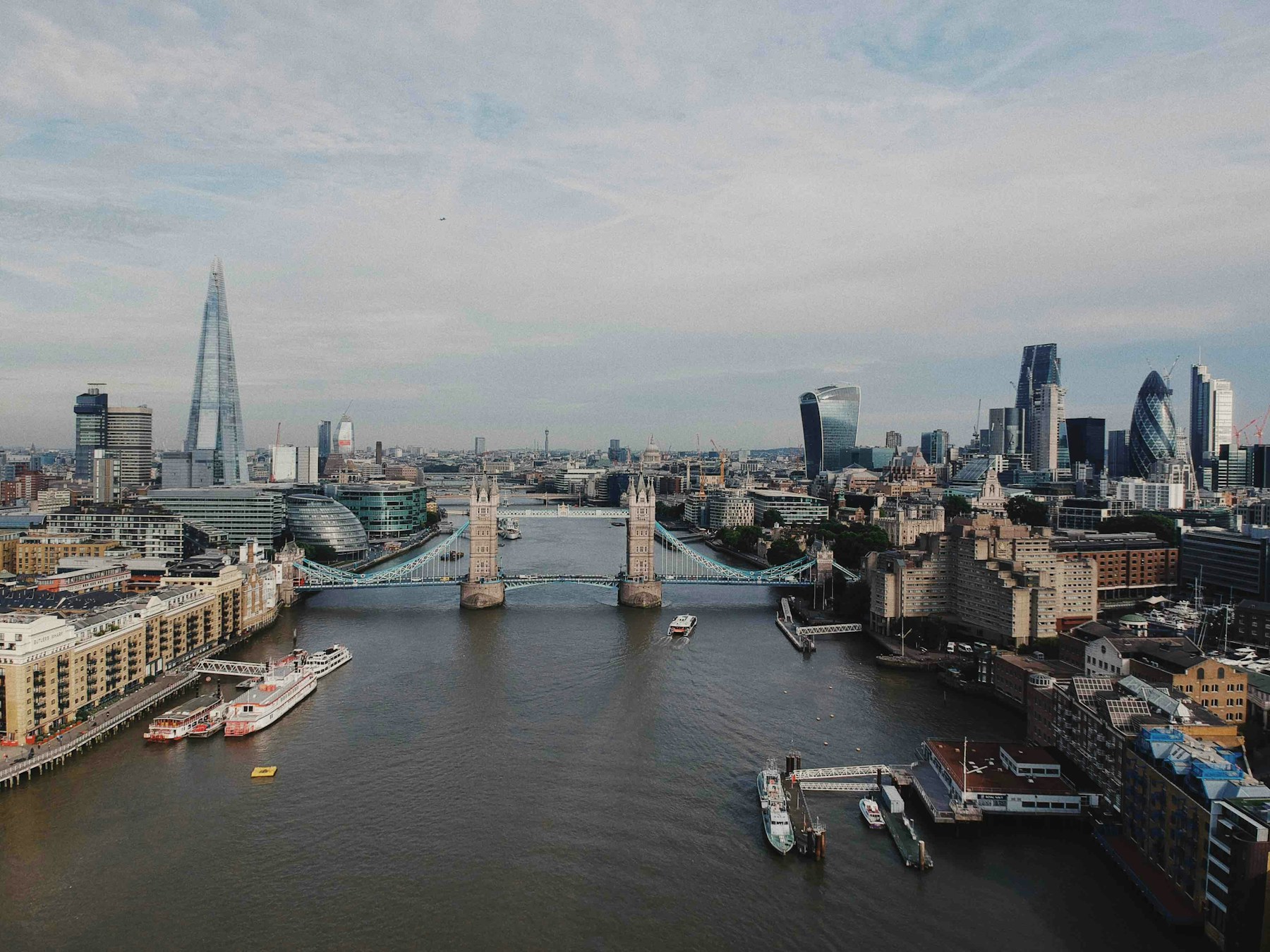
The best first read of Tower Bridge is from the Thames edge, not from the roadway alone. From the river bank, the whole composition becomes visible: two towers, the central bascule span, approach structures, high walkways, and water traffic below. This distance explains why the bridge became a landmark. It is a piece of infrastructure arranged as a framed river image.
Watch the center before the towers
The towers attract attention first, but the center explains the bridge. Look at the line where the two bascule leaves meet and imagine the road deck lifting. That moving joint is the reason the bridge has its particular form. A visitor who notices only the towers misses the central act of the design. The bridge is famous because the roadway can become a gate for the river.
Use the towers to read scale
The towers help a visitor understand scale and structure. From close range, compare the masonry surfaces, vertical openings, rooflines, and bridge deck. From further away, notice how the towers hold the skyline and frame the river corridor. This shift from detail to silhouette is useful. Tower Bridge changes from building-like mass to urban sign depending on distance.
Read the high walkways as a second route
The high walkways make the bridge feel layered. They create a second route above the roadway and keep a visual connection across the opening span. If you study them from below, they show how the bridge links tower to tower even when the road deck is the more obvious crossing. If you study them from inside or from elevated views, they reveal how the bridge turns engineering into a viewpoint.
Include river traffic in your view
Boats, piers, wakes, and the river banks are not distractions. They explain the bridge's purpose. A clean photograph of the towers can be beautiful, but a better architectural record includes the Thames because the water makes the bascule system necessary. Even when no vessel is passing through the opening span, the river keeps the bridge's original problem in view.
Compare old image and new skyline
Tower Bridge is now seen with newer London towers, including glass high-rises and dense riverfront development. Use that contrast rather than cropping it away every time. The bridge's historicist towers and blue structural lines sit inside a changing skyline. That comparison makes the visit more architectural because it shows how one Victorian crossing still organizes views in contemporary London.
Build a four-view record
A useful visit should leave four kinds of evidence: a wide river view with the whole bridge and skyline, a close view of the bascule joint or roadway, a tower or walkway detail, and one view that includes boats or the Thames foreground. Those four views preserve the bridge's main design questions: movement, civic image, structure, and river setting.
Avoid the common shortcut
The easy shortcut is to treat Tower Bridge as a backdrop and move on after one centered photograph. A slower visit asks why the backdrop works. Check whether the towers are being read as mass, whether the blue structure is being read as mechanism, whether the road deck is understood as movable, and whether the Thames remains visible as the reason for the design. That extra minute changes the bridge from scenery into architecture.