why it matters
Why this building matters
Tower Bridge helps readers connect Structural Expression and Historicist to visible design decisions: bascule road deck, high walkways, tower silhouettes.
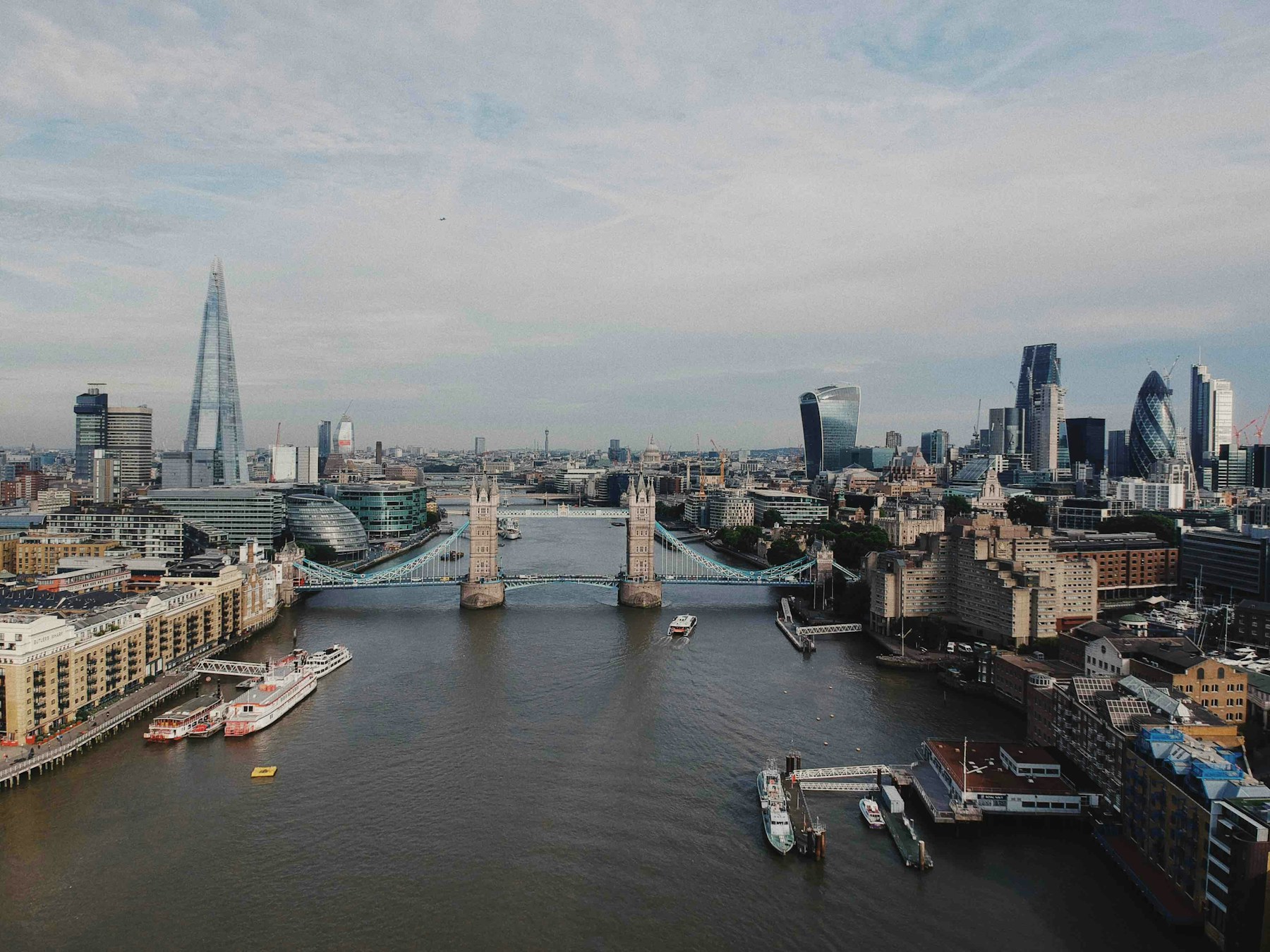
building detail
Tower Bridge is a bascule bridge in London, United Kingdom, known for its movable spans and stone-clad towers.
Photo credit: Robert Bye / Unsplash License.
why it matters
Tower Bridge helps readers connect Structural Expression and Historicist to visible design decisions: bascule road deck, high walkways, tower silhouettes.
what to notice
explore by place and style
map notes
Use the coordinates as anchors for reading the buildings in relation to streets, water, skyline, and nearby landmarks.
51.5055, -0.075451.5138, -0.098451.5136, -0.0821Map coordinates are listed with provider attribution handled through the source records.
architecture guide
A fuller reading of the building's history, setting, form, materials, and public role.
The first fact about Tower Bridge is not only that it was completed in 1894. It is a working movable bridge made to look like a civic landmark. The road deck opens in two bascule leaves for river traffic, while the paired towers, stone dressings, and high walkways give the crossing a ceremonial presence. That double identity explains why the bridge is remembered differently from a purely utilitarian river structure.
Tower Bridge belongs to a tight London river problem. It had to connect streets on both sides of the Thames while still allowing ships to pass toward the Pool of London. A fixed low bridge would have blocked navigation, and a plain movable structure would have looked too industrial for such a public site. The result is a bridge where the central opening span, towers, and approaches all respond to movement on water and land.
The towers give the bridge its postcard image, but they also organize the structure visually. They mark the ends of the movable central span, carry the high-level walkway line, and make the engineering readable from a distance. Their historicist clothing matters because it softens the industrial force of the bridge. The stone surface lets the bridge sit within London's older civic image while steel and machinery do the hard work.
The high walkways are more than scenic links. They show that the bridge was designed as a vertical section as well as a horizontal crossing. At road level, the bridge is about traffic and the bascule deck. Above, the walkways frame the Thames and make the two towers feel like a connected architectural body. This layered movement is the reason Tower Bridge rewards close reading rather than one quick riverfront photograph.
Steel, granite, stone, and river light all matter to the facts. Steel gives the bridge its movable and spanning capacity. Granite and stone give weight, texture, and a public face. The blue-painted structural elements make the mechanism more visible, while the masonry towers keep the bridge from feeling like exposed machinery alone. The material palette is a compromise between modern infrastructure and historic civic presentation.
Use the facts as viewing tools. The date places the bridge in late Victorian London, the bascules explain why the center has to move, the towers explain why the bridge became a city image, and the high walkways explain its vertical organization. A useful first reading starts with the river need, then moves to the machinery, then asks why that machinery was given such a memorable architectural costume.
A reader should leave this facts page able to say what Tower Bridge solves, what parts make the solution visible, and why the bridge's image is more than decoration. The strongest answer links river navigation, road traffic, bascule engineering, tower silhouette, and London civic memory in one sentence.
Tower Bridge is interesting because it does not choose between exposed engineering and architectural disguise. The bascule deck, suspension elements, walkways, and steel frame make it a working machine. The towers, masonry surfaces, rooflines, and Gothic Revival detail make it a public monument. The design works by holding those two readings together. It can be admired as a city symbol while still being understood as infrastructure.
The central span is the design's moving heart. The road deck is split into two leaves that rise when river traffic needs clearance. This makes the middle of the bridge fundamentally different from a normal fixed span. The design has to prepare for stillness and movement, everyday crossing and occasional spectacle. That is why the bridge's center reads as both roadway and event, especially when seen from the river banks.
The two main towers visually frame the movable center, but they also help the whole bridge feel stable. Without them, the bascule machinery could look like an industrial interruption in the river. With them, the movement sits inside a strong architectural composition. Their vertical mass makes the bridge legible from far away, while their paired symmetry turns the river crossing into a gateway image.
The high walkways create a second, elevated line above the roadway. They connect the towers and keep a visual link across the central opening even when the bascules are raised. Architecturally, this is important because the bridge does not disappear into two separate halves when the road deck opens. The upper line holds the composition together and gives visitors a way to understand the bridge as a layered section.
The bridge's historicist clothing should not be dismissed as superficial decoration. In late Victorian London, a highly visible Thames crossing needed to feel civic, durable, and compatible with public memory. Stone dressings, pointed rooflines, and tower silhouettes helped the bridge enter the city image. The design question is not whether the detail carries the load. The question is how detail made new mechanical infrastructure publicly legible.
Tower Bridge changes when read from the Thames. From the embankment or from the water, the towers, bascules, piers, and skyline align with river movement. Boats pass under the fixed and moving parts, while the bridge sits between older London references and newer commercial towers. The river is therefore not background. It is the foreground that makes the design's engineering purpose visible.
Compare Tower Bridge with the Eiffel Tower and the Palace of Westminster. The Eiffel Tower makes exposed engineering into the whole image. Westminster wraps parliamentary identity in Gothic Revival language. Tower Bridge sits between those positions. It is a visible machine, but it uses historicist form to become civic architecture. That middle position is what makes the bridge such a useful design case.
Tower Bridge's history begins with a practical urban problem. London needed another Thames crossing in the east, but the river still had to serve shipping and dock-related movement. The bridge therefore had to solve traffic and navigation together. Its public success comes from the fact that this technical answer became a city image. What began as infrastructure became one of London's most repeated symbols.
The bridge belongs to a city balancing industrial capacity, imperial confidence, public ceremony, and historic self-image. A movable bridge could have looked purely mechanical, but London gave this one towers, masonry dressings, and a dramatic profile. That choice tells us something about the period. Infrastructure was expected to work, but the most visible infrastructure also had to explain civic ambition and cultural continuity.
The bascule action is not a minor technical footnote. It is the historical reason the bridge exists in this form. The opening deck shows the old pressure between road traffic and river traffic. Even when the bridge is closed, its towers and central leaves remind viewers that the Thames was not just scenery. It was a working corridor that demanded architectural and engineering negotiation.
Tower Bridge is so familiar that it can be mistaken for a static monument. The postcard view often hides the working logic: moving leaves, high walkways, machinery, approaches, and river clearance. A better history reading uses the famous view as evidence, not decoration. The bridge became famous because it made a complex technical compromise memorable enough to enter public imagination.
Tower Bridge has not stayed visually fixed even though the bridge itself remains recognizable. The London skyline around it has changed sharply, with newer towers, office districts, river walks, tourist routes, and changing traffic patterns. This makes the bridge a useful historical marker. It holds a Victorian civic image inside a much newer metropolitan frame, so every wide view is also a comparison across periods.
The bridge is not only seen from outside. Its walkways and internal visitor routes let people study the structure from within and above the roadway. That public access changes the historical meaning because the bridge becomes an educational object as well as a crossing. Visitors can read machinery, view, tower mass, and city context rather than only consuming the bridge as a background image.
A useful history page should make Tower Bridge feel less automatic. The key shift is from landmark name to negotiated infrastructure. Its history links east London movement, Thames navigation, late Victorian civic image, movable engineering, and a skyline that keeps changing around it. Once those parts are visible, the bridge becomes more than a decorative London icon.
The best first read of Tower Bridge is from the Thames edge, not from the roadway alone. From the river bank, the whole composition becomes visible: two towers, the central bascule span, approach structures, high walkways, and water traffic below. This distance explains why the bridge became a landmark. It is a piece of infrastructure arranged as a framed river image.
The towers attract attention first, but the center explains the bridge. Look at the line where the two bascule leaves meet and imagine the road deck lifting. That moving joint is the reason the bridge has its particular form. A visitor who notices only the towers misses the central act of the design. The bridge is famous because the roadway can become a gate for the river.
The towers help a visitor understand scale and structure. From close range, compare the masonry surfaces, vertical openings, rooflines, and bridge deck. From further away, notice how the towers hold the skyline and frame the river corridor. This shift from detail to silhouette is useful. Tower Bridge changes from building-like mass to urban sign depending on distance.
The high walkways make the bridge feel layered. They create a second route above the roadway and keep a visual connection across the opening span. If you study them from below, they show how the bridge links tower to tower even when the road deck is the more obvious crossing. If you study them from inside or from elevated views, they reveal how the bridge turns engineering into a viewpoint.
Boats, piers, wakes, and the river banks are not distractions. They explain the bridge's purpose. A clean photograph of the towers can be beautiful, but a better architectural record includes the Thames because the water makes the bascule system necessary. Even when no vessel is passing through the opening span, the river keeps the bridge's original problem in view.
Tower Bridge is now seen with newer London towers, including glass high-rises and dense riverfront development. Use that contrast rather than cropping it away every time. The bridge's historicist towers and blue structural lines sit inside a changing skyline. That comparison makes the visit more architectural because it shows how one Victorian crossing still organizes views in contemporary London.
A useful visit should leave four kinds of evidence: a wide river view with the whole bridge and skyline, a close view of the bascule joint or roadway, a tower or walkway detail, and one view that includes boats or the Thames foreground. Those four views preserve the bridge's main design questions: movement, civic image, structure, and river setting.
The easy shortcut is to treat Tower Bridge as a backdrop and move on after one centered photograph. A slower visit asks why the backdrop works. Check whether the towers are being read as mass, whether the blue structure is being read as mechanism, whether the road deck is understood as movable, and whether the Thames remains visible as the reason for the design. That extra minute changes the bridge from scenery into architecture.
continue reading
related buildings
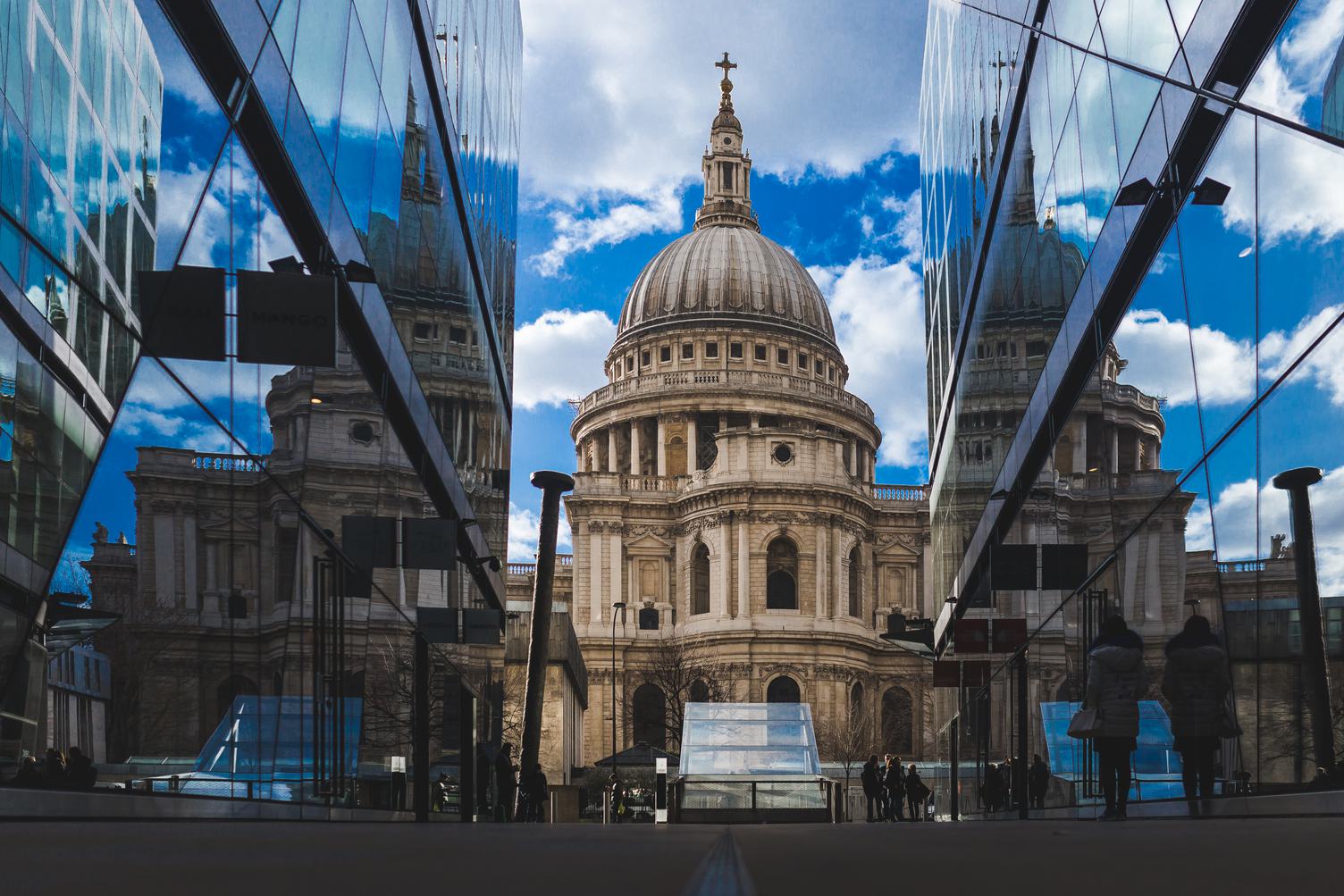
St Paul's Cathedral is a cathedral in London, United Kingdom, known for its great dome and baroque presence in the City of London.
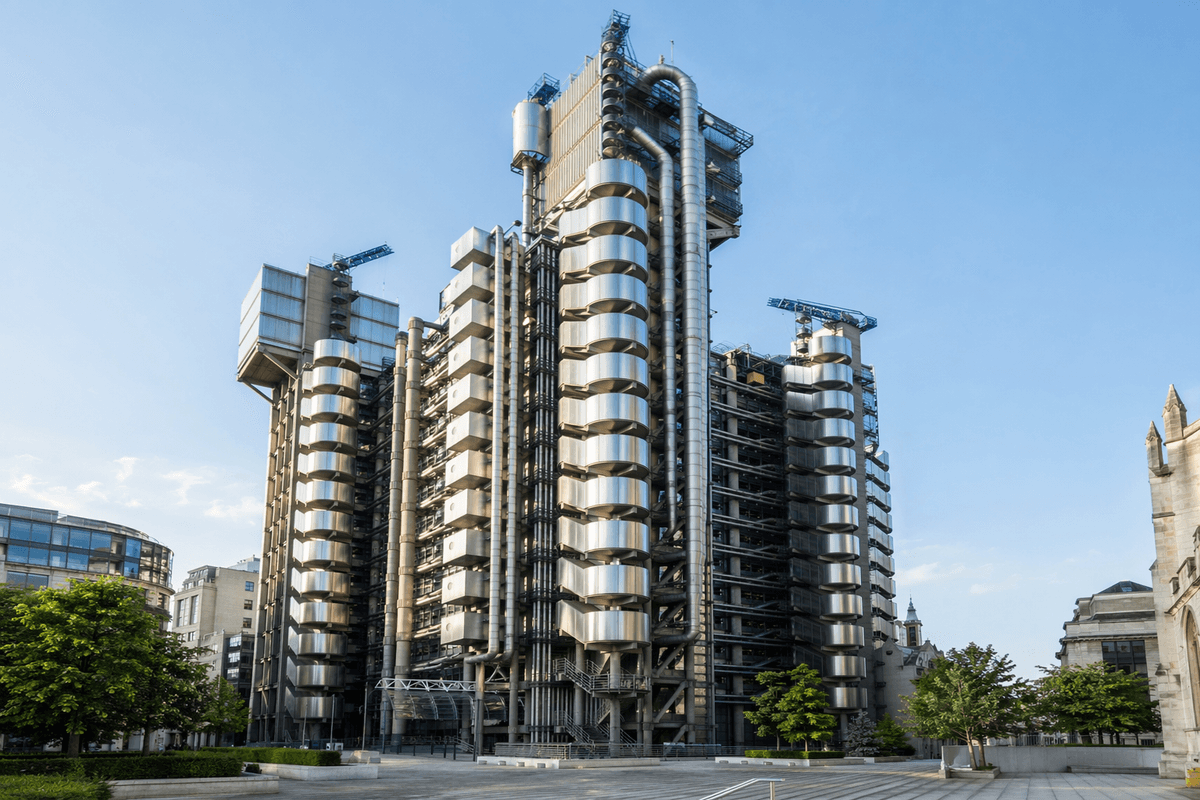
Lloyd's Building is a office building in London, United Kingdom, known for its services, lifts, and ducts moved to the exterior.
References used for facts, location data, image credits, and architectural context on this page.