why it matters
Why this building matters
St Paul's Cathedral helps readers connect Baroque to visible design decisions: triple-shell dome, west front towers, axial nave.
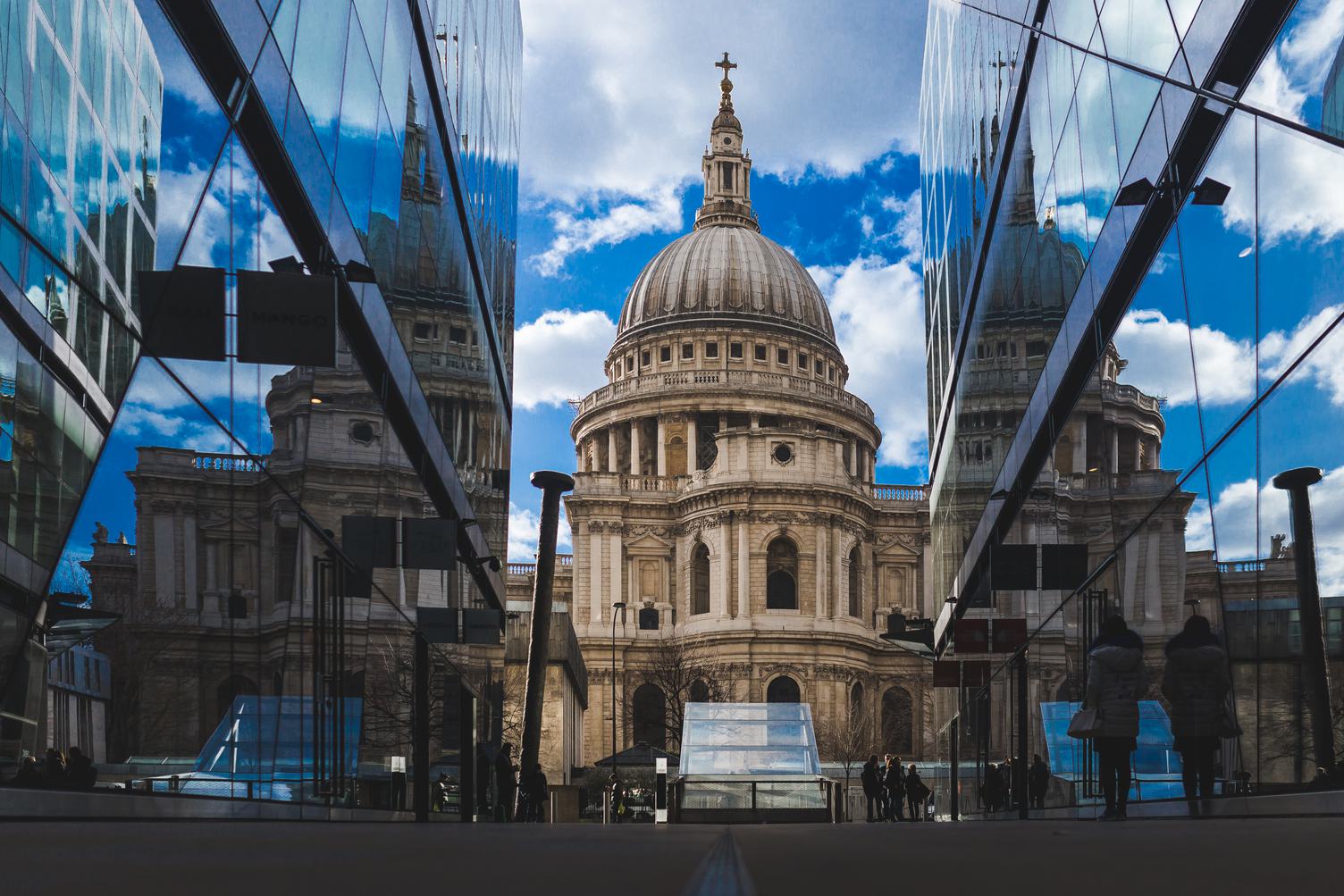
building detail
St Paul's Cathedral is a cathedral in London, United Kingdom, known for its great dome and baroque presence in the City of London.
Photo credit: Luis Llerena / CC0 / Public Domain.
why it matters
St Paul's Cathedral helps readers connect Baroque to visible design decisions: triple-shell dome, west front towers, axial nave.
what to notice
explore by place and style
map notes
Use the coordinates as anchors for reading the buildings in relation to streets, water, skyline, and nearby landmarks.
51.5138, -0.098451.4995, -0.124851.5055, -0.0754Map coordinates are listed with provider attribution handled through the source records.
architecture guide
A fuller reading of the building's history, setting, form, materials, and public role.
The useful first fact about St Paul's Cathedral is not simply the completion year of 1710. The cathedral belongs to the rebuilding of London after the Great Fire of 1666, when the previous medieval cathedral was lost and a new public church had to carry civic as well as religious meaning. Christopher Wren's commission therefore produced more than a replacement building. It gave the City of London a new architectural center after disaster, one that could be recognized from streets, river views, and later skyline comparisons.
St Paul's is remembered through its dome because the dome solves several roles at once. It crowns the crossing, marks the cathedral from a distance, and gives London a vertical image that is different from a Gothic spire. The dome is not only a smooth silhouette. It is a layered structural and visual problem, with an inner reading for worship, an outer profile for the city, and hidden engineering between them. That layered dome is the fact that makes St Paul's different from a simple masonry church with a large roof.
The cathedral's Portland stone matters because it turns scale into surface. From far away, the stone helps the dome, west towers, and long nave read as one pale mass against the London sky. From close range, the same material records joints, shadow, carving, steps, columns, and weathering. A reader should not treat material as a decorative note. At St Paul's, stone is part of the public image: it makes the building feel durable, civic, and materially continuous across a large and complex plan.
The dome often dominates the memory of St Paul's, but the west front and its towers are just as important to the first architectural reading. The west end organizes arrival, sets up the axial route into the nave, and gives the cathedral a ceremonial face toward the city. The twin towers prevent the building from being reduced to one central dome. They make the cathedral work as a sequence: approach the front, enter the nave, move toward the crossing, and then understand why the dome controls the whole composition.
A skyline view explains why St Paul's became famous, but the plan explains how it works. The long nave, crossing, choir, aisles, and west front give the cathedral a strong directional order. That order keeps the building from becoming only a domed object. The visitor moves through a processional axis before reaching the space beneath the dome. The building's public image is therefore supported by a slower interior logic: direction first, central space second, city silhouette always in the background.
Use the basic facts as a viewing method. The Great Fire explains why replacement and memory matter. Wren explains why the cathedral speaks a Baroque language in London. Portland stone explains its civic weight. The dome explains its city image. The west front explains arrival. The nave axis explains movement. Those facts are useful only if they make the building less generic: St Paul's is not simply a famous cathedral, but a post-fire urban monument where structure, ceremony, material, and skyline are tied together.
A reader should leave this facts page able to connect five parts without leaning on vague landmark praise: the Great Fire, Wren's rebuilding role, Portland stone, the triple-shell dome, and the cathedral's place in the City of London. If those parts stay connected, the building becomes easier to read in person and in photographs.
St Paul's Cathedral is a strong design case because its most famous image comes from a sectional problem. The dome had to be meaningful inside the cathedral and commanding outside in the city. Those two needs are not identical. The inner experience asks for proportion, light, and worship space. The outer profile asks for height, continuity, and a clean skyline reading. Wren's design resolves that tension by making the dome layered, so the visible urban form and the interior spatial order can support one another without becoming the same thing.
The dome should not be read as one simple shell. Its architectural force comes from the relationship between inner dome, hidden structural work, and outer profile. That is why St Paul's rewards drawings and careful explanation as much as street photography. The visitor sees a calm exterior silhouette, but the calm depends on concealed engineering and staged perception. This is one of the cathedral's central design lessons: a public image can be simple because the section behind it is complex.
The west front is not a decorative preface to the dome. It sets the body in motion. Its towers, columns, steps, and width create a civic threshold before the visitor enters the long axis of the nave. This matters because the building has to work at several speeds: a quick skyline reading, a street approach, an entrance sequence, and a slower interior procession. The west front anchors those speeds and keeps the building from feeling like a dome dropped onto a city block.
Inside, the nave gives the cathedral a deliberate delay. The visitor does not begin with the full dome effect. Movement, columns, arches, vaults, and the long axis build expectation before the crossing becomes the spatial climax. That delayed arrival is a design choice. It makes the dome a destination rather than only a roof. The building's drama comes from the relationship between linear procession and central height, not from one isolated room.
Portland stone gives the cathedral a disciplined public face. The material gathers many parts into one architectural body: dome, drum, towers, portico, walls, stairs, and details. Its pale mass reads well in London's changing light, while its carved and jointed surfaces make scale visible close up. The stone does not make the building quiet. It gives the Baroque composition enough weight to hold its place among narrower streets, open churchyard views, and later high-rise surroundings.
St Paul's is not a freestanding country church. It is a cathedral in the City of London, surrounded by changing commercial streets, framed views, and competing skyline elements. That setting changes the design reading. The dome must work above rooftops and from long approaches, while the west front and churchyard must work at pedestrian scale. The building's success depends on that double performance: a city marker seen from far away and a stone public room encountered at close range.
Compare St Paul's with Florence Cathedral and the Pantheon in Rome. Florence shows a dome as a civic engineering triumph over a Gothic body. The Pantheon concentrates dome and interior into one ancient concrete room. St Paul's sits between those lessons: it uses a Baroque cathedral plan, a layered dome, and a post-fire urban role to make the dome both structural event and city image. That middle position keeps it from being a generic domed landmark.
St Paul's Cathedral cannot be understood without the Great Fire of 1666. The fire did not merely damage a church; it destroyed the old cathedral at the symbolic center of the City. Rebuilding therefore carried a public burden. The new St Paul's had to restore religious function, but it also had to show that London could rebuild itself with order, ambition, and a changed architectural language. That is why the building's history begins with urban recovery rather than with style labels.
Christopher Wren's authorship matters because the cathedral was part of a larger post-fire rebuilding culture. He was not only designing a picturesque dome. He was working within questions of church reform, urban repair, public ceremony, engineering, and long institutional patience. The length of the project made the design a generational civic act. St Paul's therefore records the difficulty of rebuilding a city through architecture that had to satisfy worship, politics, craft, finance, and public memory.
Although the cathedral was completed in 1710, its meaning kept changing. A building of this scale becomes historical through repeated public use: services, state occasions, funerals, memorial events, tourism, conservation, and daily orientation in the City. The dome became more than an architectural feature because people kept using it as a public image. In that sense, completion is only one historical date. The longer story is how the cathedral became a shared London reference.
St Paul's is often associated with resilience because its dome came to stand for the survival of London during later crises, especially wartime memory. That association can become sentimental if it is separated from the architecture. The stronger reading connects memory to form. A clear dome above the City, a durable stone mass, and a long rebuilding origin all make the cathedral available as a symbol of endurance. The building's history works because its architecture gives public memory something visible to hold.
Historic England's Grade I listing is not the reason St Paul's matters, but it records the level of public and architectural importance attached to the building. The list description fixes key coordinates: Wren, late seventeenth- and early eighteenth-century construction, Portland stone, central dome, and western towers. Those details align with what a visitor can actually see. The listing helps keep the history attached to material evidence rather than allowing the cathedral to drift into vague national symbolism.
The historical reading of St Paul's changes as London changes around it. New commercial towers, protected views, river crossings, office districts, and tourist routes all alter the way the dome is framed. This does not weaken the cathedral's history. It makes the building a measuring device for the city. Each newer skyline view asks how a post-fire Baroque monument can remain legible inside a much denser and more vertical financial district.
A useful history page should make St Paul's feel less automatic. The key shift is from famous dome to public rebuilding instrument. The cathedral joins fire, Wren's design labor, Portland stone, dome engineering, worship, state memory, conservation, and changing skyline pressure. Once those layers are visible, the building is no longer just a London icon. It becomes evidence of how architecture carries a city through repeated acts of recovery and reinterpretation.
Begin by finding a view where the dome appears as part of London rather than as an isolated object. A river approach, a bridge view, or a street opening can show why St Paul's became a city marker. The important thing is to keep surrounding buildings in the frame. The dome's power depends on contrast: curved stone profile against roofs, offices, sky, and movement. A close-up alone cannot explain that urban role.
Use the west front as the main arrival study. Look at the towers, steps, columns, doorways, and width before thinking about the dome again. This front turns the cathedral from skyline image into public entrance. It also sets up the direction of the nave. If the visit begins only with the dome, the building can feel like one famous shape. The west front restores sequence, scale, and ceremony.
Inside, treat the nave as a route rather than a hall to cross quickly. Notice how the long axis organizes the body, how repeated structural bays control rhythm, and how the eye is drawn toward the crossing. The dome should feel prepared by that movement. This makes the visit more architectural because it links plan, procession, and vertical climax. The central space is stronger when the route to it has been noticed.
The dome has one life outside and another inside. Outside, it is a skyline profile. Inside, it is part of a spatial sequence, light condition, and structural drama. Try to compare those two readings during the same visit. Ask whether the exterior dome feels heavier, calmer, or more distant than the interior experience below it. That comparison is the best way to avoid treating the dome as a simple symbol.
At close range, give time to the stone. Look for joints, steps, carved detail, weathering, shadow under moldings, and the way pale surfaces change under grey or bright light. These details connect the massive public image to human scale. St Paul's is not only a large composition. It is also a stone building made from repeated edges, surfaces, and transitions that can be read from arm's length.
Do not limit the visit to the interior. The churchyard and surrounding streets show how the cathedral sits in the City. Step back, move around corners, and watch where the dome disappears and returns. These small changes explain the building's urban intelligence. St Paul's often works through partial views: a tower edge, a dome shoulder, a stone wall, or a sudden full composition at the end of a street.
A useful architecture visit should leave five kinds of evidence: one long skyline or bridge view, one west-front arrival view, one nave-axis view, one dome or crossing view, and one close stone detail. Those five views preserve the building's main questions: city image, entrance, procession, vertical structure, and material scale. They also prevent the visit from collapsing into one centered photograph of the dome.
continue reading
related buildings
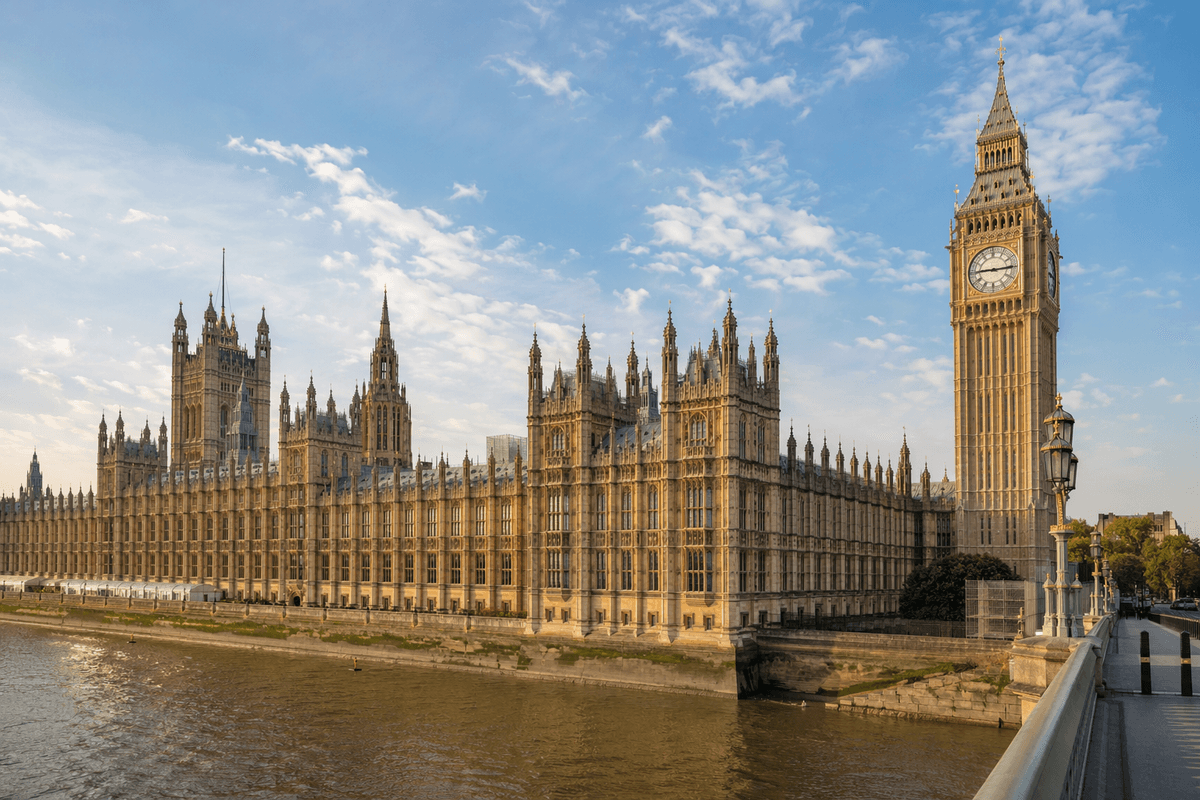
Palace of Westminster is a parliament building in London, United Kingdom, known for its Gothic Revival riverfront and clock tower composition.
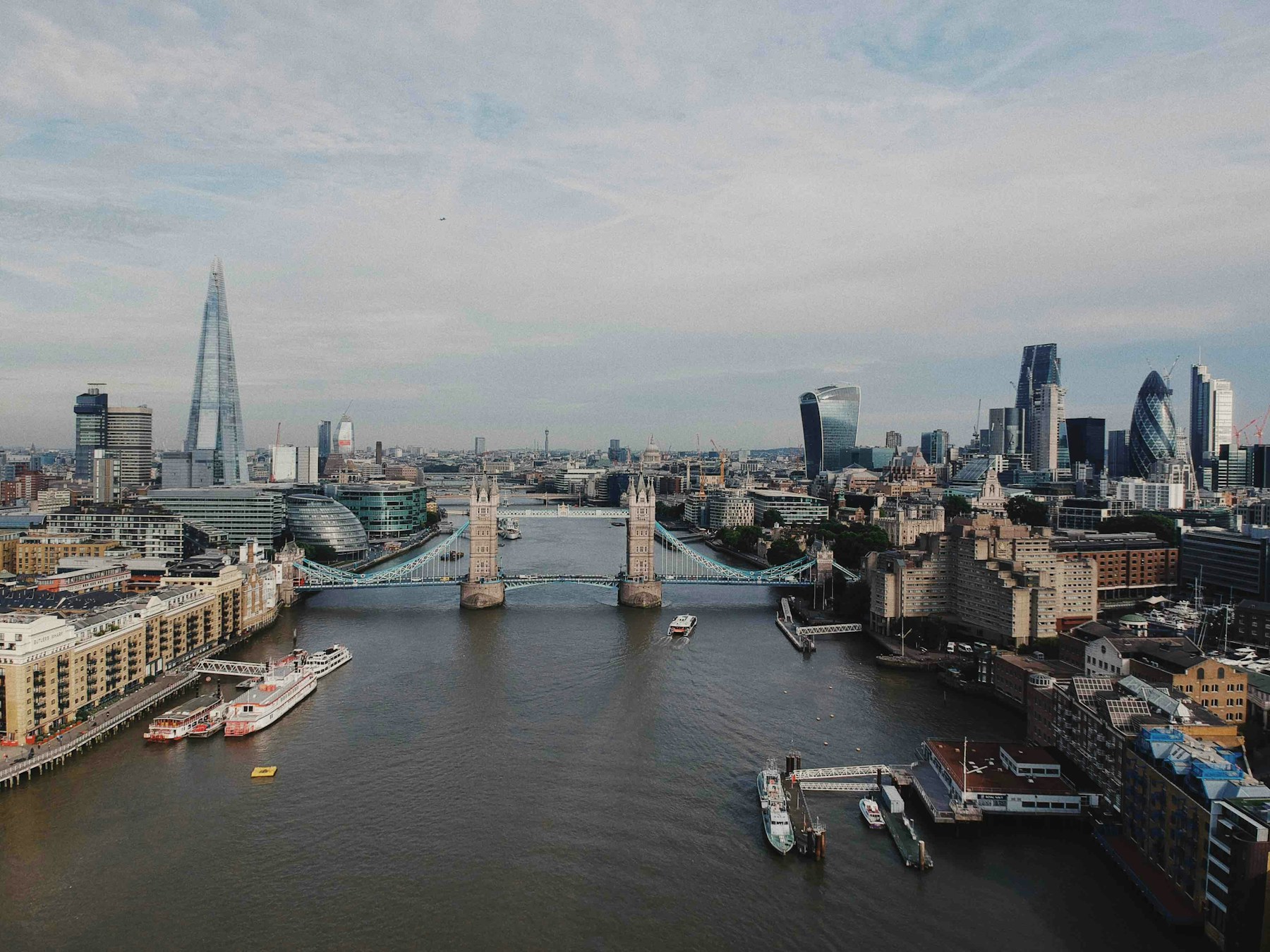
Tower Bridge is a bascule bridge in London, United Kingdom, known for its movable spans and stone-clad towers.
References used for facts, location data, image credits, and architectural context on this page.