guide
St Paul's Cathedral Design: Dome, Nave, and West Front
The design turns section into image
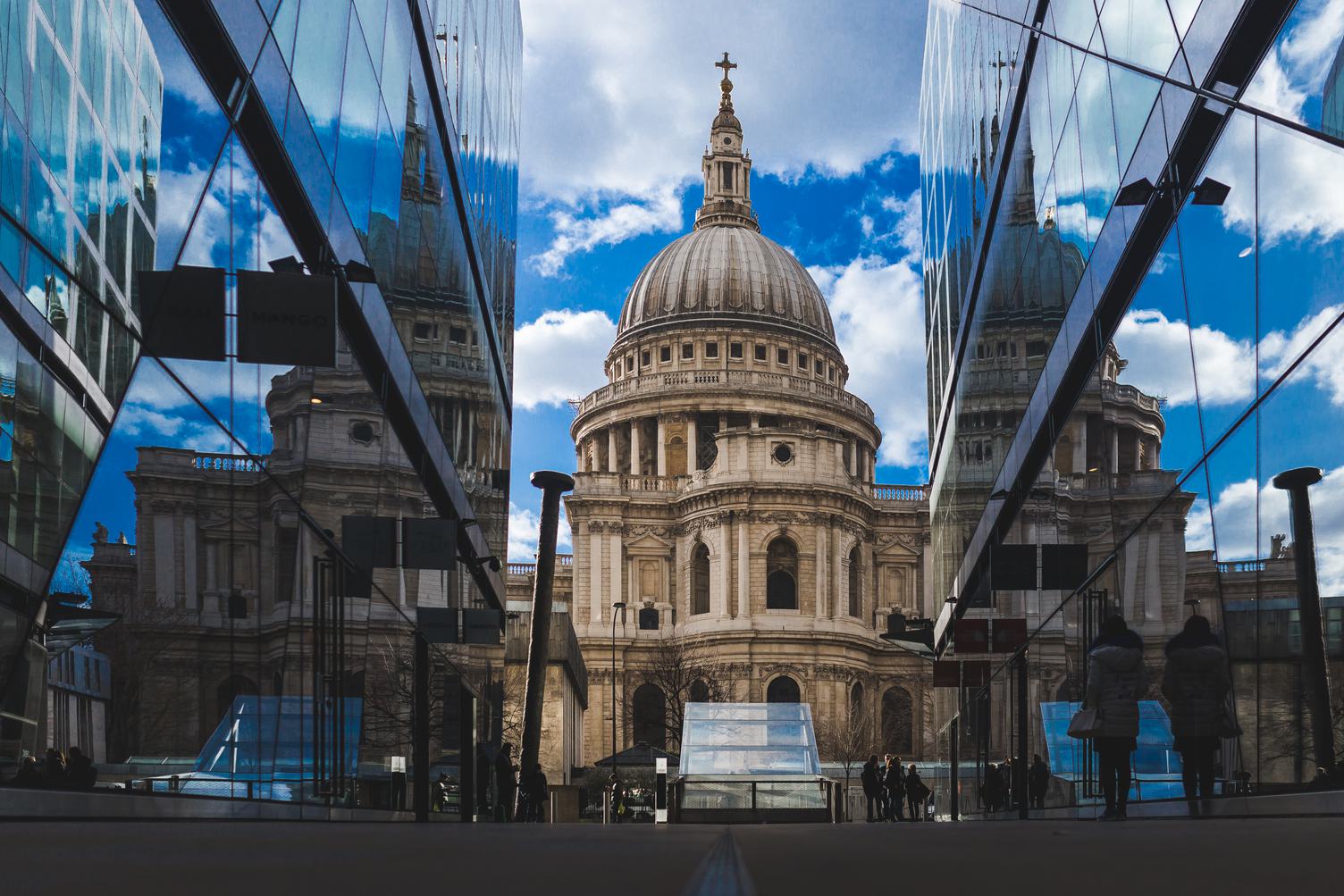
St Paul's Cathedral is a strong design case because its most famous image comes from a sectional problem. The dome had to be meaningful inside the cathedral and commanding outside in the city. Those two needs are not identical. The inner experience asks for proportion, light, and worship space. The outer profile asks for height, continuity, and a clean skyline reading. Wren's design resolves that tension by making the dome layered, so the visible urban form and the interior spatial order can support one another without becoming the same thing.
The hidden dome system matters
The dome should not be read as one simple shell. Its architectural force comes from the relationship between inner dome, hidden structural work, and outer profile. That is why St Paul's rewards drawings and careful explanation as much as street photography. The visitor sees a calm exterior silhouette, but the calm depends on concealed engineering and staged perception. This is one of the cathedral's central design lessons: a public image can be simple because the section behind it is complex.
The west front prepares the route
The west front is not a decorative preface to the dome. It sets the body in motion. Its towers, columns, steps, and width create a civic threshold before the visitor enters the long axis of the nave. This matters because the building has to work at several speeds: a quick skyline reading, a street approach, an entrance sequence, and a slower interior procession. The west front anchors those speeds and keeps the building from feeling like a dome dropped onto a city block.
The nave makes the dome arrive late
Inside, the nave gives the cathedral a deliberate delay. The visitor does not begin with the full dome effect. Movement, columns, arches, vaults, and the long axis build expectation before the crossing becomes the spatial climax. That delayed arrival is a design choice. It makes the dome a destination rather than only a roof. The building's drama comes from the relationship between linear procession and central height, not from one isolated room.
Stone creates civic discipline
Portland stone gives the cathedral a disciplined public face. The material gathers many parts into one architectural body: dome, drum, towers, portico, walls, stairs, and details. Its pale mass reads well in London's changing light, while its carved and jointed surfaces make scale visible close up. The stone does not make the building quiet. It gives the Baroque composition enough weight to hold its place among narrower streets, open churchyard views, and later high-rise surroundings.
The City setting is part of the design
St Paul's is not a freestanding country church. It is a cathedral in the City of London, surrounded by changing commercial streets, framed views, and competing skyline elements. That setting changes the design reading. The dome must work above rooftops and from long approaches, while the west front and churchyard must work at pedestrian scale. The building's success depends on that double performance: a city marker seen from far away and a stone public room encountered at close range.
Design comparison
Compare St Paul's with Florence Cathedral and the Pantheon in Rome. Florence shows a dome as a civic engineering triumph over a Gothic body. The Pantheon concentrates dome and interior into one ancient concrete room. St Paul's sits between those lessons: it uses a Baroque cathedral plan, a layered dome, and a post-fire urban role to make the dome both structural event and city image. That middle position keeps it from being a generic domed landmark.