guide
Tower Bridge Facts: Bascules, Towers, and Thames Setting
The bridge is both machine and monument
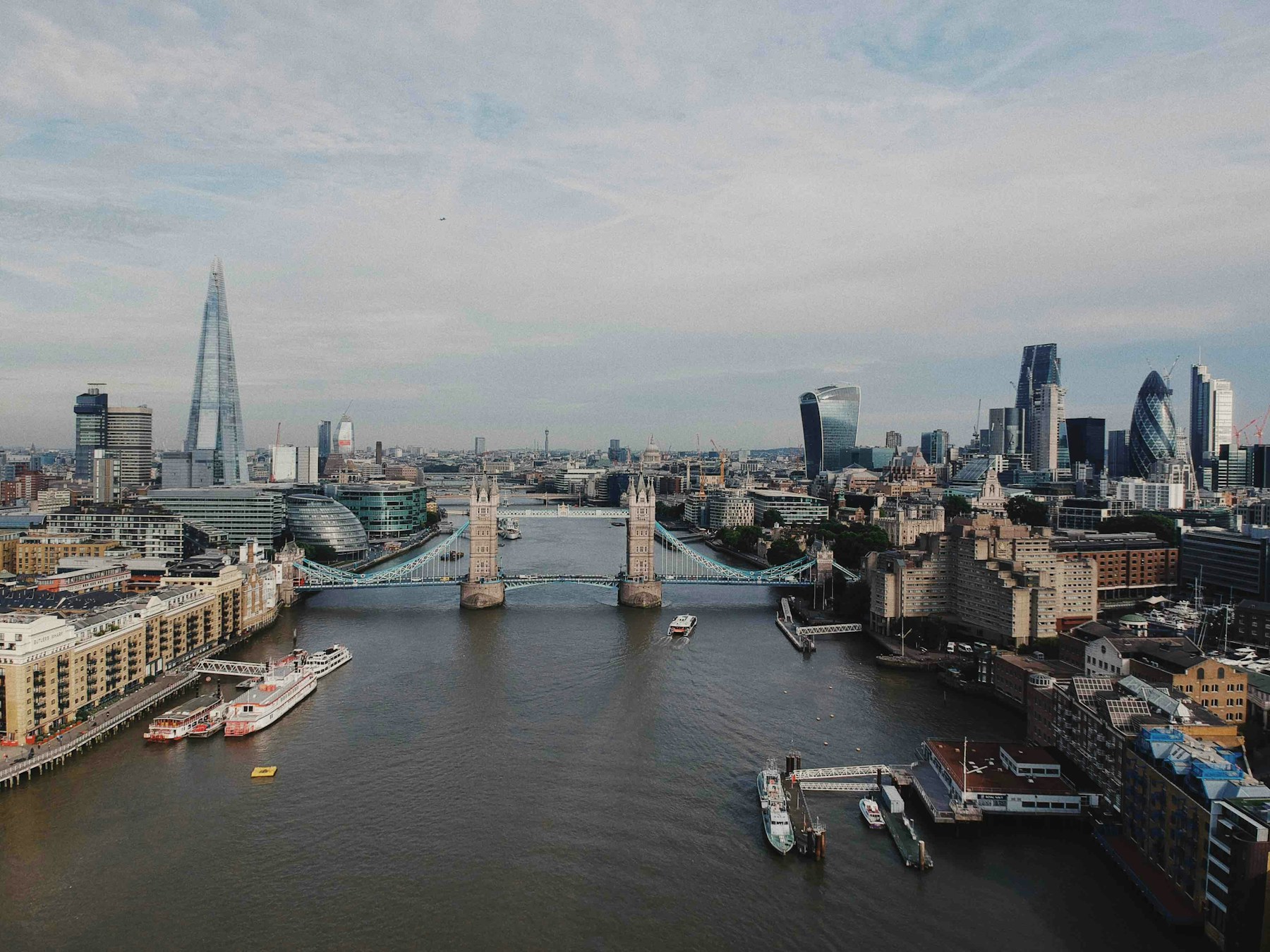
The first fact about Tower Bridge is not only that it was completed in 1894. It is a working movable bridge made to look like a civic landmark. The road deck opens in two bascule leaves for river traffic, while the paired towers, stone dressings, and high walkways give the crossing a ceremonial presence. That double identity explains why the bridge is remembered differently from a purely utilitarian river structure.
The Thames setting explains the form
Tower Bridge belongs to a tight London river problem. It had to connect streets on both sides of the Thames while still allowing ships to pass toward the Pool of London. A fixed low bridge would have blocked navigation, and a plain movable structure would have looked too industrial for such a public site. The result is a bridge where the central opening span, towers, and approaches all respond to movement on water and land.
The towers are not just decoration
The towers give the bridge its postcard image, but they also organize the structure visually. They mark the ends of the movable central span, carry the high-level walkway line, and make the engineering readable from a distance. Their historicist clothing matters because it softens the industrial force of the bridge. The stone surface lets the bridge sit within London's older civic image while steel and machinery do the hard work.
The high walkways change the reading
The high walkways are more than scenic links. They show that the bridge was designed as a vertical section as well as a horizontal crossing. At road level, the bridge is about traffic and the bascule deck. Above, the walkways frame the Thames and make the two towers feel like a connected architectural body. This layered movement is the reason Tower Bridge rewards close reading rather than one quick riverfront photograph.
Materials carry the split identity
Steel, granite, stone, and river light all matter to the facts. Steel gives the bridge its movable and spanning capacity. Granite and stone give weight, texture, and a public face. The blue-painted structural elements make the mechanism more visible, while the masonry towers keep the bridge from feeling like exposed machinery alone. The material palette is a compromise between modern infrastructure and historic civic presentation.
What the basic facts should help you see
Use the facts as viewing tools. The date places the bridge in late Victorian London, the bascules explain why the center has to move, the towers explain why the bridge became a city image, and the high walkways explain its vertical organization. A useful first reading starts with the river need, then moves to the machinery, then asks why that machinery was given such a memorable architectural costume.
Reader check
A reader should leave this facts page able to say what Tower Bridge solves, what parts make the solution visible, and why the bridge's image is more than decoration. The strongest answer links river navigation, road traffic, bascule engineering, tower silhouette, and London civic memory in one sentence.