guide
Tower Bridge Design: Engineering Behind a Historicist Image
The design hides and reveals at the same time
Tower Bridge is interesting because it does not choose between exposed engineering and architectural disguise. The bascule deck, suspension elements, walkways, and steel frame make it a working machine. The towers, masonry surfaces, rooflines, and Gothic Revival detail make it a public monument. The design works by holding those two readings together. It can be admired as a city symbol while still being understood as infrastructure.
The bascules make the center active
The central span is the design's moving heart. The road deck is split into two leaves that rise when river traffic needs clearance. This makes the middle of the bridge fundamentally different from a normal fixed span. The design has to prepare for stillness and movement, everyday crossing and occasional spectacle. That is why the bridge's center reads as both roadway and event, especially when seen from the river banks.
The towers give the mechanism a frame
The two main towers visually frame the movable center, but they also help the whole bridge feel stable. Without them, the bascule machinery could look like an industrial interruption in the river. With them, the movement sits inside a strong architectural composition. Their vertical mass makes the bridge legible from far away, while their paired symmetry turns the river crossing into a gateway image.
The high walkways make a second bridge
The high walkways create a second, elevated line above the roadway. They connect the towers and keep a visual link across the central opening even when the bascules are raised. Architecturally, this is important because the bridge does not disappear into two separate halves when the road deck opens. The upper line holds the composition together and gives visitors a way to understand the bridge as a layered section.
Historicist detail makes infrastructure acceptable
The bridge's historicist clothing should not be dismissed as superficial decoration. In late Victorian London, a highly visible Thames crossing needed to feel civic, durable, and compatible with public memory. Stone dressings, pointed rooflines, and tower silhouettes helped the bridge enter the city image. The design question is not whether the detail carries the load. The question is how detail made new mechanical infrastructure publicly legible.
The river completes the composition
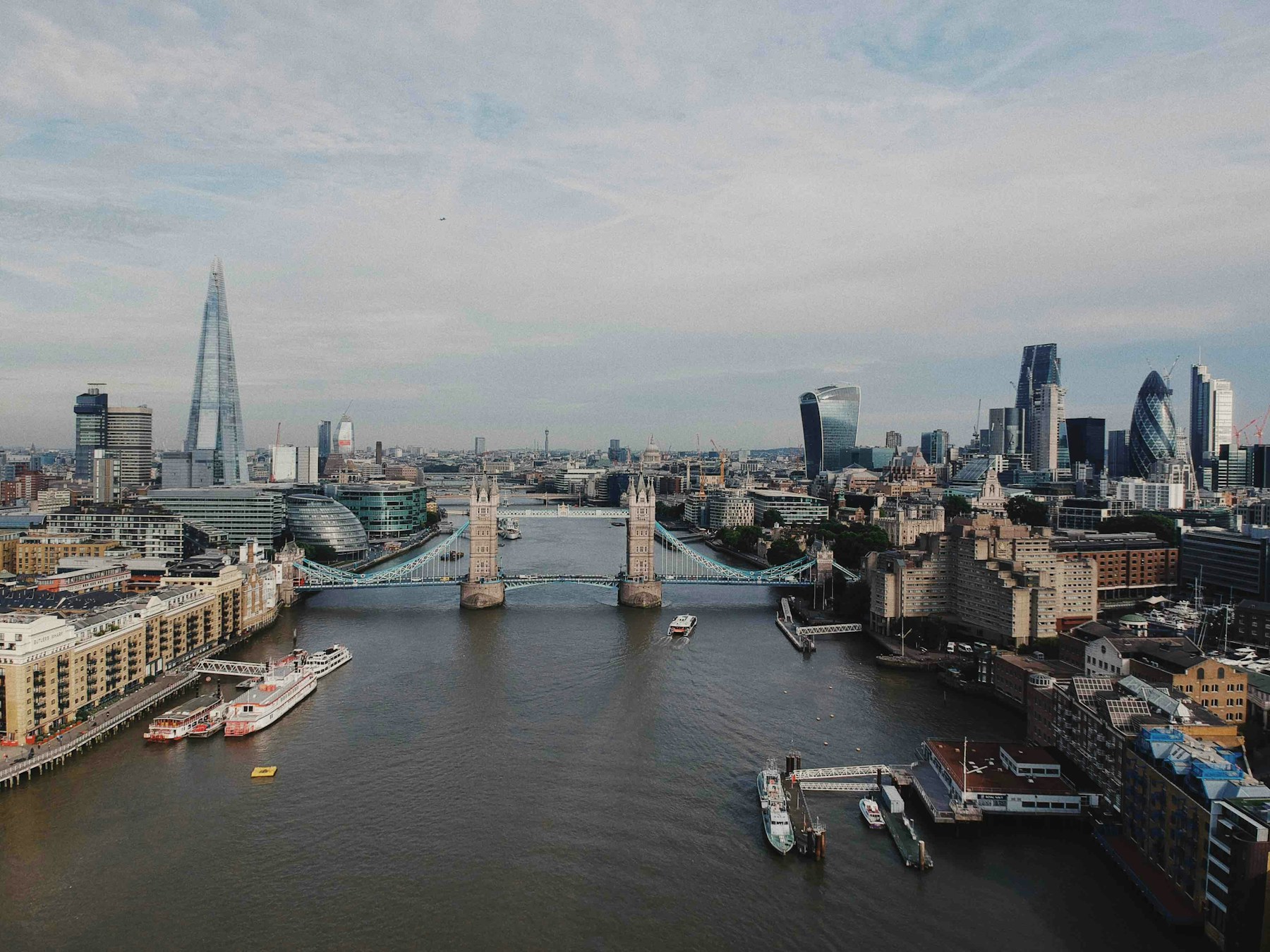
Tower Bridge changes when read from the Thames. From the embankment or from the water, the towers, bascules, piers, and skyline align with river movement. Boats pass under the fixed and moving parts, while the bridge sits between older London references and newer commercial towers. The river is therefore not background. It is the foreground that makes the design's engineering purpose visible.
Design comparison
Compare Tower Bridge with the Eiffel Tower and the Palace of Westminster. The Eiffel Tower makes exposed engineering into the whole image. Westminster wraps parliamentary identity in Gothic Revival language. Tower Bridge sits between those positions. It is a visible machine, but it uses historicist form to become civic architecture. That middle position is what makes the bridge such a useful design case.