guide
Tokyo International Forum Glass Hall Visit Notes
Begin inside the Glass Hall
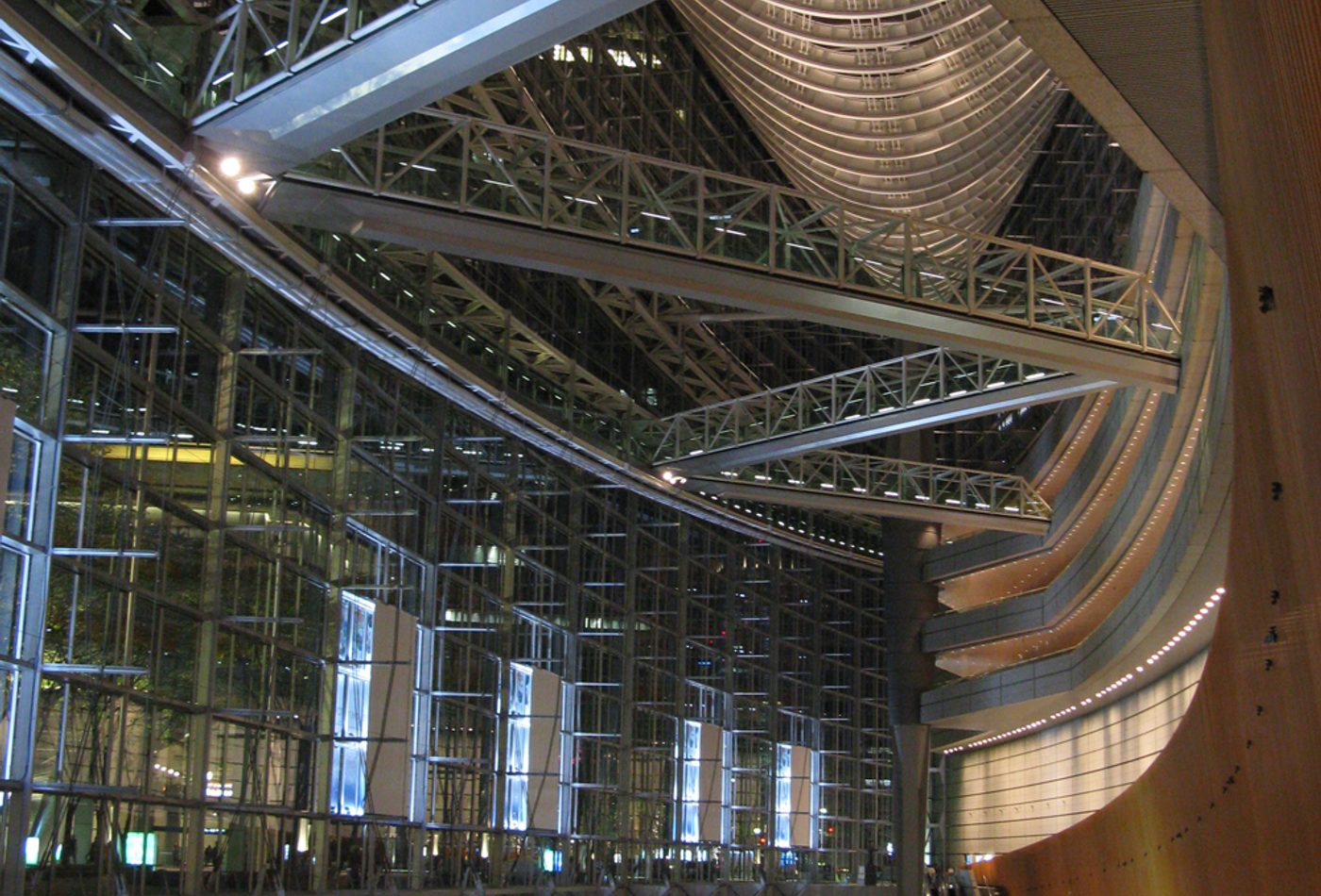
The best first read of Tokyo International Forum is from inside the Glass Hall. Stand low enough to see the full height, ribs, bridges, glass skin, and people moving through the space. The building is not best understood from a single exterior view. Its architecture is the interior experience of structure, light, circulation, and public scale. Start there before trying to photograph the building as an object.
Look upward, then across
The atrium rewards a simple sequence: look up at the steel ribs and glass roofline, then look across at the bridges and circulation routes. This makes the building's section readable. The eye should move from structural span to human movement. That shift is the design lesson. The building is large, but it remains understandable because the structure and paths keep explaining where you are.
Use the bridges as observation points
If you can move to upper levels or bridge routes, use them as observation decks for the interior rather than only as shortcuts. From above, the Glass Hall becomes a layered civic room with people, events, entrances, escalators, city edges, and structure visible at once. These elevated views help clarify why the building is about circulation. They also reveal how a huge atrium can stay connected to human scale.
Study the city edges
After reading the interior, move toward the transparent edges and look back to the surrounding district. Tokyo International Forum sits near Yurakucho, Tokyo Station, rail lines, and office movement, so its edges are important. Watch how people enter, pass through, meet, and leave. The building's public value depends on these thresholds. It is not only a beautiful hall; it is a filter between event programs and everyday Tokyo movement.
Photograph structure and movement together
A useful photograph should include both structure and movement. Avoid making only an empty glass-and-steel image. Include a bridge, stair, route, or human-scale element so the atrium reads as a working civic interior. The best views often pair the long ribs with people crossing below or above. That combination shows why the building is more than a technical display.
Compare light at different times
The Glass Hall changes with daylight, reflections, evening light, and interior illumination. If you see it at more than one time, compare how the steel and glass shift from transparent civic room to glowing interior vessel. This change matters because the building's material identity is not fixed. It depends on light, reflection, and use. The atmosphere is part of the architecture, not a background effect.
Compare after the visit
After studying Tokyo International Forum, compare it with Centre Pompidou, Eiffel Tower, and Louvre Pyramid. Centre Pompidou helps explain exposed public movement; the Eiffel Tower helps explain structure as civic image; the Louvre Pyramid helps explain glass as an organizing device. Tokyo International Forum differs because it turns all of those questions inward, making a public interior that is structural, transparent, and useful at city scale. If you only have a short visit, make one final slow pass from an entrance edge toward the center of the Glass Hall and back out again. That small route shows whether the building succeeds as more than a dramatic atrium: it tests arrival, orientation, structure, threshold, and return to the city in one sequence.