why it matters
Why this building matters
It turns circulation, structure, and transparency into the main public experience.
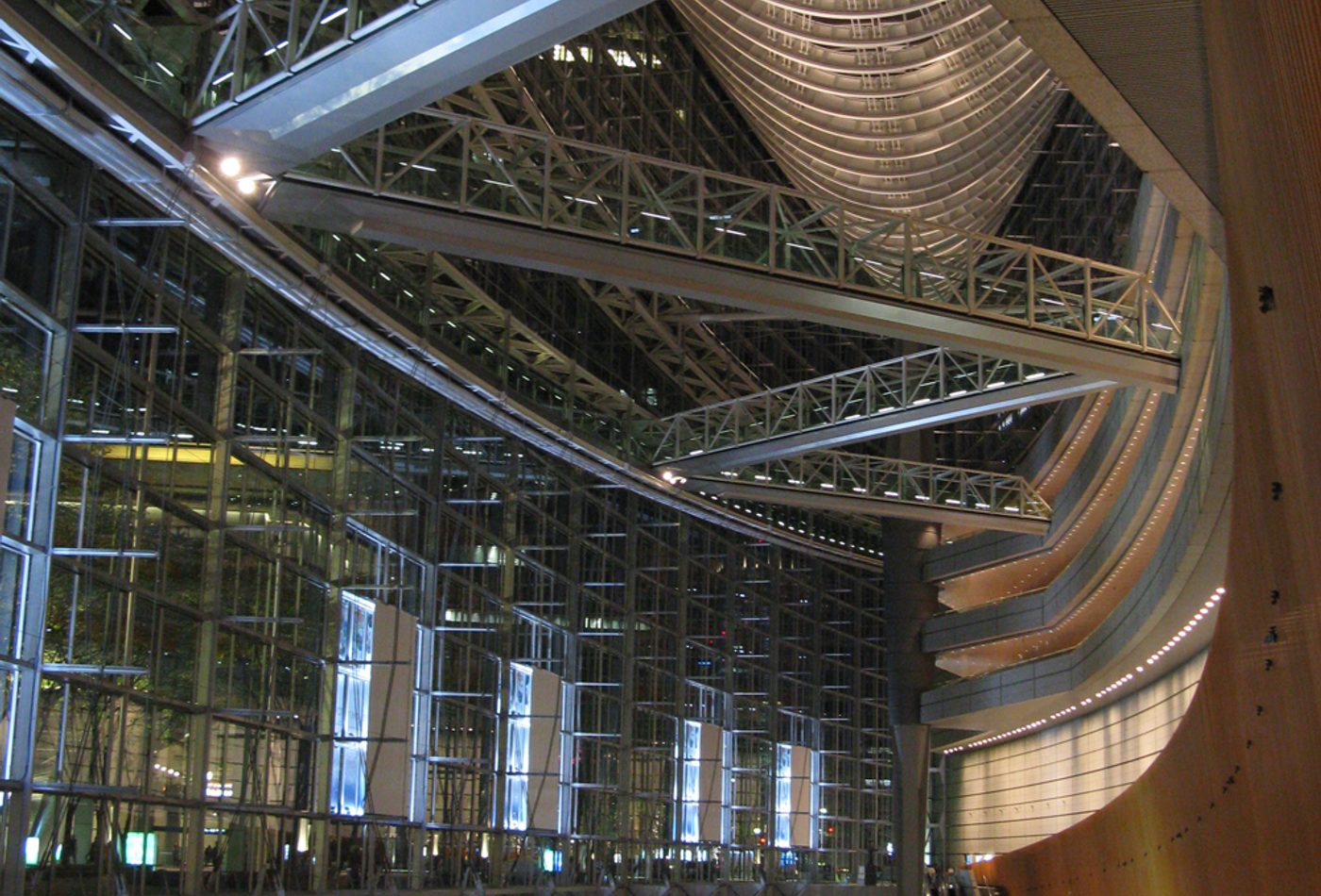
building detail
A civic complex known for a vast glass atrium often compared to a ship.
Photo credit: Wikimedia Commons contributor / CC BY-SA 3.0.
why it matters
It turns circulation, structure, and transparency into the main public experience.
what to notice
explore by place and style
map notes
Use the coordinates as anchors for reading the buildings in relation to streets, water, skyline, and nearby landmarks.
35.6764, 139.764548.8584, 2.294548.8606, 2.3522Map coordinates are listed with provider attribution handled through the source records.
architecture guide
A fuller reading of the building's history, setting, form, materials, and public role.
Tokyo International Forum is a civic and cultural complex in Tokyo designed by Rafael Vinoly and opened in 1996. The first useful fact is that its most memorable architecture is inside, not only on the street. The Glass Hall creates a vast public interior between conference halls, performance spaces, rail lines, offices, shopping streets, and the dense movement of central Tokyo. It works as a civic room inserted into a city where open interior public space is especially valuable.
The building is often remembered for the boat-like Glass Hall. That comparison is useful if it points to structure and volume rather than decoration. The long atrium uses steel ribs, bridges, glass skin, and suspended circulation to make the interior feel like an engineered vessel. The form is not only a shape to recognize. It is a way to make movement, light, and structural rhythm visible to people walking through the complex.
The project stands near Yurakucho and Tokyo Station, in a district where rail, offices, shopping, events, and everyday pedestrian movement overlap. That context matters because the building is not a remote conference center. It is embedded in one of Tokyo's busiest urban fabrics. The public value of the complex comes from letting visitors pass through, pause, look upward, cross bridges, enter halls, and keep moving through the city without the building feeling closed off.
The visible steel structure is a main reading tool. Trusses, ribs, bridges, and glass surfaces organize the enormous atrium and keep visitors oriented. Instead of hiding the building's technical system, the design makes it part of the public experience. This is why Tokyo International Forum belongs near high-tech and structural-expression architecture, even though it is calmer than Centre Pompidou. The structure is theatrical but also legible and useful.
The Glass Hall is the famous part, but the project also includes multiple halls, meeting rooms, exhibition spaces, shops, circulation routes, plazas, and service systems. The architectural fact is how those pieces are coordinated around a large transparent interior. The building has to handle scheduled events and informal public movement at the same time. That dual role makes it different from a single-purpose auditorium or a purely commercial passage.
Glass is not only an envelope material here. It changes how public the building feels. The atrium lets daylight, city views, interior bridges, and structural depth remain visible at once. That transparency does not make the building simple; it makes its complexity readable. A visitor can understand that many routes and programs overlap because the building shows them rather than burying them behind opaque walls.
Start with the Glass Hall ribs, the suspended bridges, and the relationship to the surrounding rail-and-office district. Those details explain the building better than a generic cultural-center label. The ribs reveal structure; the bridges reveal movement; and the site reveals why a large public interior matters in Tokyo. Tokyo International Forum belongs in the core atlas because it teaches how structure, circulation, transparency, and urban density can become one civic experience.
Tokyo International Forum is strongest when read as moving architecture. The Glass Hall does not simply contain a lobby; it turns circulation into the main public event. Bridges, stairs, elevators, trusses, glass walls, and long views make the act of moving through the building visible. This is why the complex feels more civic than a sealed convention center. It lets visitors see one another, the structure, and the city at the same time.
The building's most important design drawing is not a flat facade but a section through the atrium. Height, ribs, bridges, floors, entries, and light all stack together. That sectional clarity lets a very large interior feel understandable. The hall can be read from below, from a bridge, from an upper level, or from the side, and each view explains another part of the spatial system. The design rewards vertical looking as much as forward walking.
Many people compare the Glass Hall to a ship. The comparison is helpful because the ribs and long hull-like volume make the interior feel engineered and directional. It becomes weak if it turns the building into a novelty image. The better design reading asks how the ribbed form organizes light, span, acoustic scale, route choice, and public orientation. The point is not that the building looks like a ship; it is that structure gives the interior a memorable public body.
The glass envelope creates openness, but the design is not minimal. It is full of layers: structural members, bridges, stairs, city views, event flows, signage, reflections, and people. The value of the design is that these layers remain readable. A less disciplined building could become visual clutter. Tokyo International Forum turns the complexity of a big public program into an ordered interior landscape, using transparency as a wayfinding tool.
The building belongs near high-tech architecture, but it does not expose pipes and services as loudly as Centre Pompidou or Lloyd's Building. Its technical expression is quieter: steel ribs, glass hall, bridge routes, and carefully framed movement. That restraint matters. It lets the structure be dramatic while still serving civic clarity. The building feels engineered, but it also feels accessible, which is why it has aged as a public interior rather than only as a 1990s design statement.
Tokyo International Forum uses its site by allowing the city to press against the building's transparent edges. People approach from rail, office streets, shopping routes, and event entrances. The design has to absorb that pressure while maintaining the calm of the central hall. This is a difficult balance. The building is not an isolated object in a plaza; it is a filter between dense urban movement and scheduled cultural programs.
Compare Tokyo International Forum with Centre Pompidou, Eiffel Tower, and Louvre Pyramid. Centre Pompidou externalizes systems and movement onto the facade; the Eiffel Tower makes pure structure public; the Louvre Pyramid uses glass geometry to organize entry; Tokyo International Forum makes a transparent structural interior into the main civic experience. The comparison shows why this building should be read through circulation and section, not only through its glass skin.
Tokyo International Forum is historically important because it made a large civic interior feel public, useful, and technically expressive in one of the world's densest cities. Opened in 1996, it belongs to a period when global cities were experimenting with cultural and convention complexes as urban infrastructure. The building's long-term value is not only its image. It has continued to work as a place where events, passage, gathering, and architectural looking overlap.
Rafael Vinoly's authorship matters because the project is a clear architectural proposition, not just a program container. The design turns the Glass Hall into the public heart of the complex and uses structure to make a huge interior understandable. That decision gave the building a durable identity. Many event complexes disappear into anonymous halls and back-of-house systems; Tokyo International Forum is remembered because its circulation and structure are the civic face.
The site near Yurakucho and Tokyo Station gives the building its historical force. It stands where rail movement, office districts, shopping streets, and cultural events meet. That location means the complex has always had to operate as part of the city, not only as a destination. Its history is therefore tied to Tokyo's ability to fold large public programs into tight, transit-rich districts without making them feel sealed off.
The building also belongs to the history of high-tech and structural expression after the louder experimental phase of the 1970s and 1980s. Tokyo International Forum does not rely on bright service pipes or industrial provocation. It absorbs technical expression into an elegant civic interior. That makes it historically useful: it shows how exposed structure and transparency could become less rebellious and more institutional by the 1990s.
The project has received long-term recognition because it remained useful and memorable beyond its opening moment. Its Glass Hall is not just a dramatic photograph; it is a working circulation space that people can repeatedly experience. That distinction matters in architectural history. Some icons fade when their novelty wears off, but buildings that organize public life well can gain authority over time. Tokyo International Forum belongs in that second category.
The main historical debate is what kind of publicness a large cultural and convention complex can offer. Tokyo International Forum is not a park or a street, but its transparent hall, routes, and event edges create a form of interior public life. The building invites questions about access, programming, security, and civic use. Its importance lies partly in making those questions visible through architecture rather than hiding them behind blank event-center walls.
A useful history page should leave Tokyo International Forum looking less like a glass spectacle and more like a civic machine. It should be read as a 1990s cultural complex, a transit-adjacent public interior, a structural expression landmark, and a durable piece of Tokyo urban infrastructure. If those layers remain visible, the building becomes a richer case study than a simple atrium photo.
The best first read of Tokyo International Forum is from inside the Glass Hall. Stand low enough to see the full height, ribs, bridges, glass skin, and people moving through the space. The building is not best understood from a single exterior view. Its architecture is the interior experience of structure, light, circulation, and public scale. Start there before trying to photograph the building as an object.
The atrium rewards a simple sequence: look up at the steel ribs and glass roofline, then look across at the bridges and circulation routes. This makes the building's section readable. The eye should move from structural span to human movement. That shift is the design lesson. The building is large, but it remains understandable because the structure and paths keep explaining where you are.
If you can move to upper levels or bridge routes, use them as observation decks for the interior rather than only as shortcuts. From above, the Glass Hall becomes a layered civic room with people, events, entrances, escalators, city edges, and structure visible at once. These elevated views help clarify why the building is about circulation. They also reveal how a huge atrium can stay connected to human scale.
After reading the interior, move toward the transparent edges and look back to the surrounding district. Tokyo International Forum sits near Yurakucho, Tokyo Station, rail lines, and office movement, so its edges are important. Watch how people enter, pass through, meet, and leave. The building's public value depends on these thresholds. It is not only a beautiful hall; it is a filter between event programs and everyday Tokyo movement.
A useful photograph should include both structure and movement. Avoid making only an empty glass-and-steel image. Include a bridge, stair, route, or human-scale element so the atrium reads as a working civic interior. The best views often pair the long ribs with people crossing below or above. That combination shows why the building is more than a technical display.
The Glass Hall changes with daylight, reflections, evening light, and interior illumination. If you see it at more than one time, compare how the steel and glass shift from transparent civic room to glowing interior vessel. This change matters because the building's material identity is not fixed. It depends on light, reflection, and use. The atmosphere is part of the architecture, not a background effect.
After studying Tokyo International Forum, compare it with Centre Pompidou, Eiffel Tower, and Louvre Pyramid. Centre Pompidou helps explain exposed public movement; the Eiffel Tower helps explain structure as civic image; the Louvre Pyramid helps explain glass as an organizing device. Tokyo International Forum differs because it turns all of those questions inward, making a public interior that is structural, transparent, and useful at city scale. If you only have a short visit, make one final slow pass from an entrance edge toward the center of the Glass Hall and back out again. That small route shows whether the building succeeds as more than a dramatic atrium: it tests arrival, orientation, structure, threshold, and return to the city in one sequence.
continue reading
related buildings
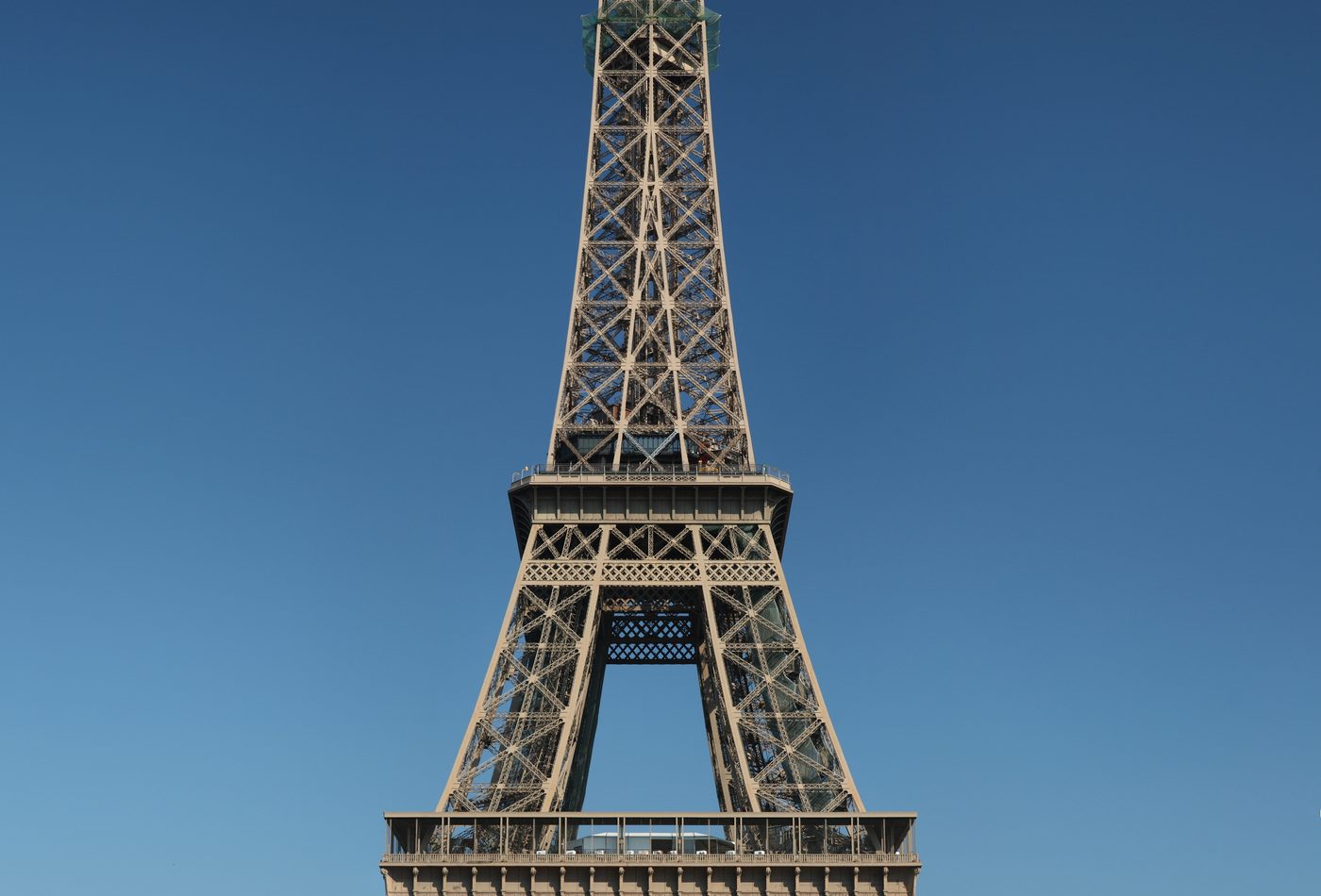
An iron lattice tower built for the 1889 Exposition Universelle.
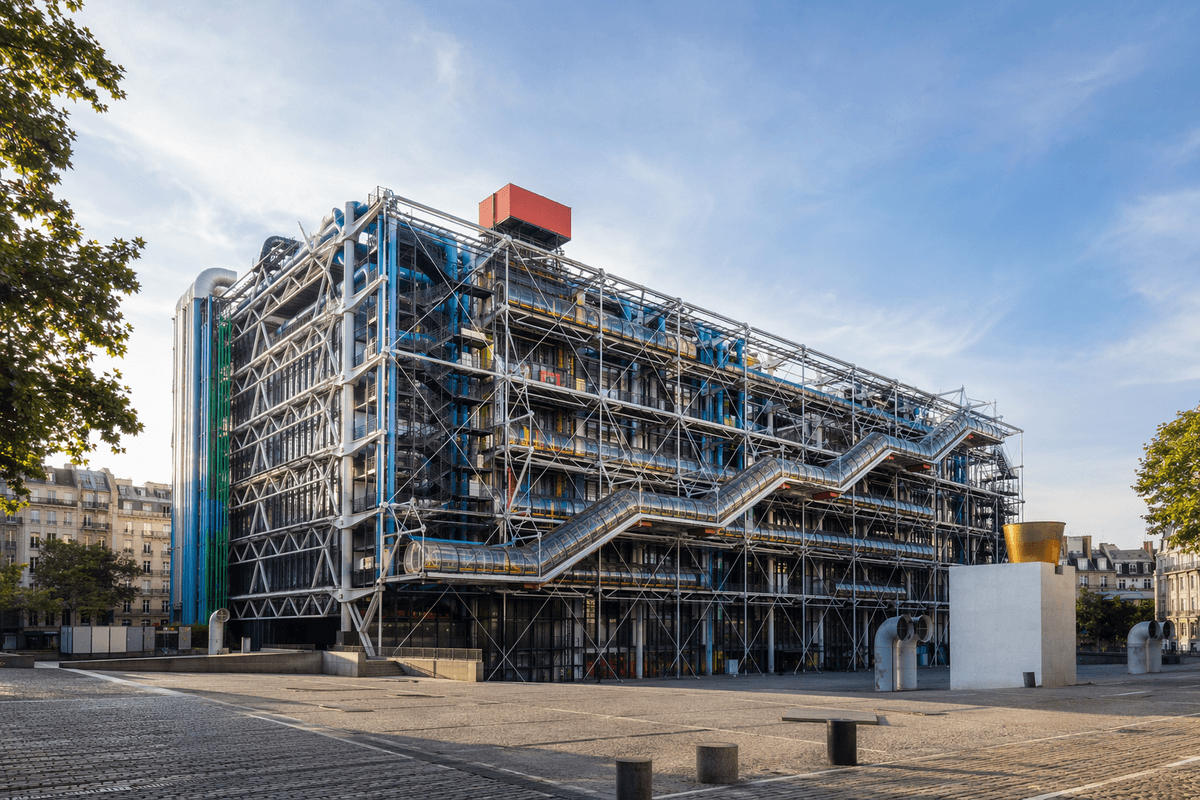
A cultural center famous for putting structure, escalators, and services on the outside.
References used for facts, location data, image credits, and architectural context on this page.