guide
Taj Mahal Facts: Marble Tomb, Garden, and River Axis
The first fact is an axis
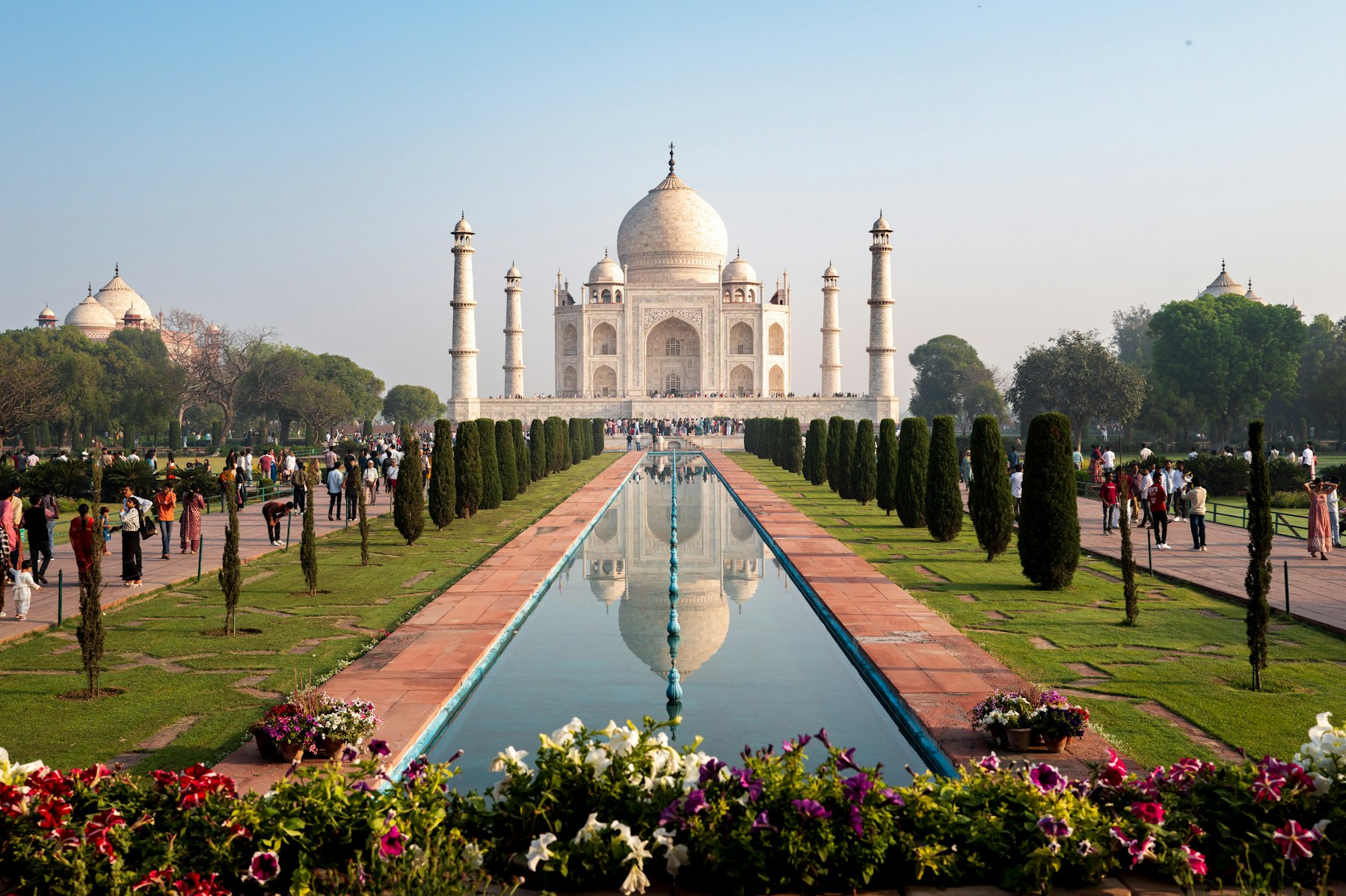
The Taj Mahal is usually introduced as a white marble mausoleum in Agra, completed in the seventeenth century, but the architectural fact to start with is the long garden axis. The tomb is not simply placed in a park. It is staged through a charbagh garden, a reflecting pool, paths, gates, trees, and controlled distance. That approach makes the building appear slowly, so symmetry becomes an experience before it becomes a diagram.
A mausoleum, not a palace
The building is often described in tourist language as a palace, but its program is a tomb complex built for Mumtaz Mahal under the patronage of Shah Jahan. That matters because the architecture is organized around memory, ritual, imperial power, and carefully framed approach rather than daily royal residence. The central marble tomb, the red sandstone support buildings, the river edge, and the garden all work together to make commemoration visible.
White marble changes the reading
The marble surface is not a neutral white wrapper. It receives morning haze, strong sun, shadow, reflected water, and evening color differently, which is why the building can seem severe from one view and almost weightless from another. The material also holds carved detail and stone inlay. A facts page should therefore connect material to perception: marble gives the Taj Mahal its luminous image and its close-range craft evidence.
Four minarets make the tomb legible
The four minarets at the corners of the marble platform do more than decorate the composition. They mark the tomb precinct, stabilize the silhouette, and help the central dome read as the focus. Their slight separation from the main mass keeps the mausoleum from becoming a single block. From the garden axis, the minarets frame the central volume so the dome, pishtaq arch, and platform become readable as one ordered composition.
The red sandstone buildings are not background
The mosque and the jawab, the balancing building on the opposite side, are essential to the facts of the complex. Their red sandstone surfaces sharpen the contrast with the white marble tomb and prevent the composition from becoming only a single isolated object. They also show how Mughal architecture uses pairing, contrast, and axial control. The side buildings are part of the argument, not scenery around the famous postcard view.
UNESCO status confirms a larger system
UNESCO recognition is useful here because it points beyond the familiar image. The Taj Mahal is not valuable only as a dome or as a romantic symbol. Its importance comes from architecture, garden planning, craft, setting, and the way the entire ensemble expresses Mughal ideas of order and paradise garden imagery. That wider reading is what keeps the page from becoming a caption under a pretty photograph.
What the basic facts should help you see
A reader should leave the facts page with a viewing sequence: enter through the gate, read the garden axis, compare marble and red sandstone, locate the four minarets, then move from the distant image toward inlay and carved detail. Those facts make the Taj Mahal less generic. They turn fame into evidence: material, geometry, landscape, memory, and imperial ceremony are all visible in the same composition.