why it matters
Why this building matters
It turned an engineering challenge into one of the most recognizable public buildings in the world.
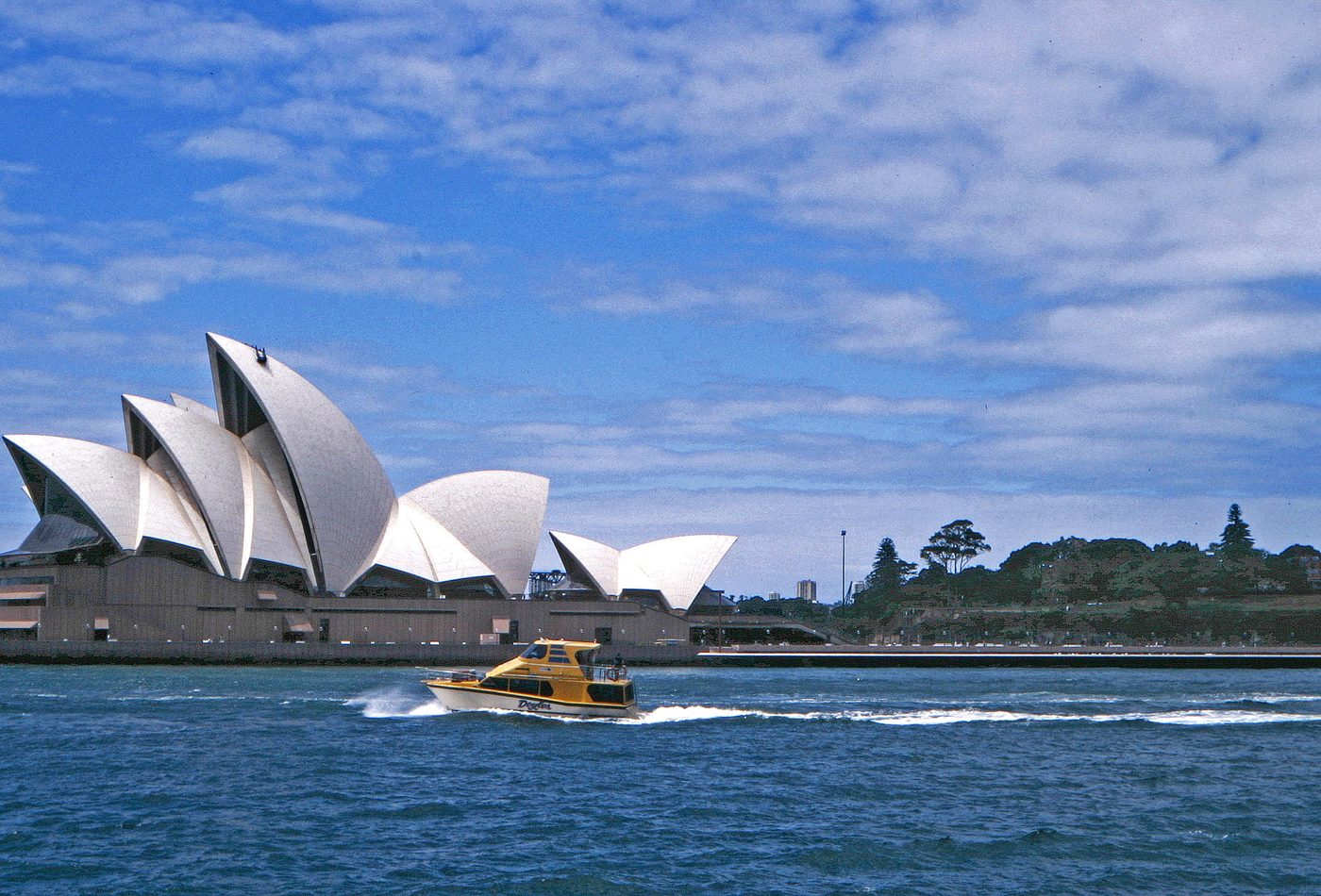
building detail
A waterfront performing arts complex known for its shell-like roof forms.
Photo credit: Wikimedia Commons contributor / CC BY-SA 4.0.
why it matters
It turned an engineering challenge into one of the most recognizable public buildings in the world.
what to notice
explore by place and style
map notes
Use the coordinates as anchors for reading the buildings in relation to streets, water, skyline, and nearby landmarks.
-33.8568, 151.21531.2834, 103.860743.2686, -2.9340Map coordinates are listed with provider attribution handled through the source records.
architecture guide
A fuller reading of the building's history, setting, form, materials, and public role.
The Sydney Opera House is inseparable from Bennelong Point. The building sits between city, harbor, ferry routes, and open water, so its first architectural fact is not only the completion year of 1973. It is the way the site turns a performing arts center into a public marker that can be read from a boat, a bridge, a quay, or the steps at close range. That setting explains why the building works even before a visitor understands its plan.
The familiar white roof is a family of repeated shell-like forms, not a single sculptural gesture. Jorn Utzon's competition idea became buildable through a disciplined geometry that allowed the shells to be related to one another. That matters because the building can look free and almost wind-shaped from the harbor while still belonging to a strict construction logic. The tension between apparent freedom and repeated order is the core fact to remember.
The main materials are concrete, ceramic tile, and glass, but they do different jobs. The concrete podium makes the complex feel civic and heavy, almost like a constructed headland. The pale ceramic tiles catch changing light and keep the roof from reading as flat white plastic. Glass opens foyers toward the water and city. Together, those materials create the contrast between a grounded public platform and a roofscape that seems to lift away from it.
The building's fame is tied to its construction story as much as to its silhouette. It grew from an international design competition, became a major engineering and political challenge, and opened after years of cost, authorship, and delivery disputes. Those conflicts are not side notes. They show why ambitious public architecture needs more than a strong image: it needs engineering translation, institutional patience, and a way to survive changing political expectations.
Use the facts as viewing tools. The date places the project in late modern public architecture; the site explains its global recognizability; the materials explain its changing surface; and the performing arts program explains why the complex is organized as several volumes rather than one hall. A good first reading starts with the shells, then moves down to the podium, then outward to the harbor edges that make the composition feel larger than the building footprint.
The Sydney Opera House belongs in the public core of this atlas because it teaches a portable lesson: a landmark is not only an unusual form. It is a relationship between image, structure, city setting, public program, and memory. Compare it with Marina Bay Sands for waterfront silhouette, Guggenheim Bilbao for cultural-icon effect, and the Eiffel Tower for the way a once-contested project can become a civic symbol.
A reader should leave this page able to answer three plain questions without relying on generic praise: where the building gets its power, which parts make that power visible, and why the difficult delivery history still matters to the finished architecture.
Sydney Opera House is memorable because its main oppositions stay visible. The roof appears light, pale, and almost floating, while the podium is dark, stepped, and heavy. The building reads as both object and landscape: a cluster of shells from the water, then a sequence of stairs, platforms, foyers, and terraces from the ground. That pairing keeps the project from becoming a simple sculptural icon.
A normal civic building often has one main facade, but this complex avoids that hierarchy. The shells make several strong profiles, each changing as the viewer moves around Bennelong Point. That means the design is cinematic. It is understood through approach, angle, distance, and reflection rather than from a single official elevation. The harbor makes this especially powerful because the building is constantly seen in motion.
The famous roof was not just a visual idea waiting to be built. Its design depended on finding a geometric system that could turn ambitious competition drawings into repeatable components. The result is architecture where engineering translation becomes part of the story. The shells look expressive, but their credibility comes from the discipline behind their repetition, ribs, edges, and tiling.
The podium is easy to overlook because the roof gets most of the attention, yet it is essential to the design. It gathers entrances, stairs, terraces, service areas, and public movement into a constructed base. Without that base, the shells would risk becoming isolated objects. With it, the building has civic weight and a clear relationship to the ground, the harbor walk, and the ceremonial act of arrival.
The design succeeds at long distance, but the close reading matters just as much. The ceramic-tile surface breaks the roof into a fine scale that catches light differently through the day. The glass walls let public foyers face outward. The concrete structure and stone-like platform make the visitor aware of mass and labor. These details stop the building from collapsing into a logo.
Compare Sydney Opera House with Guggenheim Bilbao and Marina Bay Sands, but do not compare only their silhouettes. Ask how each building turns a cultural or leisure program into a city image. Sydney's answer is more civic and sectional: it separates rooms under shells and grounds them on a public platform. That is different from Bilbao's metallic continuity or Singapore's skyline deck.
The common mistake is to describe the building only as a set of white sails. That image is useful, but it hides the architecture. The more precise reading asks how separate performance volumes, roof geometry, foyer glazing, ceremonial stairs, service needs, and harbor views are made to appear like one effortless public composition. That is also why the building still rewards sectional drawings, close photographs, and slow walking.
Sydney Opera House is not famous only because it is photogenic. It is famous because the risk of the project remains legible in the finished building. A young architect's competition idea, an exposed harbor site, unresolved engineering, political conflict, and a demanding cultural program all met in one public commission. The finished landmark still carries that sense of difficulty, which is why its history matters to the architectural reading.
The commission gave Australia a cultural building meant to face the world, while the selected designer, Jorn Utzon, brought an outsider's proposal that did not simply imitate local civic architecture. That tension helped make the project powerful and controversial. The building became a way to debate what kind of modern public image Sydney wanted and how far a public client should go to realize an unfamiliar architectural idea.
The disputes over budget, control, construction method, and authorship are often treated as drama around the building. They are more than that. They changed how the building is understood. The Opera House became evidence that architectural ambition can exceed the systems built to deliver it. Its history is therefore a warning and a defense at the same time: difficult public architecture can be costly, but it can also create lasting civic value.
The building became memorable because its image could carry many meanings at once. It could stand for performance, modern Australia, Sydney Harbor, tourism, engineering ambition, and public gathering. The shells are abstract enough to be reused in drawings and logos, yet specific enough that they cannot be mistaken for another city. That combination is rare, and it explains why the building moved from controversy into broad public affection.
After opening in 1973, the Opera House did not become important simply by aging. Its legacy grew through repeated use: concerts, national ceremonies, tourism, education, night lighting, restoration work, and everyday harbor views. UNESCO recognition later confirmed what public memory had already done. The building had become part of how Sydney explains itself to residents and visitors.
The lesson is not that every city needs a spectacular icon. The better lesson is that a building becomes historically important when form, site, program, politics, and public memory reinforce one another over time. Sydney Opera House shows how architecture can outlive the conflict that produced it, while still making that conflict part of the building's meaning.
A useful history page should change how the building is seen. In this case, the cost and authorship disputes make the shells feel less like a pure image and more like evidence of negotiation among ambition, engineering, government, and cultural identity.
The best first read of Sydney Opera House is from a distance, ideally across the harbor or from the public approaches around Circular Quay. From there the shells can be seen as a group rather than as isolated roofs. Distance also makes the podium legible, which matters because the building is not only a roof sculpture. It is a public platform set into one of the city's most visible edges.
Do not treat the building as having a single correct facade. Walk the edges and watch how the shell profiles change. From some angles they look like sails, from others like tiled vaults or separate performance-room covers. This changing profile is part of the design. A quick photograph from one point will miss the way the building uses movement as an architectural tool.
The stairs, terraces, and heavy base are not just access infrastructure. They explain how the building handles ceremony and crowd movement. Pause on the podium and look back toward the city as well as outward to the harbor. That reversal helps clarify why the Opera House works as both destination and viewing platform. The building frames Sydney as much as Sydney frames the building.
At close range, focus on the roof tiles and shell edges. The surface is not a blank white skin. It has scale, pattern, reflection, and subtle color variation, which helps the shells respond to sun, cloud, and water light. This is the detail that most clearly links the huge harbor image to a human-scale architectural surface.
Make three kinds of image rather than chasing one postcard view. First, take a wide harbor or quay view that shows the shells and podium together. Second, take a close detail of tile, stair, concrete, or glass. Third, include the surrounding water, city skyline, or public approach so the building's urban role is visible. Those three studies create a better architectural record than one frontal shot.
After studying Sydney Opera House, compare it with Marina Bay Sands, Guggenheim Bilbao, and the Eiffel Tower. The point is not to rank icons. It is to ask how different landmarks turn engineering, public visibility, tourism, and city identity into architecture. Sydney's special lesson is the way a cultural building uses a harbor setting to become both a place of performance and a performance in itself.
Give the visit a sequence. Start with the whole silhouette from across the water, then move to the base and stairs, then study one roof edge and one glass foyer view. That route keeps the experience architectural. It prevents the visit from becoming only a quick selfie stop and makes the building's scale, craft, and public role easier to remember. The goal is to connect postcard distance with material evidence underfoot.
continue reading
related buildings
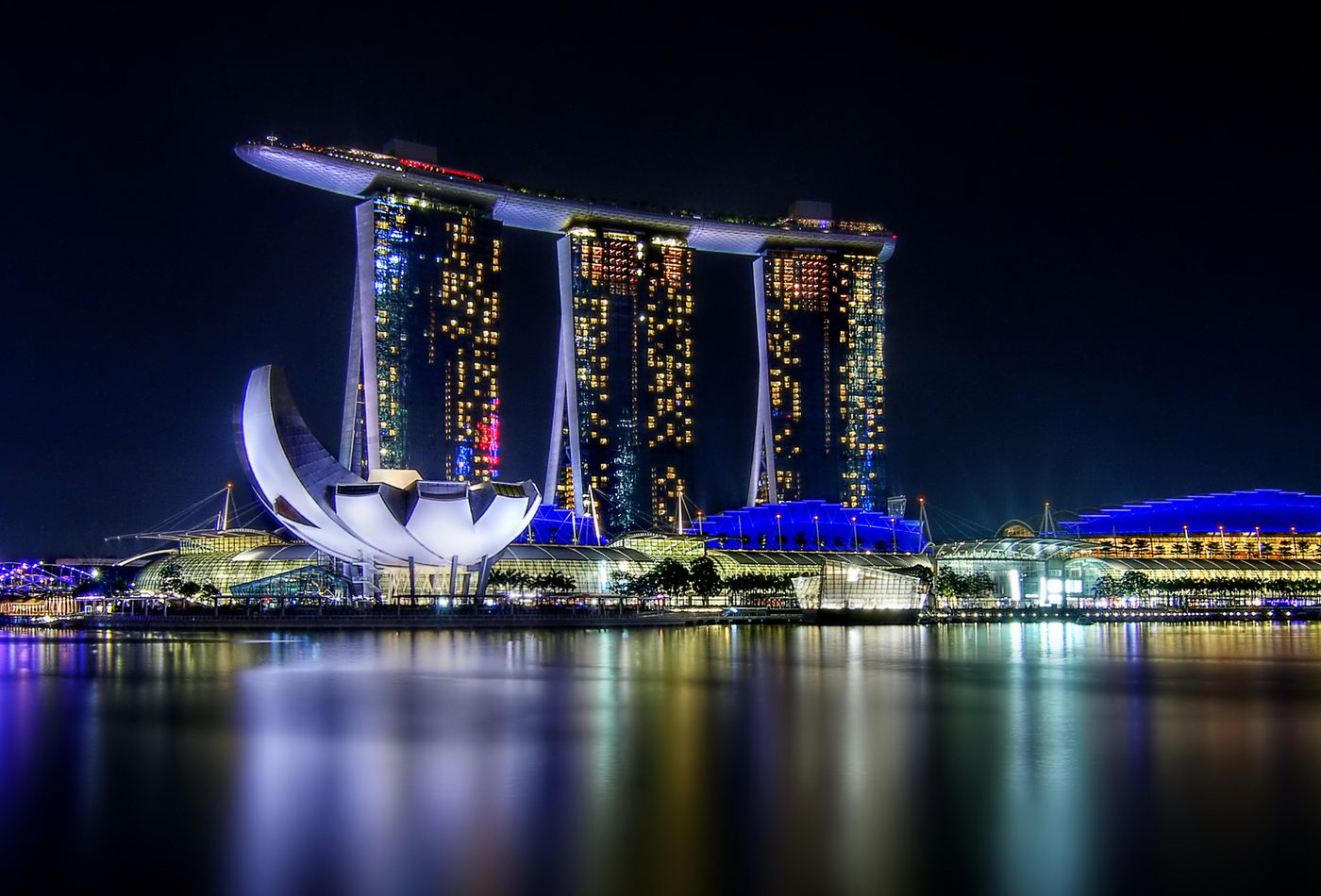
A three-tower integrated resort with a long sky park across the top.
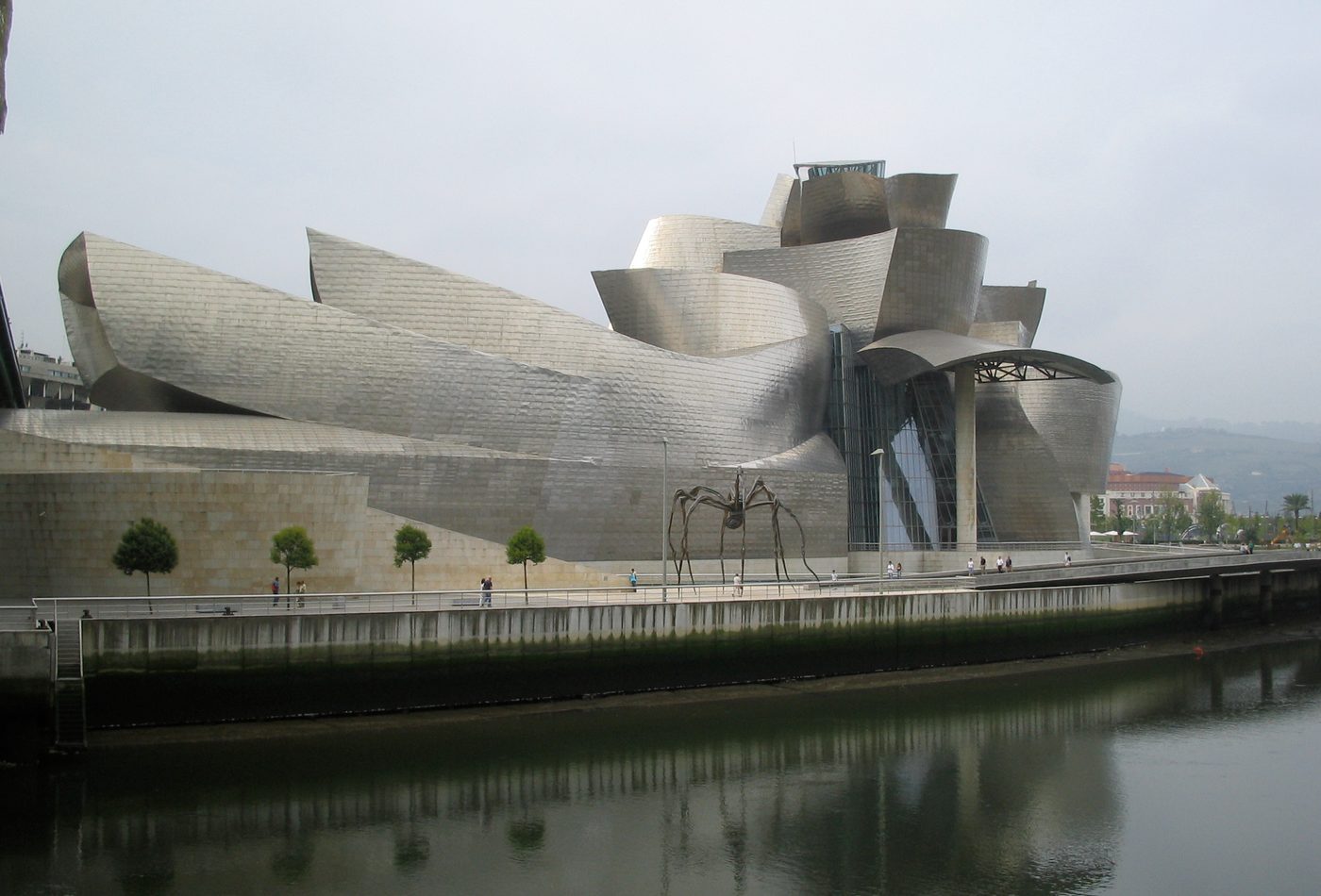
A museum known for titanium curves and the urban renewal story often called the Bilbao effect.
References used for facts, location data, image credits, and architectural context on this page.