guide
Sydney Opera House Facts for Reading the Shells
Bennelong Point comes first
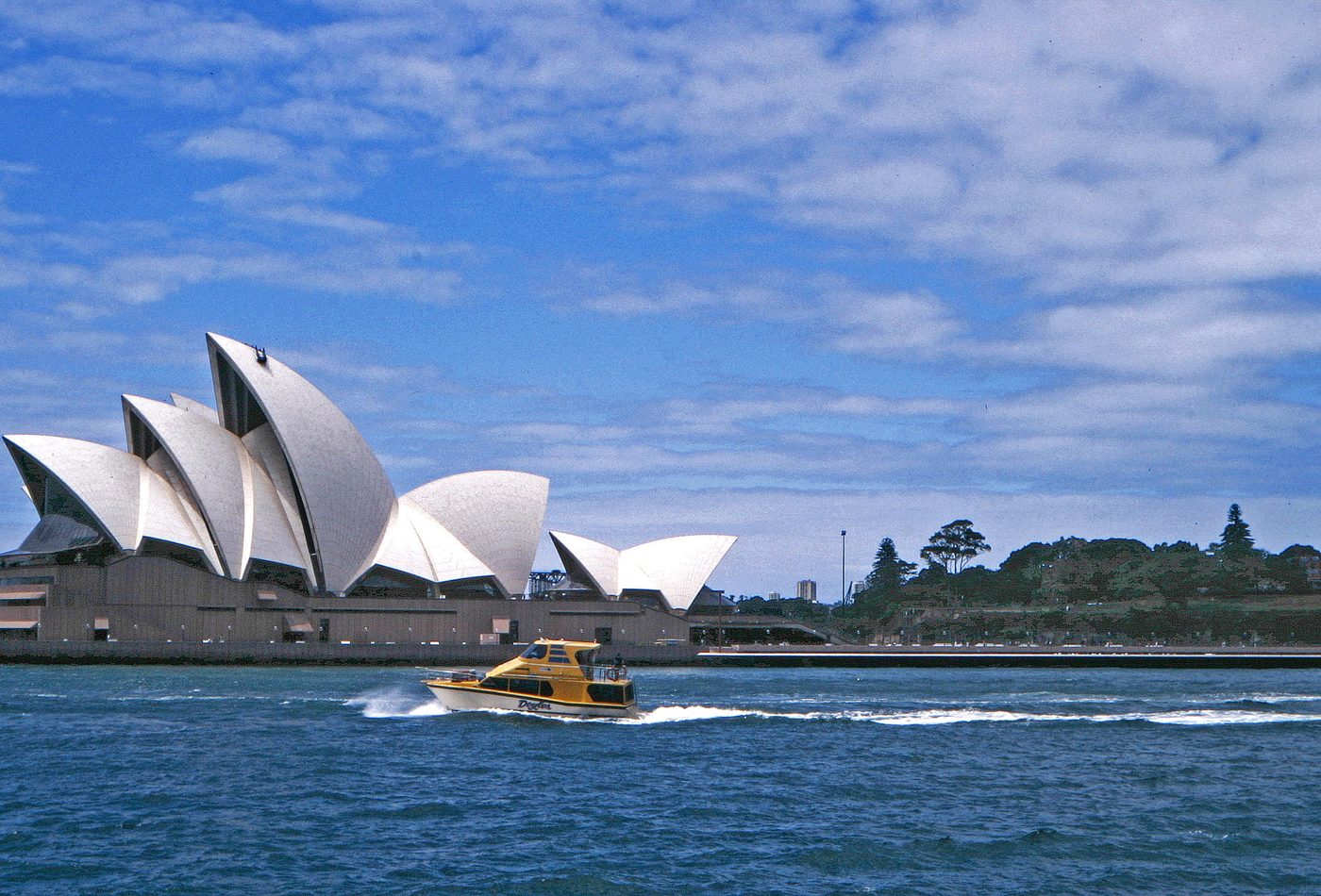
The Sydney Opera House is inseparable from Bennelong Point. The building sits between city, harbor, ferry routes, and open water, so its first architectural fact is not only the completion year of 1973. It is the way the site turns a performing arts center into a public marker that can be read from a boat, a bridge, a quay, or the steps at close range. That setting explains why the building works even before a visitor understands its plan.
The roof is not one shell
The familiar white roof is a family of repeated shell-like forms, not a single sculptural gesture. Jorn Utzon's competition idea became buildable through a disciplined geometry that allowed the shells to be related to one another. That matters because the building can look free and almost wind-shaped from the harbor while still belonging to a strict construction logic. The tension between apparent freedom and repeated order is the core fact to remember.
Podium, tiles, glass, and concrete
The main materials are concrete, ceramic tile, and glass, but they do different jobs. The concrete podium makes the complex feel civic and heavy, almost like a constructed headland. The pale ceramic tiles catch changing light and keep the roof from reading as flat white plastic. Glass opens foyers toward the water and city. Together, those materials create the contrast between a grounded public platform and a roofscape that seems to lift away from it.
A public building with a difficult birth
The building's fame is tied to its construction story as much as to its silhouette. It grew from an international design competition, became a major engineering and political challenge, and opened after years of cost, authorship, and delivery disputes. Those conflicts are not side notes. They show why ambitious public architecture needs more than a strong image: it needs engineering translation, institutional patience, and a way to survive changing political expectations.
What the basic facts should help you see
Use the facts as viewing tools. The date places the project in late modern public architecture; the site explains its global recognizability; the materials explain its changing surface; and the performing arts program explains why the complex is organized as several volumes rather than one hall. A good first reading starts with the shells, then moves down to the podium, then outward to the harbor edges that make the composition feel larger than the building footprint.
Why it belongs in a core architecture atlas
The Sydney Opera House belongs in the public core of this atlas because it teaches a portable lesson: a landmark is not only an unusual form. It is a relationship between image, structure, city setting, public program, and memory. Compare it with Marina Bay Sands for waterfront silhouette, Guggenheim Bilbao for cultural-icon effect, and the Eiffel Tower for the way a once-contested project can become a civic symbol.
Reader check
A reader should leave this page able to answer three plain questions without relying on generic praise: where the building gets its power, which parts make that power visible, and why the difficult delivery history still matters to the finished architecture.