guide
Harbor Approach Notes for Sydney Opera House
Start from the water or the quay
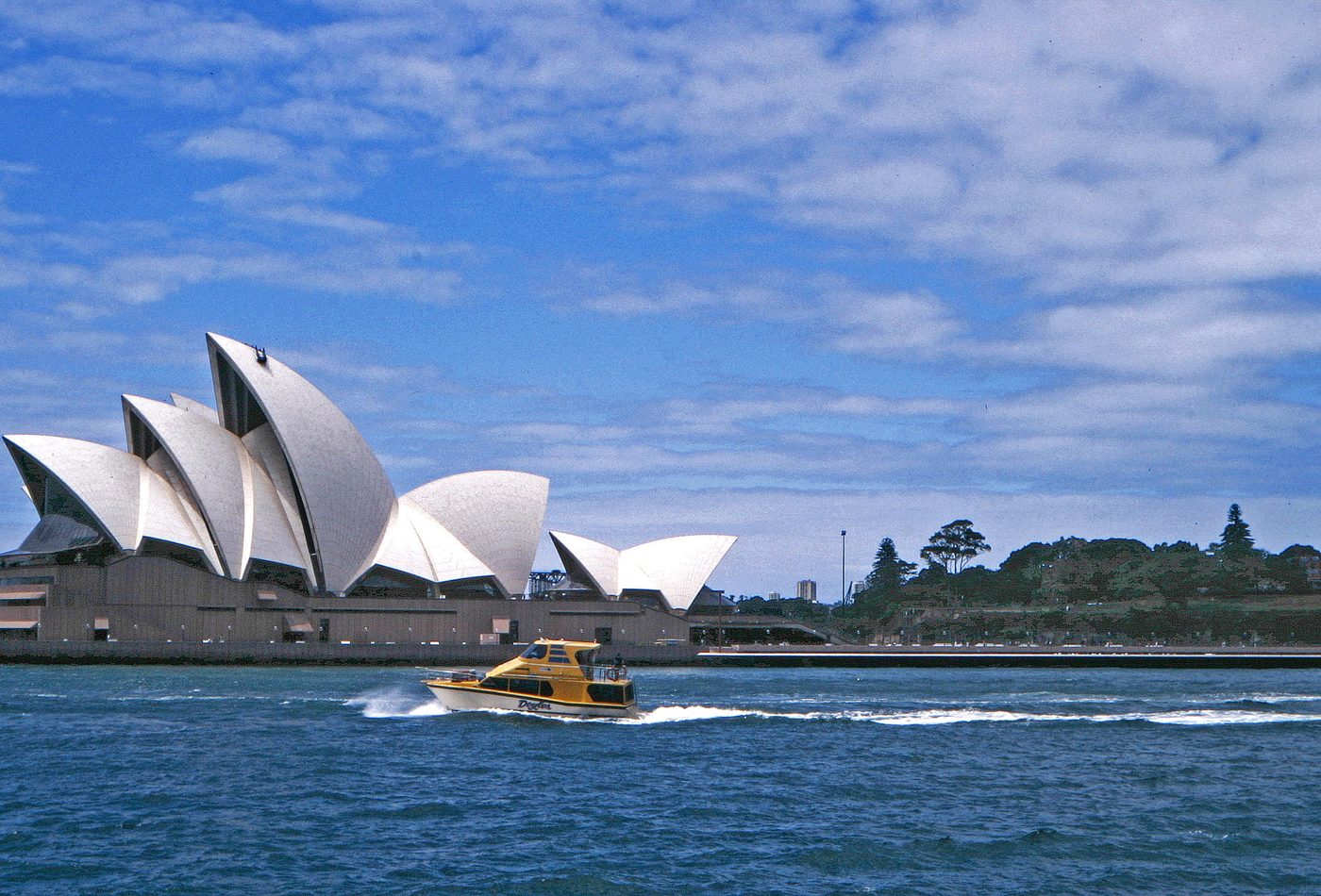
The best first read of Sydney Opera House is from a distance, ideally across the harbor or from the public approaches around Circular Quay. From there the shells can be seen as a group rather than as isolated roofs. Distance also makes the podium legible, which matters because the building is not only a roof sculpture. It is a public platform set into one of the city's most visible edges.
Walk around instead of looking for one front
Do not treat the building as having a single correct facade. Walk the edges and watch how the shell profiles change. From some angles they look like sails, from others like tiled vaults or separate performance-room covers. This changing profile is part of the design. A quick photograph from one point will miss the way the building uses movement as an architectural tool.
Use the stairs and podium as evidence
The stairs, terraces, and heavy base are not just access infrastructure. They explain how the building handles ceremony and crowd movement. Pause on the podium and look back toward the city as well as outward to the harbor. That reversal helps clarify why the Opera House works as both destination and viewing platform. The building frames Sydney as much as Sydney frames the building.
Look closely at the tile surface
At close range, focus on the roof tiles and shell edges. The surface is not a blank white skin. It has scale, pattern, reflection, and subtle color variation, which helps the shells respond to sun, cloud, and water light. This is the detail that most clearly links the huge harbor image to a human-scale architectural surface.
Three useful photo studies
Make three kinds of image rather than chasing one postcard view. First, take a wide harbor or quay view that shows the shells and podium together. Second, take a close detail of tile, stair, concrete, or glass. Third, include the surrounding water, city skyline, or public approach so the building's urban role is visible. Those three studies create a better architectural record than one frontal shot.
What to compare after the visit
After studying Sydney Opera House, compare it with Marina Bay Sands, Guggenheim Bilbao, and the Eiffel Tower. The point is not to rank icons. It is to ask how different landmarks turn engineering, public visibility, tourism, and city identity into architecture. Sydney's special lesson is the way a cultural building uses a harbor setting to become both a place of performance and a performance in itself.
Slow-looking route
Give the visit a sequence. Start with the whole silhouette from across the water, then move to the base and stairs, then study one roof edge and one glass foyer view. That route keeps the experience architectural. It prevents the visit from becoming only a quick selfie stop and makes the building's scale, craft, and public role easier to remember. The goal is to connect postcard distance with material evidence underfoot.