guide
Sydney Opera House History After the Competition
The building is famous because the risk stayed visible
Sydney Opera House is not famous only because it is photogenic. It is famous because the risk of the project remains legible in the finished building. A young architect's competition idea, an exposed harbor site, unresolved engineering, political conflict, and a demanding cultural program all met in one public commission. The finished landmark still carries that sense of difficulty, which is why its history matters to the architectural reading.
A national project with an international author
The commission gave Australia a cultural building meant to face the world, while the selected designer, Jorn Utzon, brought an outsider's proposal that did not simply imitate local civic architecture. That tension helped make the project powerful and controversial. The building became a way to debate what kind of modern public image Sydney wanted and how far a public client should go to realize an unfamiliar architectural idea.
The construction story changed the meaning
The disputes over budget, control, construction method, and authorship are often treated as drama around the building. They are more than that. They changed how the building is understood. The Opera House became evidence that architectural ambition can exceed the systems built to deliver it. Its history is therefore a warning and a defense at the same time: difficult public architecture can be costly, but it can also create lasting civic value.
Why the harbor image became civic memory
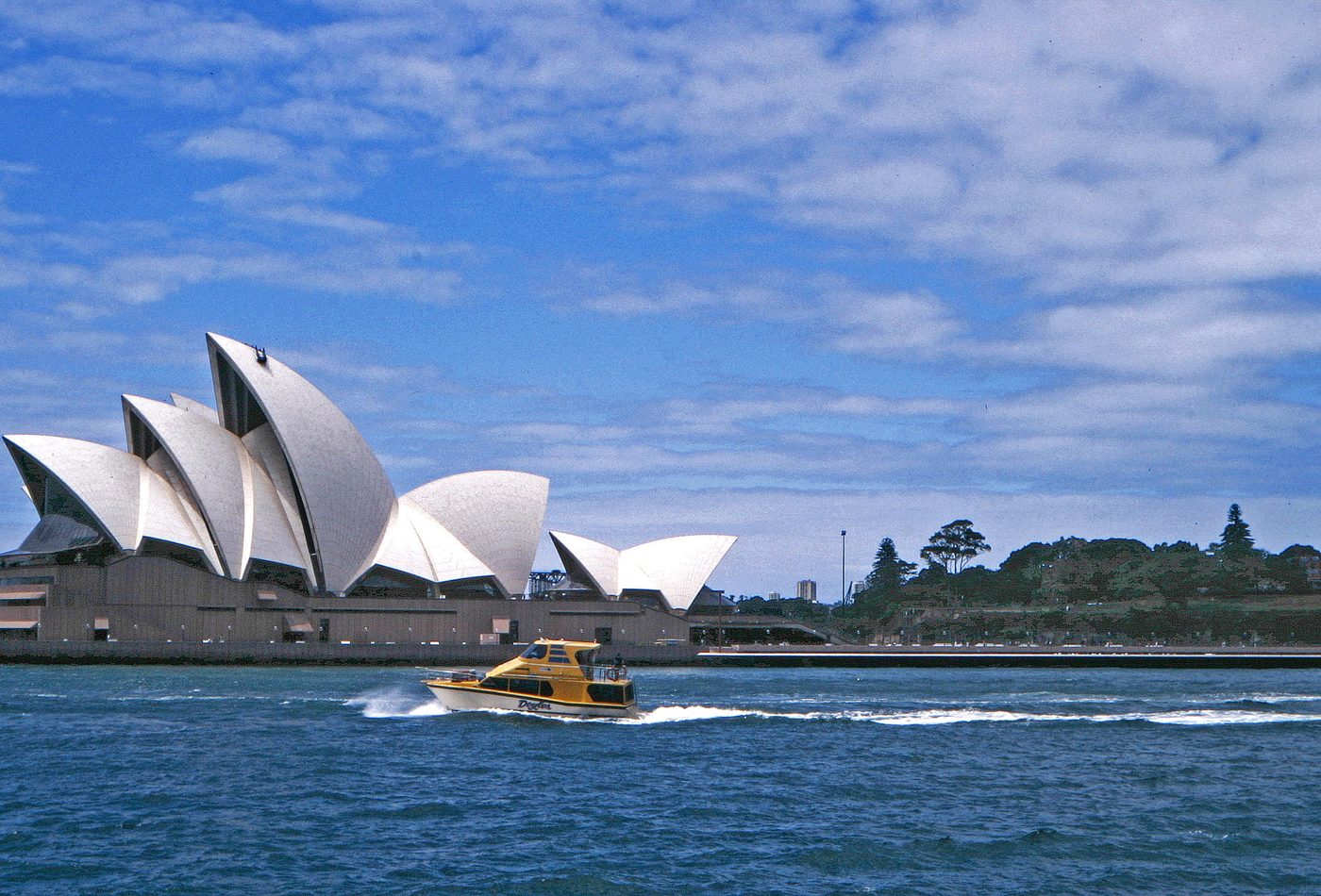
The building became memorable because its image could carry many meanings at once. It could stand for performance, modern Australia, Sydney Harbor, tourism, engineering ambition, and public gathering. The shells are abstract enough to be reused in drawings and logos, yet specific enough that they cannot be mistaken for another city. That combination is rare, and it explains why the building moved from controversy into broad public affection.
Legacy after opening
After opening in 1973, the Opera House did not become important simply by aging. Its legacy grew through repeated use: concerts, national ceremonies, tourism, education, night lighting, restoration work, and everyday harbor views. UNESCO recognition later confirmed what public memory had already done. The building had become part of how Sydney explains itself to residents and visitors.
What the history teaches
The lesson is not that every city needs a spectacular icon. The better lesson is that a building becomes historically important when form, site, program, politics, and public memory reinforce one another over time. Sydney Opera House shows how architecture can outlive the conflict that produced it, while still making that conflict part of the building's meaning.
Historical reading check
A useful history page should change how the building is seen. In this case, the cost and authorship disputes make the shells feel less like a pure image and more like evidence of negotiation among ambition, engineering, government, and cultural identity.