why it matters
Why this building matters
It connected spectacular museum architecture with city identity, tourism, and economic narrative.
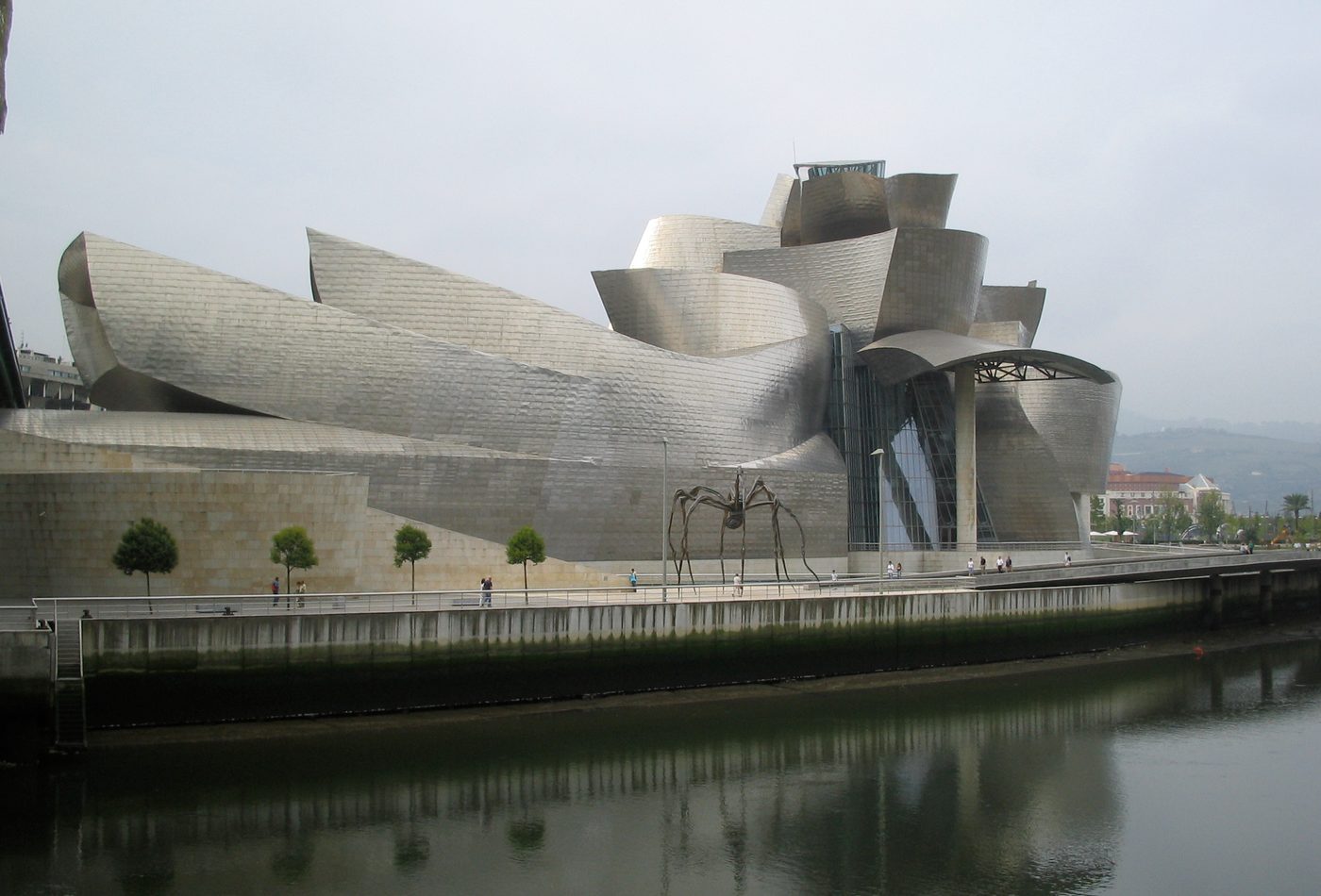
building detail
A museum known for titanium curves and the urban renewal story often called the Bilbao effect.
Photo credit: Wikimedia Commons contributor / CC BY-SA 2.5.
why it matters
It connected spectacular museum architecture with city identity, tourism, and economic narrative.
what to notice
explore by place and style
map notes
Use the coordinates as anchors for reading the buildings in relation to streets, water, skyline, and nearby landmarks.
43.2686, -2.934050.0755, 14.4142-33.8568, 151.2153Map coordinates are listed with provider attribution handled through the source records.
architecture guide
A fuller reading of the building's history, setting, form, materials, and public role.
Guggenheim Museum Bilbao is a museum in Bilbao, Spain, designed by Frank Gehry and opened in 1997, but the first useful fact is the site. The building sits on a former industrial river edge along the Nervion, where rail, road, bridge, water, and city redevelopment meet. That setting explains why the museum is more than an object for art. It was placed where a cultural building could visibly change how the city read its own waterfront.
From a distance the museum can look like one continuous swirl of metal, but the architecture is a set of different volumes pressed together. Some parts are stone and more rectilinear, others are titanium and fluid, and the glass areas pull light into public circulation. This matters because the building is not just a sculpture dropped beside the river. It is a museum made from collisions between gallery needs, public routes, city edges, and a deliberately unstable exterior profile.
The material fact most visitors remember is titanium. The thin metal panels catch dull weather, sun, and river reflection differently, so the museum changes without changing shape. That surface helped turn the building into a recognizable global image. Yet titanium is only one part of the material reading. Limestone gives weight to more grounded volumes, and glass marks the public interior. The building works because those materials separate movement, mass, and spectacle.
The museum is often discussed as an expressive design, but its factual story includes construction translation. Complex curved forms had to be coordinated so that drawings, structure, cladding, and contractor work could agree. That is why the project belongs to the history of late twentieth-century digital design as much as to museum culture. The visible freedom depends on disciplined modeling, fabrication logic, and thousands of small decisions that made irregular geometry repeatable enough to build.
The exterior gets most attention, but the interior organization matters. The central atrium and connected circulation routes help visitors move between galleries, bridges, stairs, lifts, and changing views. This is the museum's internal counterpart to the exterior complexity. A reader should not treat the building only as a riverfront photograph. The public interior shows how the museum converts sculptural drama into orientation, movement, and a usable sequence of rooms.
The phrase Bilbao effect describes the idea that a major cultural building can help reshape a city's identity and economy. The museum is the key example, but the phrase can become too simple. The building did not act alone; it worked within larger urban, political, transport, tourism, and cultural investment. A fact page should therefore use the Bilbao effect carefully: it names the museum's influence, while also warning readers not to reduce city change to one spectacular object.
Start with three clues: the river edge, the titanium panels, and the contrast between curving metal volumes and more grounded stone forms. Those clues explain the building faster than a general claim about iconic architecture. The river gives the project its urban role; the titanium gives it a changing surface; and the mixed volumes show that the museum is both object and infrastructure. That combination is why it belongs in the public core of this atlas.
Guggenheim Museum Bilbao looks irregular, but the design is not random. Its power comes from controlled disorder: curving titanium forms, stone blocks, glass slots, bridge edges, river views, and gallery volumes are brought into one composition without becoming symmetrical. The museum refuses the calm frontality of a traditional art museum. Instead, it makes approach, reflection, overlap, and surprise part of the design language.
The building changes as the viewer moves around it. From the river, it becomes a metal landscape of folds and reflections. From city approaches, stone and glass make the museum feel more grounded and institutional. From near the bridge, the scale shifts again because infrastructure becomes part of the frame. This multi-sided quality is central to the design. It makes the museum cinematic rather than simply frontal.
The titanium skin is the clearest design device because it turns weather into architecture. The panels do not need bright sun to work; in grey light they can look soft, matte, or almost fabric-like. In stronger light, the surface becomes sharper and more reflective. That changing behavior supports the museum's curving geometry. A rigid material is made to feel fluid because scale, paneling, and reflection keep the eye moving.
The museum belongs to a moment when digital tools helped architects translate complex geometry into buildable information. That does not mean the computer designed the building. It means the computer helped coordinate a design that would have been far harder to document, price, fabricate, and assemble through older methods alone. The result is important because the visible expression and the production method are linked. The form advertises a new relationship between design imagination and construction control.
The central atrium keeps the building from becoming only a sequence of confusing shapes. It gathers movement and lets visitors understand where galleries, stairs, lifts, bridges, and views sit in relation to one another. The atrium is therefore not a neutral lobby. It is the spatial hinge between the museum's sculptural outside and its functional inside. Without that organizing room, the exterior drama would have less architectural credibility.
Water, bridges, nearby buildings, streets, and former industrial memory all participate in the design. The museum does not only occupy a site; it edits the site into a new public image. This is why photographs from the river are so persistent. They show the building using reflection and infrastructure to enlarge its presence. The city becomes part of the composition, just as titanium and glass do.
Compare Guggenheim Bilbao with Sydney Opera House and Centre Pompidou. Sydney turns a harbor cultural building into a civic silhouette; Centre Pompidou turns technical systems and public movement outward; Bilbao turns sculptural surface and riverfront regeneration into a museum identity. The comparison shows why Bilbao should not be described only as strange or shiny. Its design links form, construction method, material behavior, and urban strategy.
Guggenheim Museum Bilbao is historically important because it became linked to a city's attempt to change its public image. Bilbao had industrial and port identities before the museum became a global cultural symbol. The project used a riverfront site where architecture could be seen as renewal rather than only as cultural storage. This history explains why the building is often discussed outside architecture schools, in conversations about tourism, economics, and urban strategy.
The museum's position on a former industrial edge is not background scenery. It is part of the historical argument. By occupying the river bend, the building helped make the waterfront legible as a place for culture, leisure, walking, and international attention. The museum therefore belongs to a broader pattern of postindustrial cities reworking old infrastructure into new public identity. The site turns the building into an urban document.
The building made Frank Gehry's sculptural design language part of global public conversation. Before Bilbao, experimental museum forms existed, but this project showed how a highly expressive building could become more widely known than many collections inside it. That changed expectations for cultural institutions. Cities, donors, and museum boards began to imagine the museum building itself as a destination, brand, and media image.
The phrase Bilbao effect is historically powerful because it names a real perception: the museum became associated with tourism growth and city recognition. But it is also historically misleading when used as a formula. Bilbao's change involved infrastructure, planning, governance, investment, transport, and regional context. The museum became the visible symbol of those forces. It did not replace them. A good history page should keep both ideas in view.
The museum also belongs to the history of digital design and construction. Its complex geometry required careful translation between model, structure, cladding, and site work. That history matters because later architecture absorbed the lesson. Complex surfaces became more plausible when design teams could coordinate irregular forms with greater precision. Bilbao therefore marks a shift in what the public could expect a large cultural building to look like.
The museum's success created a debate that still matters. Can a spectacular cultural building genuinely help a city, or does it encourage expensive image-making without deeper public value? Guggenheim Bilbao is the case that keeps the argument alive. It can be admired as architecture and still questioned as a model. That tension is part of its historical importance, not an embarrassment around it.
A useful history of Guggenheim Bilbao should make the museum look less like a miracle object. It should be seen as an expressive building, a redevelopment symbol, a digital construction landmark, a tourism image, and a warning against easy replication. If those layers remain visible, the building becomes more valuable than a simple success story. It becomes a test case for how architecture enters public history.
The best first read of Guggenheim Museum Bilbao is from across or along the river, where the building can be seen with water, bridge, and city fabric in the same view. This distance makes the museum's urban role clear before the surface detail takes over. The building was designed to be encountered as part of a riverfront transformation, so the visit should begin with context rather than with a close-up of titanium.
After the wide view, move along the river edge and watch how the volumes change. The museum does not have one fixed front. Its metal forms fold, overlap, and turn toward different approaches. The walk is useful because it reveals the building as a sequence rather than a single image. Pause when the titanium, glass, water, and bridge structure enter the same frame. That is where the urban reading becomes strongest.
Visitors often photograph the titanium and forget the limestone. Do the opposite for a few minutes. Look for the more grounded stone volumes and ask how they balance the reflective curves. The museum needs those heavier parts because the galleries and city-facing edges cannot all behave like metal waves. The contrast between limestone, glass, and titanium is one of the clearest ways to understand the design.
At close range, study the titanium panels as individual pieces rather than as one shiny surface. Notice panel scale, seams, color changes, and how light softens or sharpens the curves. This detail matters because it connects the building's global image to construction reality. The museum becomes more credible when the famous exterior is read through actual joints, edges, weathering, and material behavior.
If your visit includes the interior, use the atrium as the main architectural checkpoint. Stand where you can see stairs, bridges, lifts, gallery entries, light, and vertical volume at once. The atrium explains how the museum turns sculptural complexity into orientation. It also gives a different lesson from the exterior: the building is not only about image. It has to move people through art, height, light, and circulation.
Make one riverfront photograph that includes city context, one close material photograph of titanium or limestone, and one circulation photograph if the interior is accessible. Those three images create a better architectural record than a single postcard angle. They show setting, surface, and movement. That is the minimum evidence needed to remember why the building is a museum, an urban project, and a construction achievement at the same time.
After studying the museum, compare it with Sydney Opera House, Dancing House, and Centre Pompidou. Each uses unusual form differently. Sydney turns roof geometry and harbor setting into civic image; Dancing House works at street-corner scale; Centre Pompidou externalizes public systems; Bilbao uses titanium surface and riverfront regeneration. That comparison keeps the visit from becoming only a story about the Bilbao effect and brings the attention back to architectural evidence.
continue reading
related buildings
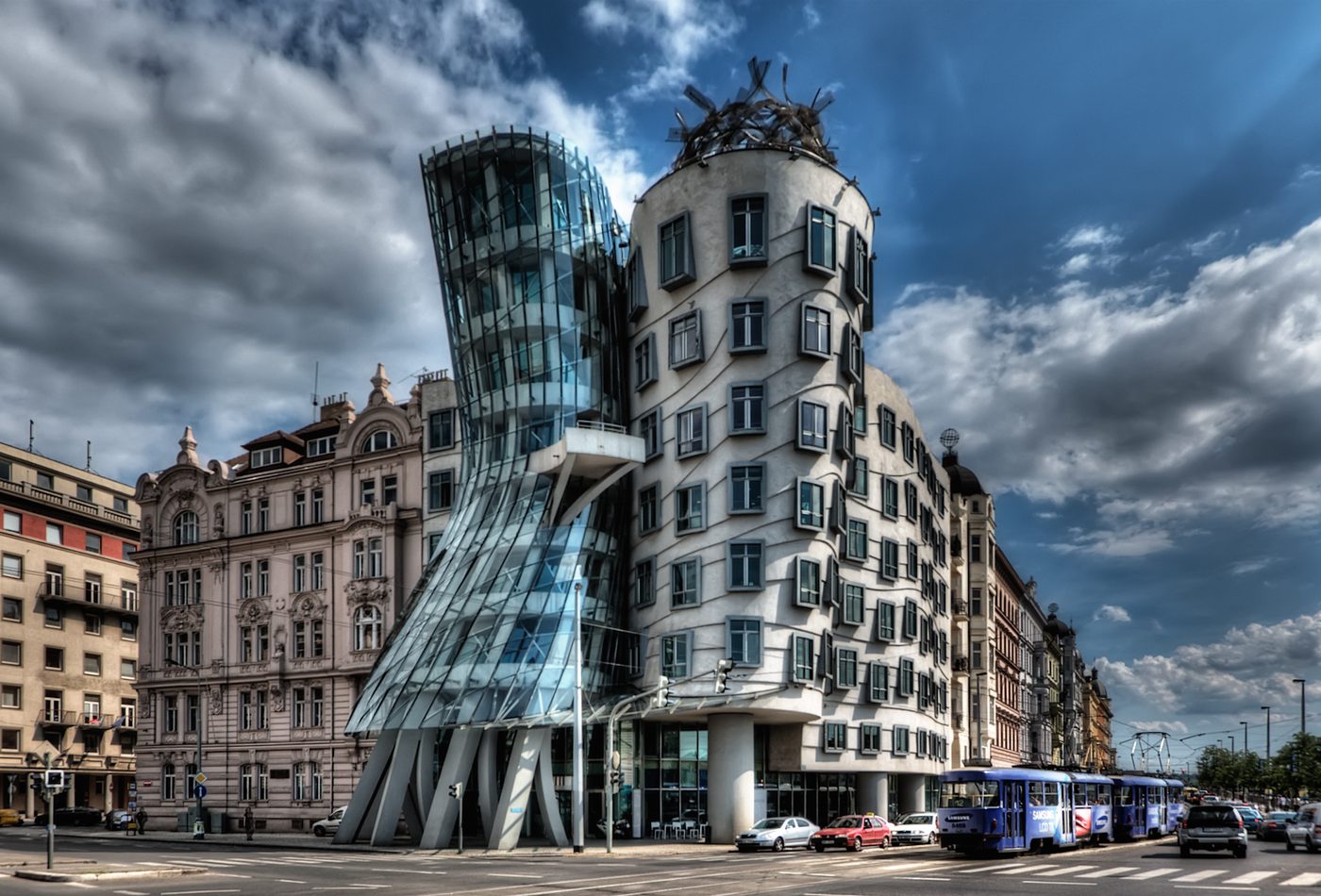
A Prague office building famous for two towers that appear to lean and dance.
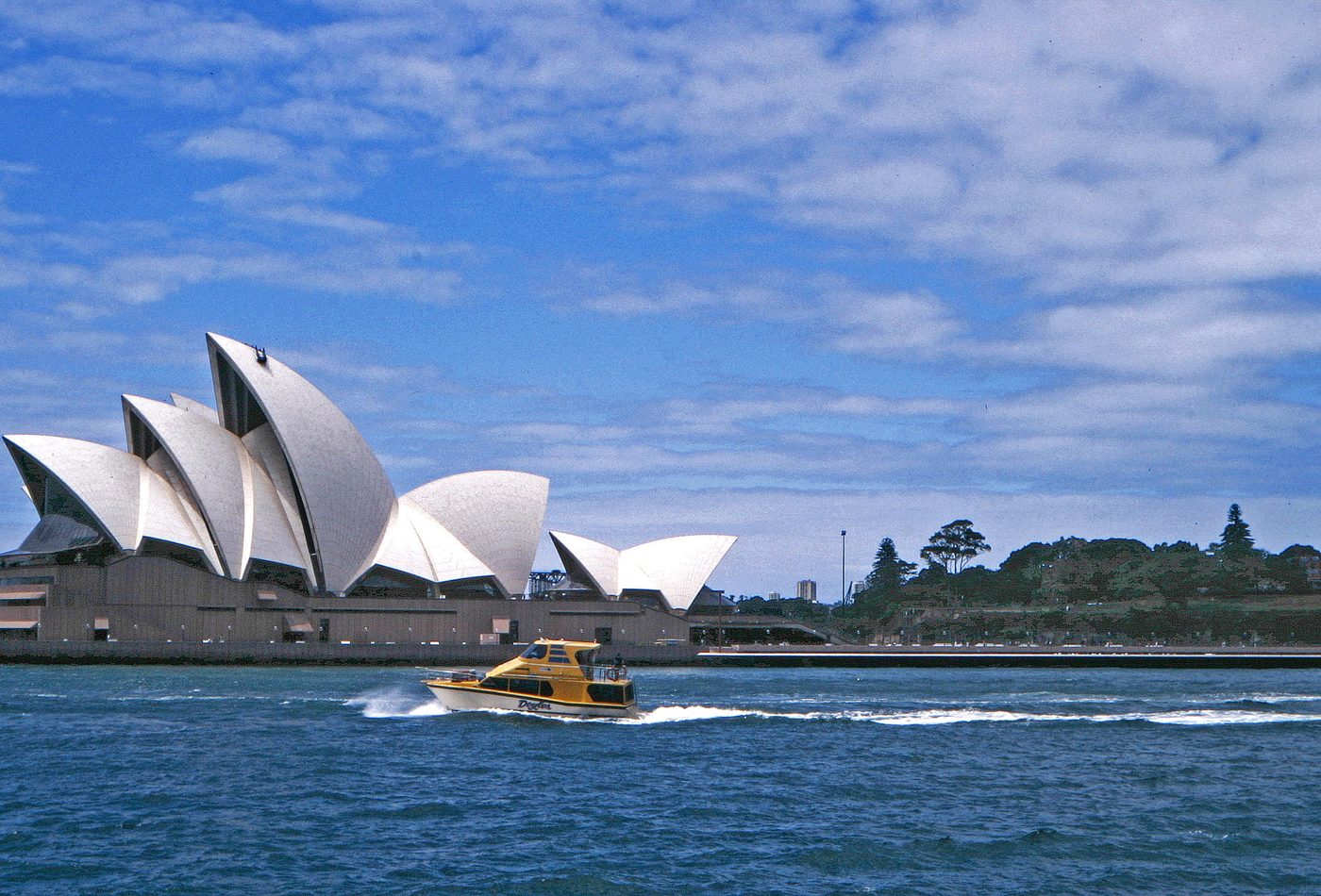
A waterfront performing arts complex known for its shell-like roof forms.
References used for facts, location data, image credits, and architectural context on this page.