guide
Guggenheim Museum Bilbao Facts: Titanium, River, and Role
The river site is the first fact
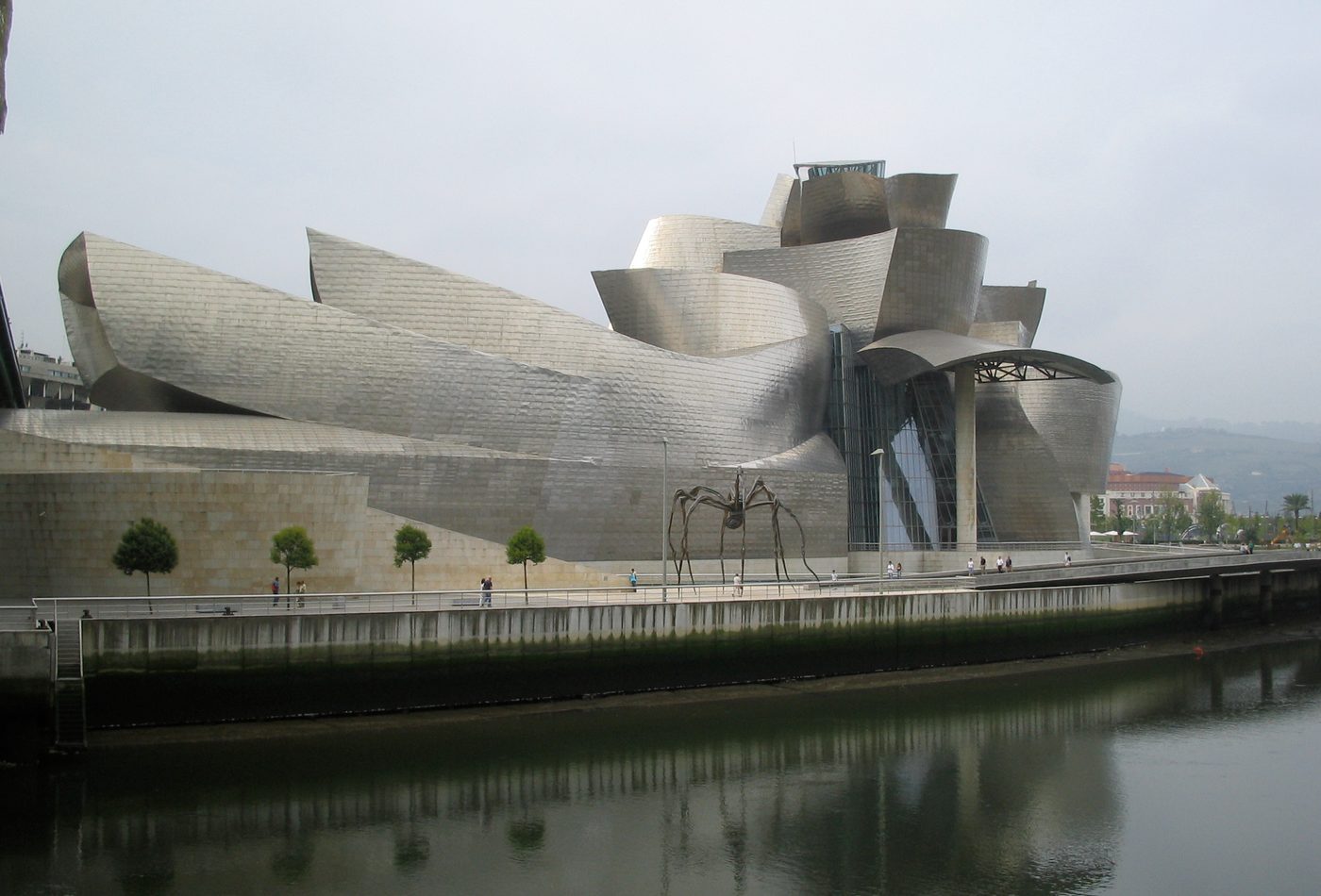
Guggenheim Museum Bilbao is a museum in Bilbao, Spain, designed by Frank Gehry and opened in 1997, but the first useful fact is the site. The building sits on a former industrial river edge along the Nervion, where rail, road, bridge, water, and city redevelopment meet. That setting explains why the museum is more than an object for art. It was placed where a cultural building could visibly change how the city read its own waterfront.
The building is not a single curve
From a distance the museum can look like one continuous swirl of metal, but the architecture is a set of different volumes pressed together. Some parts are stone and more rectilinear, others are titanium and fluid, and the glass areas pull light into public circulation. This matters because the building is not just a sculpture dropped beside the river. It is a museum made from collisions between gallery needs, public routes, city edges, and a deliberately unstable exterior profile.
Titanium made the public image
The material fact most visitors remember is titanium. The thin metal panels catch dull weather, sun, and river reflection differently, so the museum changes without changing shape. That surface helped turn the building into a recognizable global image. Yet titanium is only one part of the material reading. Limestone gives weight to more grounded volumes, and glass marks the public interior. The building works because those materials separate movement, mass, and spectacle.
Digital translation made the form buildable
The museum is often discussed as an expressive design, but its factual story includes construction translation. Complex curved forms had to be coordinated so that drawings, structure, cladding, and contractor work could agree. That is why the project belongs to the history of late twentieth-century digital design as much as to museum culture. The visible freedom depends on disciplined modeling, fabrication logic, and thousands of small decisions that made irregular geometry repeatable enough to build.
The atrium is the public hinge
The exterior gets most attention, but the interior organization matters. The central atrium and connected circulation routes help visitors move between galleries, bridges, stairs, lifts, and changing views. This is the museum's internal counterpart to the exterior complexity. A reader should not treat the building only as a riverfront photograph. The public interior shows how the museum converts sculptural drama into orientation, movement, and a usable sequence of rooms.
The Bilbao effect is useful but risky
The phrase Bilbao effect describes the idea that a major cultural building can help reshape a city's identity and economy. The museum is the key example, but the phrase can become too simple. The building did not act alone; it worked within larger urban, political, transport, tourism, and cultural investment. A fact page should therefore use the Bilbao effect carefully: it names the museum's influence, while also warning readers not to reduce city change to one spectacular object.
What to notice first
Start with three clues: the river edge, the titanium panels, and the contrast between curving metal volumes and more grounded stone forms. Those clues explain the building faster than a general claim about iconic architecture. The river gives the project its urban role; the titanium gives it a changing surface; and the mixed volumes show that the museum is both object and infrastructure. That combination is why it belongs in the public core of this atlas.