guide
St Peter's Basilica Piazza and Dome Visit Notes
Begin in the square, not at the door
Start with Saint Peter's Square because the basilica begins outdoors. Stand far enough back to read the colonnades, obelisk, facade, and dome together. The square gathers the body before the church does. If you rush straight to the entrance, you miss Bernini's main lesson: the approach is already architecture. The first question should be how the open space turns a crowd into a directed ceremonial audience.
Use the facade as a filter
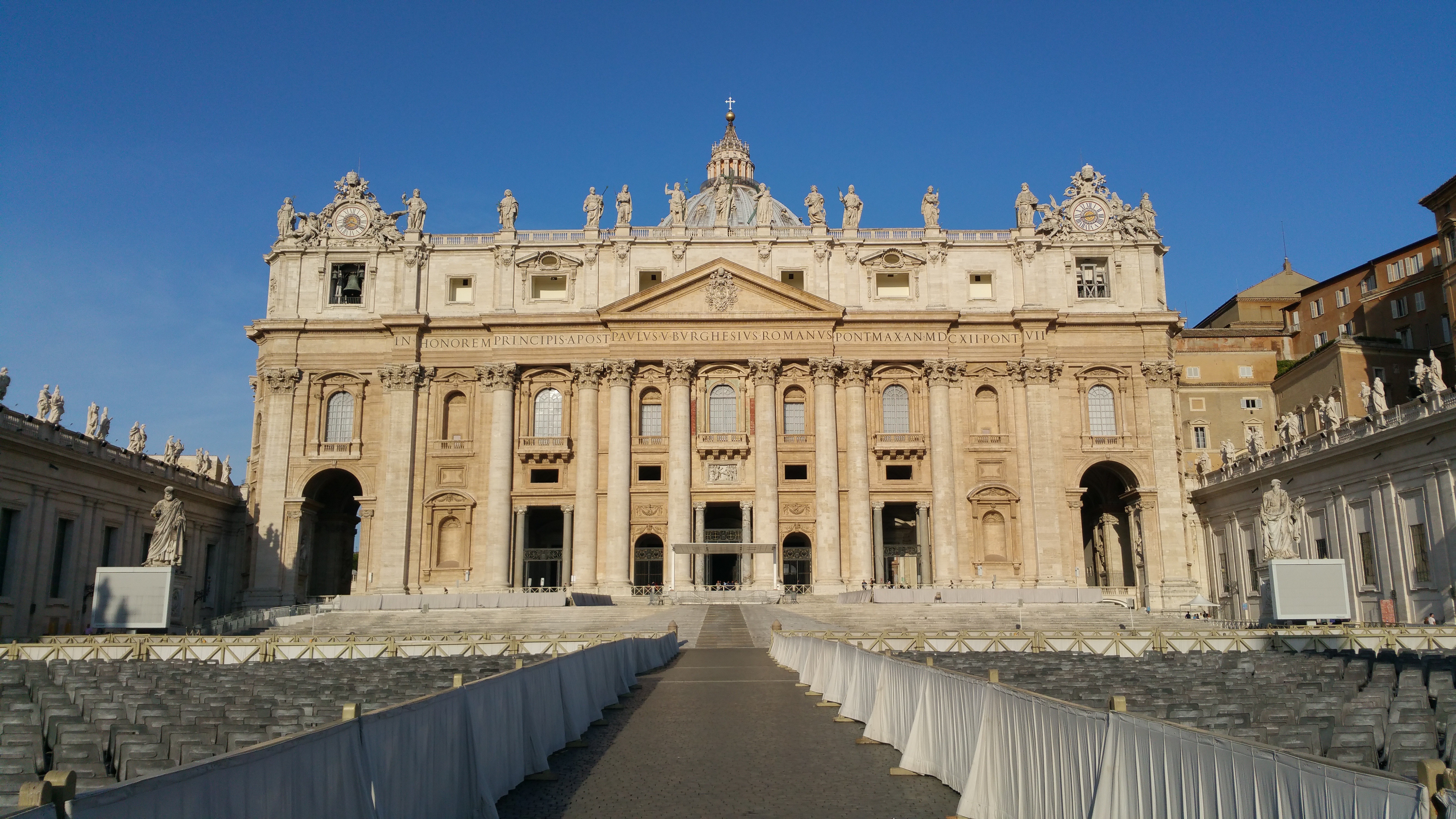
Before entering, study the facade as a filter between public square and sacred interior. Notice its width, giant order, balcony, inscription, door rhythm, and the way it partly masks the dome from close frontal view. That partial masking is not a mistake to ignore. It is part of the experience. The facade controls expectation and keeps the dome from being consumed as a single postcard before the visitor reaches the crossing.
Read the nave as measured delay
Inside, do not immediately hunt for the dome. Let the nave work. Its length, piers, pavement, chapels, and vaults delay the crossing and make the body aware of scale. The nave is the building's slow instrument. It turns entry into procession and makes the eventual upward release more forceful. A visitor who treats the nave as a corridor misses the design logic that connects facade to altar.
Let the crossing reset the scale
At the crossing, stop and let the scale reset. The dome, piers, altar area, bronze work, light, and surrounding arms change the building from a long route into a centralized event. This is the moment when the basilica's competing design impulses become visible. The long nave has brought you forward, but the crossing asks you to look up and around. Use that shift to understand why the dome is a spatial event, not only an exterior landmark.
Separate richness from structure
The interior can overwhelm because so many surfaces compete for attention. Choose one structural reading before moving into detail. Trace a pier, bay, arch, vault, or dome support, then look at marble, sculpture, inscription, or bronze. This keeps the visit from becoming a list of famous objects. St Peter's is full of art, but the architecture is the system that holds those objects in a legible order.
Use side spaces as scale checks
After the nave and crossing, use one side chapel or side aisle as a scale check. These spaces can feel secondary in comparison with the dome, yet they reveal how the basilica manages repeated movement, smaller devotional focus, and the transition between monument and room. Look for how columns, pavement, wall surfaces, and openings keep the side spaces connected to the larger order. This prevents the visit from becoming only a march from square to altar. The building is also made of lateral pauses where the huge central sequence becomes human again.
Return outside for the dome
After the interior, return to an exterior view if possible. The dome will read differently after you have stood under it or near the crossing. From the square and surrounding approaches, compare what the dome promised from outside with what the interior delivered. That comparison is one of the strongest visiting lessons. St Peter's is not one image; it is an exchange between skyline, square, facade, and interior space.
Build a five-view record
A useful architecture record should include five views: the square and colonnade, the facade with central approach, the nave axis, the crossing and dome relationship, and one close material or structural detail. Those five images keep the visit from becoming only a facade shot or a dome shot. They preserve the sequence that makes the basilica architecturally specific: gathering, threshold, procession, vertical center, and detail.