why it matters
Why this building matters
Florence Cathedral helps readers connect Gothic and Renaissance to visible design decisions: octagonal dome, marble facade pattern, urban skyline role.
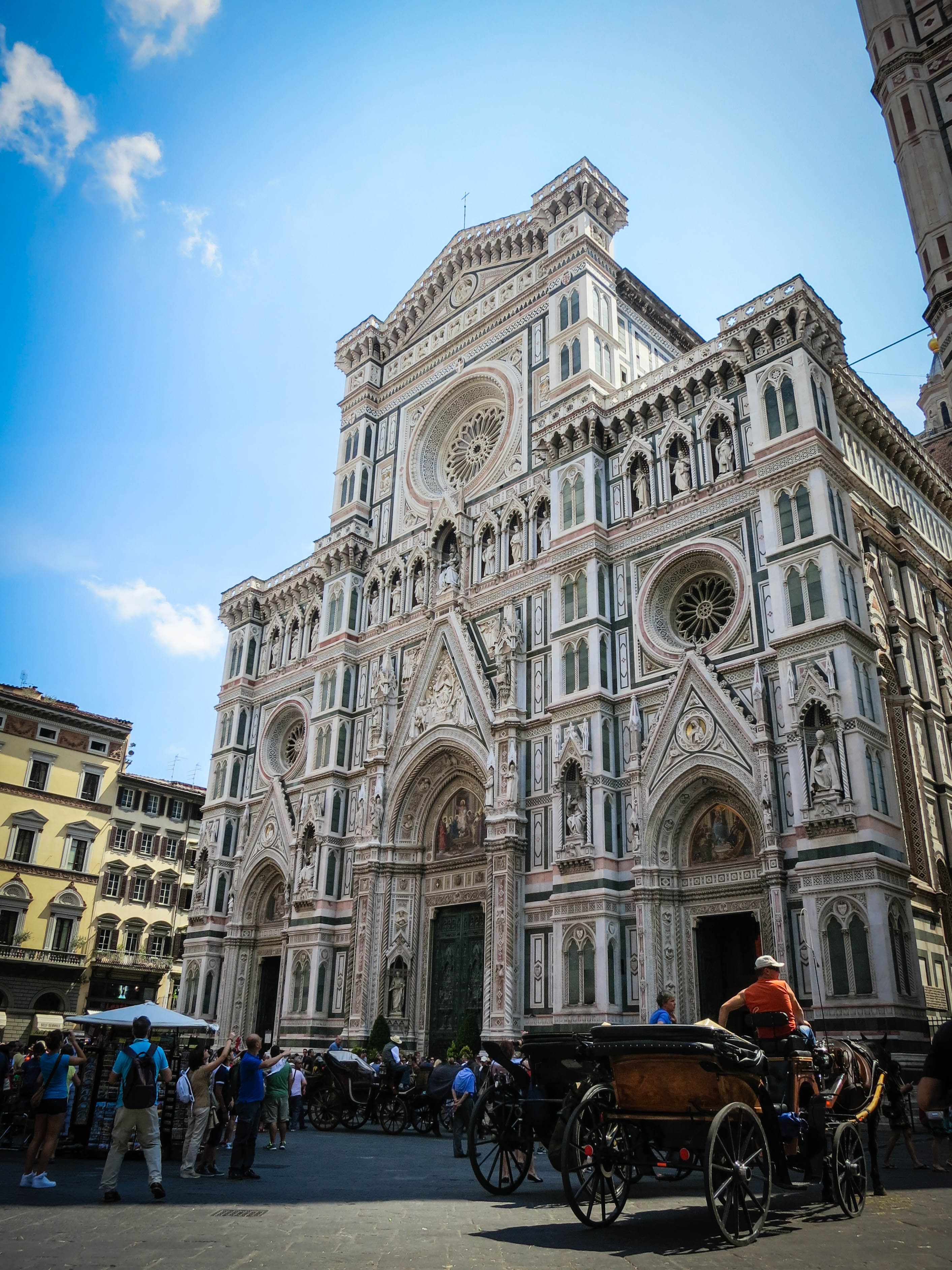
building detail
Florence Cathedral is a cathedral in Florence, Italy, known for Brunelleschi's dome rising above a richly patterned cathedral body.
Photo credit: Travel Coffee Book / CC0 / Public Domain.
why it matters
Florence Cathedral helps readers connect Gothic and Renaissance to visible design decisions: octagonal dome, marble facade pattern, urban skyline role.
what to notice
explore by place and style
map notes
Use the coordinates as anchors for reading the buildings in relation to streets, water, skyline, and nearby landmarks.
43.7731, 11.256041.8986, 12.476941.9022, 12.4539Map coordinates are listed with provider attribution handled through the source records.
architecture guide
A fuller reading of the building's history, setting, form, materials, and public role.
Florence Cathedral should not be read as only one front facade or one famous dome. It is part of a larger cathedral complex that includes Santa Maria del Fiore, Giotto's campanile, the baptistery nearby, the piazza around it, and the city fabric that presses close to the monument. That matters because the building works by accumulation. Facade, nave, dome, bell tower, pavement, crowd movement, and urban approach all contribute to the architectural experience.
The date marker of 1436 points toward the completion of Brunelleschi's dome, the feature that made the cathedral's long story into a visible city event. The dome is not only a roof over a crossing. It gives Florence a dominant skyline form and turns technical construction into civic identity. From a distance, the cathedral is often recognized by the octagonal dome before the facade is seen. That priority matters: the building is an urban landmark before it becomes a close decorative surface.
The colored marble facade makes Florence Cathedral unusually readable at close range. Green, white, and pink stone patterns turn the surface into a dense system of frames, panels, arches, gables, sculpture niches, and rose windows. The pattern is not merely ornamental. It slows the eye and breaks a very large wall into human-scale pieces. A visitor who studies the facade can see how material contrast gives rhythm to a building that might otherwise feel overwhelmingly large.
The atlas marks the building with both Gothic and Renaissance style readings, and that overlap is the useful fact. The cathedral body carries pointed arches, vertical emphasis, decorative complexity, and medieval urban ambition. The dome, by contrast, belongs to a Renaissance story of geometry, engineering, and civic confidence. The building is therefore not a clean example of one style. Its importance comes from the way a long medieval project was completed by a dome that changed architectural history.
The main materials recorded here are marble, brick, and stone, but they should not be treated as a flat list. Brick is central to the great dome and its construction logic. Stone gives structure and urban mass. Marble turns the public-facing surfaces into a patterned civic skin. Those materials explain three scales at once: engineering above, wall and pier stability within, and decorative surface at the pedestrian edge. The building's material intelligence depends on that division of work.
The cathedral's immediate neighbors make the basic facts more concrete. The baptistery in front and the campanile beside the cathedral create a public ensemble rather than a single isolated monument. This matters for orientation: visitors often understand the complex by moving between separate but related buildings. The cathedral facade answers the baptistery across the piazza, while the campanile gives the complex a vertical measure before the dome takes over the skyline.
A useful Florence Cathedral fact sheet should leave a reader with a sequence: first, the dome on the skyline; second, the cathedral complex in the piazza; third, the polychrome facade and rose windows; fourth, the relationship between medieval body and Renaissance dome. Those facts turn the building from a single famous image into a set of architectural relationships. The cathedral is large enough to overwhelm a quick visitor, so facts should function as a route through scale.
Florence Cathedral belongs in the public core because it connects engineering, image, and city identity in one legible monument. Compare it with the Pantheon for dome precedent, with St Peter's Basilica for later dome-based civic and religious ambition, and with Milan Cathedral for another Italian monument where scale and surface detail shape public memory. The comparison shows that a cathedral can be an engineering problem, a city symbol, and a close-looking exercise at the same time.
Florence Cathedral is often remembered through its decorated front or its red-tiled dome, but the design problem was bigger than either image. The cathedral had to hold an enormous sacred interior, occupy a dense urban site, relate to the baptistery and campanile, and finish a crossing that earlier builders had left as a major technical challenge. A design reading should therefore start with scale and completion: how does a long cathedral project become a coherent public monument?
Brunelleschi's dome is the central design event because it turns a construction problem into the building's public identity. The octagonal form, high profile, ribs, lantern, and tiled surface make the dome legible from outside the cathedral and across Florence. It is not an invisible technical solution hidden behind a roof. It becomes the monument's skyline argument. The dome tells the city that a difficult span has been solved and made beautiful.
The facade should be read as a layered graphic and sculptural system. Marble colors draw frames around portals, arches, rose windows, gables, and niches. Instead of one flat decorated wall, the front is a hierarchy of openings, panels, figures, edges, and shadows. This is why the facade rewards close looking even if the dome dominates from afar. It gives the pedestrian a different scale from the skyline view.
Giotto's campanile matters because it prevents the cathedral from reading as a single isolated mass. The tower gives the complex a vertical counterpoint to the long nave and broad dome. From the piazza, the eye moves between facade, bell tower, dome, and surrounding street edges. This distributed composition is important: Florence Cathedral is not one centralized object like the Pantheon. It is a set of related architectural bodies forming a civic room. The tower also gives visitors a measuring device for scale, because its patterned vertical face can be compared directly with the cathedral wall.
Polychrome marble makes a very large cathedral readable at human scale. The pattern gives the surface a measured rhythm, while sculpture and portals create points of focus. Brick and stone carry a different kind of meaning: they are tied to mass, structure, and construction. The design succeeds because material does not do one job. It handles appearance, scale, structure, craft, and memory through different surfaces and positions.
The exterior is visually dense, but the interior experience depends more on volume, direction, and the sense of a vast body leading toward the dome. That contrast is part of the design reading. The facade prepares the visitor through surface complexity, while the cathedral body asks the visitor to understand length, height, nave rhythm, and the spatial pull toward the crossing. The dome then gathers that movement upward. A good analysis keeps surface and section in conversation, because the building's public image and interior route depend on each other.
Florence Cathedral is not best understood by forcing it into one style label. Gothic ambition appears in the cathedral's scale, vertical energies, pointed forms, and decorative density. Renaissance force appears in the dome's geometry, engineering confidence, and civic self-consciousness. The building is a conversation across time rather than a single moment. That layered quality is one reason it feels richer than a tidy textbook example.
The design lesson is that a landmark can be completed across generations without losing architectural force. Florence Cathedral works because later interventions did not merely cover earlier work; they intensified the public reading. The dome gives the city a profile, the facade gives the piazza a detailed front, the campanile anchors the complex, and the material palette ties scale to close inspection. A strong analysis keeps all four in view and asks how each one changes the others.
Florence Cathedral cannot be reduced to 1436 even though that date is essential for the dome and consecration. The building began in the late thirteenth century, developed through medieval civic ambition, reached a major technical climax with Brunelleschi's dome, and received its present facade much later. That long chronology matters because the cathedral is a record of changing priorities. It shows a city returning to the same public monument across generations.
The cathedral was never only a church interior. It was a civic statement in a competitive Italian city, a project that connected religion, guild culture, public pride, craft, and urban image. Its scale and location made it part of Florence's self-presentation. When a city builds at this size, architecture becomes an argument about collective capacity. The cathedral says that worship, city government, artisanship, and public memory can converge in one monumental center.
The dome's importance comes from the way it solved a highly visible problem. The crossing needed a roof that could span an enormous space without relying on a conventional timber centering strategy at that scale. Brunelleschi's solution became famous because it joined technical invention to civic drama. The result was not just a completed building. It was a historical episode in which engineering, competition, experiment, and public identity became inseparable.
The cathedral should also be understood through the institutions and crafts that sustained it. Large medieval and Renaissance building projects depended on administrators, patrons, guilds, quarrying, transport, masons, sculptors, carpenters, metalworkers, and long financial commitment. The finished monument can hide that labor. Florence Cathedral is historically useful because its scale makes the organization behind architecture visible: a city had to keep choosing the building over time.
The front most visitors photograph today is not a simple medieval survivor. The present polychrome facade belongs to a later completion, which means the visitor is seeing different historical layers at once. That should not make the facade less important. It makes it more instructive. The building's public image is partly the result of later interpretation, taste, and completion. Florence Cathedral teaches that monuments are often assembled across time, not frozen at first construction.
Florence Cathedral became part of the story people tell about the Renaissance because the dome made ingenuity visible. It was tied to geometry, construction knowledge, urban pride, and the idea that architecture could recover and surpass ancient ambition. The Pantheon is a useful comparison because it shows a great earlier dome, but Florence Cathedral's dome belongs to a different historical moment: a city using new methods to solve a public problem left by medieval scale. That is why the dome is remembered as both a technical achievement and a civic narrative about Florence itself.
The cathedral's fame can make it too easy to see only the postcard: red dome, patterned facade, busy piazza. A better historical reading keeps the tensions visible. The building is religious and civic, medieval and Renaissance, local and globally famous, technical and decorative. It has been shaped by original construction, later completion, restoration, crowd use, and constant reproduction in images. Those tensions are not clutter. They are the reason the building remains historically alive, and why a guide should resist reducing it to a beautiful skyline object.
Florence Cathedral teaches that architectural history is often the history of unfinished problems being inherited, transformed, and solved. Later generations did not erase the earlier cathedral; they completed and reinterpreted it. That makes the building especially useful for readers who think monuments appear fully formed. Here, the public masterpiece is the result of time, risk, technical ambition, civic pride, and a willingness to let new work speak to old work in public.
A useful Florence Cathedral visit starts before the visitor reaches the facade. Look for the dome from streets, bridges, or higher viewpoints if possible, because the building's first architectural role is as a city marker. Then move into the piazza and let the scale change. The dome belongs to the skyline; the facade and campanile belong to close urban experience. Holding those two views together prevents the visit from becoming only a facade photograph.
Stand far enough back to see the whole front, then move closer in stages. First read the overall triangular gables, rose windows, portals, and vertical divisions. Then look for the color changes in the marble and how they frame smaller pieces. The facade can feel visually crowded, but that density is the point. It turns a giant cathedral wall into a sequence of readable zones. The goal is to see order inside abundance.
Giotto's campanile is not a side accessory. It changes the entire piazza composition by giving the cathedral complex a separate vertical body. Compare its patterned surface with the cathedral facade, then step back and see how tower, church, and dome compete and cooperate. This comparison helps visitors understand the complex as a civic ensemble rather than a single building with a famous roof.
When the dome is visible, study its octagonal geometry, ribs, lantern, tile color, and relationship to the lower cathedral body. The dome should not be treated only as a scenic cap. It is evidence of a difficult structural problem solved at city scale. Ask how it rises from the crossing, how it changes the skyline, and how it differs from ancient dome models such as the Pantheon.
If you enter the cathedral, use the threshold as a scale reset. The busy piazza and patterned facade create one kind of visual pressure, while the interior volume asks for slower orientation. Look for the length of the nave, the pull toward the crossing, and the way the dome becomes a spatial event rather than only an exterior silhouette. Even a short interior visit should connect the outside image to the building's section.
Build a small architectural record rather than collecting one postcard shot. Take one city or skyline image with the dome visible, one piazza image showing facade and campanile together, one close facade image of marble pattern or portal detail, and one oblique view that shows how the cathedral body turns in the tight urban fabric. Those four views preserve city role, complex relationship, surface craft, and massing.
A strong visit should notice that the building is layered across time. The present facade, medieval body, dome, campanile, sculptural details, paving, crowds, and conservation work do not all belong to one moment. Instead of looking for a pure original state, ask how the cathedral became the object now seen in the city. That question makes the building more interesting and avoids the common mistake of treating a long project as a single style sample.
After studying Florence Cathedral, compare it with the Pantheon for dome logic, with St Peter's Basilica for later religious and urban monumentality, and with Milan Cathedral for another Italian cathedral where surface detail and civic identity meet. These comparisons help separate what belongs to Florence specifically from what belongs to broader questions of domes, facades, and cathedral-scale city image.
A useful visit should leave four answers. You should be able to explain how the dome changes Florence's skyline, how the facade organizes visual density, how the campanile changes the complex, and why the building cannot be described with one style label. If those answers are clear, Florence Cathedral has moved from a tourist landmark into architectural evidence.
continue reading
related buildings
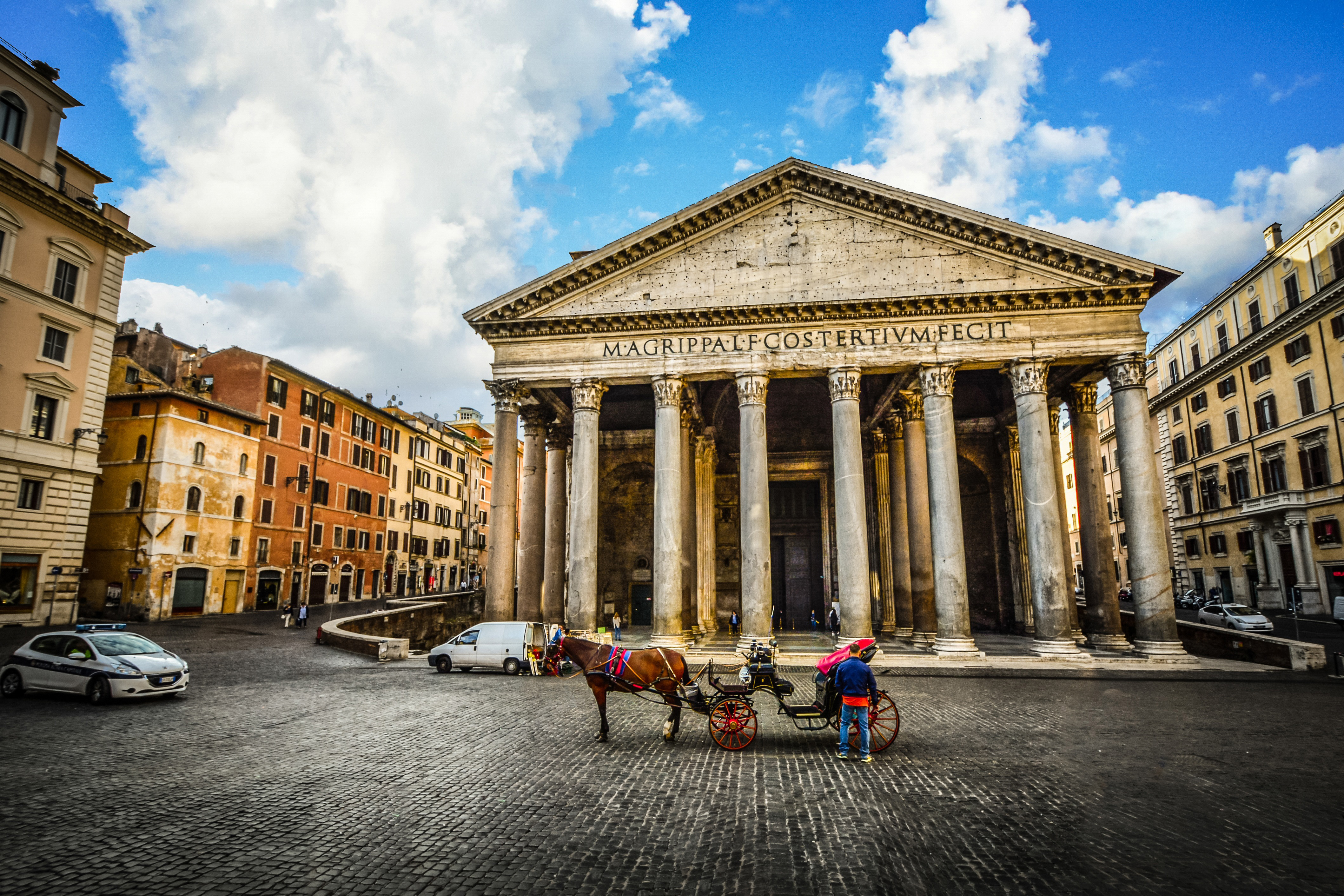
Pantheon Rome is a temple in Rome, Italy, known for its concrete dome, oculus, and classical portico.
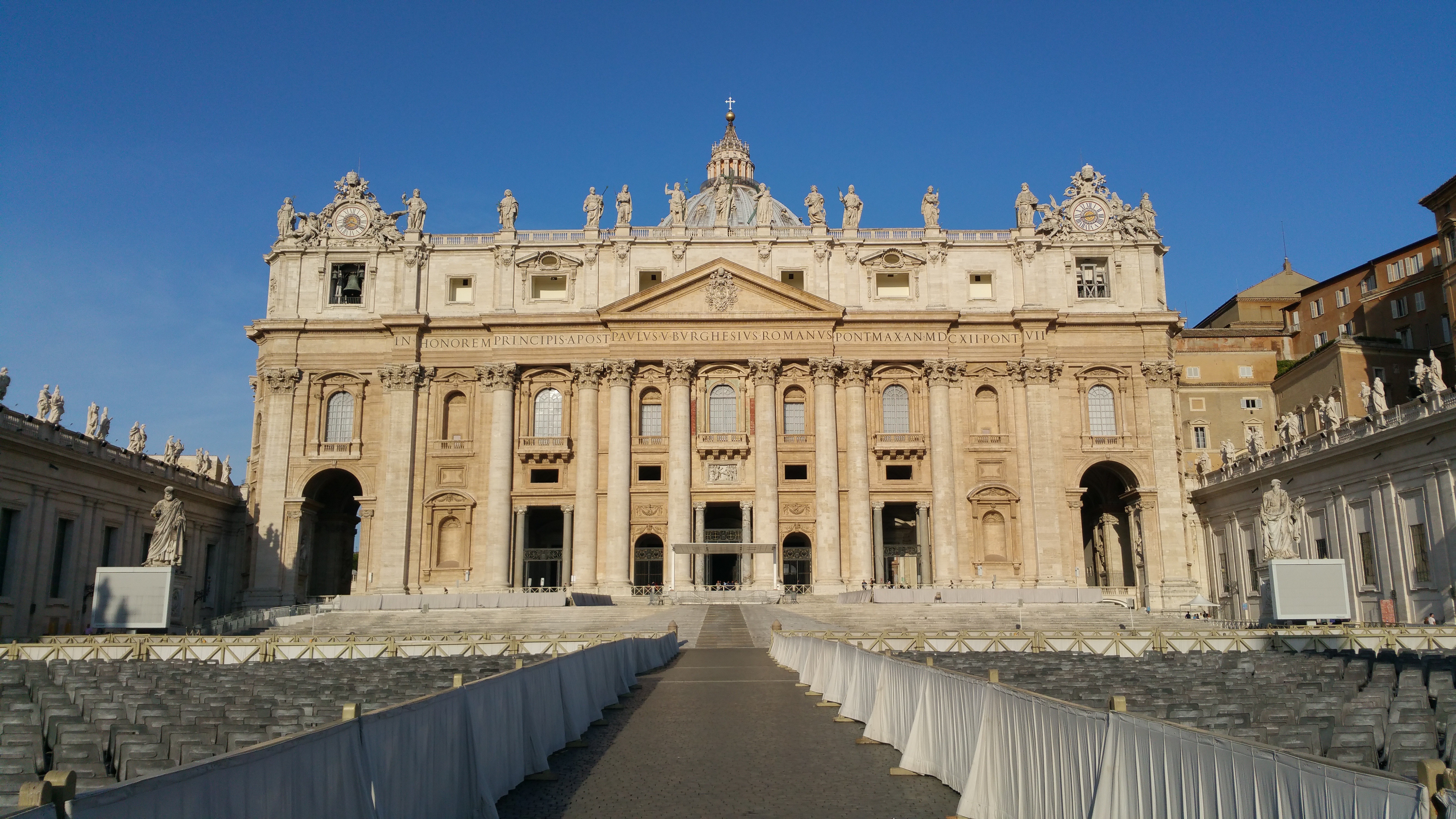
St Peter's Basilica is a basilica in Vatican City, Vatican City, known for its dome, monumental nave, and ceremonial piazza connection.
References used for facts, location data, image credits, and architectural context on this page.