why it matters
Why this building matters
Pantheon Rome helps readers connect Ancient and Classical to visible design decisions: open oculus, coffered dome, portico-to-rotunda transition.
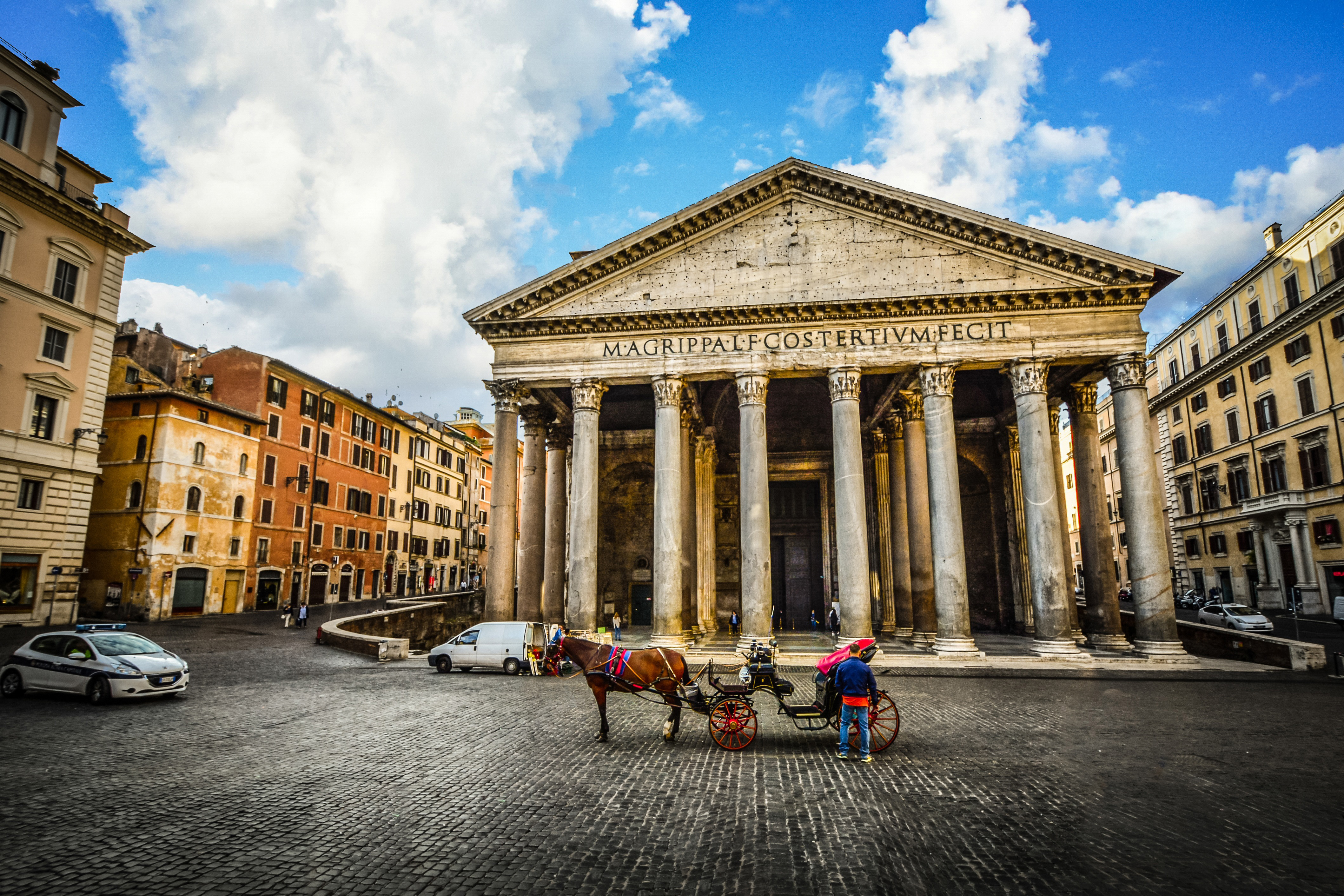
building detail
Pantheon Rome is a temple in Rome, Italy, known for its concrete dome, oculus, and classical portico.
Photo credit: Kirk Fisher / CC0 / Public Domain.
why it matters
Pantheon Rome helps readers connect Ancient and Classical to visible design decisions: open oculus, coffered dome, portico-to-rotunda transition.
what to notice
explore by place and style
map notes
Use the coordinates as anchors for reading the buildings in relation to streets, water, skyline, and nearby landmarks.
41.8986, 12.476941.0086, 28.980243.7731, 11.2560Map coordinates are listed with provider attribution handled through the source records.
architecture guide
A fuller reading of the building's history, setting, form, materials, and public role.
Pantheon Rome is often introduced as an ancient Roman temple, but the useful architectural fact is the mismatch between what the front promises and what the interior delivers. The portico presents a familiar classical face of columns, pediment, and inscription. Behind it is a vast circular room covered by a concrete dome. That shift from rectangular temple front to centralized rotunda is the reason the building stays so powerful: it changes architectural language at the threshold.
The facade inscription names Marcus Agrippa, but the building most visitors experience belongs to the later imperial rebuilding commonly associated with Hadrian's period. This matters because the Pantheon should not be read as a single simple date attached to one name. It is an ancient project with memory built into the front, technical ambition built into the rotunda, and later religious reuse built into its survival. The inscription is evidence, but it is not the whole building.
The Pantheon's concrete dome turns the interior into a single architectural event. It is not only a roof over a room. It defines the room's geometry, weight, light, and emotional scale. The oculus at the top keeps the dome from feeling sealed. Light, weather, and the movement of the sun enter through that opening, so the building's most famous structural form also becomes its main instrument of perception.
The recessed coffers in the dome are practical and visual at once. They break up the large curved surface, give the eye a rhythm to follow, and make the dome feel measured rather than shapeless. A visitor who only looks for the oculus misses how the surrounding dome is scaled. The coffers make the concrete surface readable, turning enormous weight into a patterned ceiling that can be studied from below.
The Pantheon is important not only because it was built well, but because it remained useful. Its conversion into a church helped preserve the structure while many other ancient Roman buildings were stripped, fragmented, or reduced to archaeology. That continuous life changes the facts. The building is both ancient monument and active inherited space, which is why it feels less like a ruin than a working architectural memory.
The Pantheon is not approached across an empty ceremonial field. It sits within Rome's dense streets and a compact piazza, so the front can appear suddenly and at close range. That setting makes the portico feel urban, almost compressed, before the interior opens into a radically different volume. The surrounding city is therefore part of the fact pattern: narrow approach, sudden facade, deep porch, then the circular room.
A useful quick reading should leave a route in the mind. First, read the portico and inscription. Second, notice the seam between the porch and the rotunda. Third, enter and look up to understand the dome, coffers, and oculus as one system. Fourth, remember that the building survived because it changed use. Those facts turn the Pantheon from a famous ancient name into a legible architectural sequence.
Pantheon Rome works because the front and interior do not say the same thing. The portico belongs to the language of columns, pediment, axial entry, and civic address. The rotunda belongs to enclosure, circular geometry, and a dome that gathers the room into one centered volume. The design does not hide this contradiction. It stages it, asking the visitor to pass from a classical front into a space that feels almost cosmic.
The porch gives the building a public face in the piazza, but it also slows entry. Columns create depth, shade, and a moment of compression before the interior opens. That pause matters. Without the portico, the rotunda would still be technically impressive, but the visitor would lose the transition from city to threshold to interior. The portico makes the building urban before the dome makes it spatially absolute.
Inside, the curved wall does not behave like a normal facade. It wraps the visitor, holds niches and surfaces, and supports the dome without presenting a single front. This makes the room feel centered rather than directional. The visitor can turn in place and keep reading architecture in every direction. The rotunda is therefore not just a plan shape. It is a way of removing ordinary front-and-back hierarchy from the interior.
The oculus is the design's most memorable detail because it is both opening and instrument. It brings daylight into the room, makes the dome feel open at its highest point, and lets weather and time register inside the architecture. The beam of light is not decoration placed on a surface. It is produced by the building's geometry. That is why the Pantheon is understood differently across a day rather than only from a fixed viewpoint.
The dome could have felt like an overwhelming mass, but the coffers give it order. They create rings of scale, guide the eye upward, and make the surface feel designed rather than simply heavy. The relationship between the coffers and the oculus is especially important: repeated pattern gives way to a single void. The design moves from measured surface to pure opening, which makes the top of the room feel both structural and symbolic.
The Pantheon is read through concrete, stone, brick, marble, bronze memory, repair, and the traces of long use. Its surfaces do not all belong to one untouched moment. That layered material condition is part of the design experience now. A clean reconstruction would teach one thing; the existing building teaches another. It shows Roman engineering, later adaptation, removed materials, renewed surfaces, and continuing care in one interior.
The Pantheon's design lesson is not simply that Roman concrete was advanced. The sharper lesson is that structure, geometry, light, and sequence can become inseparable. The portico prepares the visitor, the rotunda gathers the body, the dome controls the room, and the oculus animates it over time. Few buildings make such a clear argument with so few primary moves. That clarity is why the Pantheon remains a reference point rather than only a preserved artifact.
Pantheon Rome is not useful as a simple before-and-after story. Its history is layered into the building itself: an inscription recalling Agrippa, a later Roman structure with a radical concrete dome, Christian reuse, changing materials, burials, tourism, and ongoing care. This layered condition is exactly why the building matters. It lets readers see how architecture can carry political memory, technical ambition, and later religious life in one body.
The Pantheon belongs to a Roman world where building, rebuilding, inscription, and public display were tied to authority. The front inscription gives the building an inherited name and historical dignity, even though the existing structure reflects later construction. That tension should not be treated as confusion. It is part of the monument's historical meaning: Rome often preserved memory while transforming fabric, and the Pantheon makes that process visible.
The concrete dome is historical evidence as much as technical achievement. It shows that Roman builders could create a vast centralized interior that did not depend on a forest of columns. The dome, coffers, thick walls, and oculus made engineering into an experience that later visitors could understand physically. This is why the Pantheon stayed influential: it did not only record a construction method; it made that method emotionally legible.
Many ancient buildings survive as fragments because their original use disappeared and their materials became available for other projects. The Pantheon followed a different path. Its conversion into a church gave the building an active institutional role, which helped protect the main structure. That does not freeze the building in its Roman state. It means survival came through adaptation, and adaptation became part of the historical record.
The Pantheon shaped later architecture because it offers a clear model: a strong exterior threshold, a centralized interior, a dome with a single opening, and a room where geometry and light carry meaning. Renaissance and later architects did not need to copy every detail to learn from it. They could study the relationship between plan, section, structure, and atmosphere. Its influence comes from the clarity of the architectural idea.
The building's historical life cannot be separated from Rome around it. Streets, piazza space, surrounding buildings, changing ground levels, worship, visitors, conservation, and city traffic all shape how the monument is encountered. The Pantheon is famous as an ancient interior, but it also operates as an urban object in a living district. That continuing contact with the city is one reason it feels unusually present rather than remote.
The Pantheon teaches that longevity is not only a matter of durability. It depends on usefulness, reinterpretation, symbolic value, and the ability of a form to absorb new meanings without losing its core spatial force. The building has been temple memory, church, model, tourist destination, and engineering lesson. That range is why it deserves a full guide rather than a short caption about an ancient dome.
Start far enough back to see the Pantheon as an urban front. The surrounding buildings, paving, fountain, crowds, and narrow approach routes make the portico feel compressed into the city. This first view explains why the building is not only an isolated Roman object. It is a facade that still works as the end point of streets and the anchor of a public room. Give the piazza a few minutes before entering.
Before going inside, stand under or near the columns and look at the depth of the porch. Notice how the pediment, inscription, column shafts, shadows, and doorway prepare a ceremonial entry. The portico is easy to photograph as a front, but it is more useful as a transition. It compresses light and scale so that the rotunda can open with greater force once the visitor crosses the threshold.
Inside, avoid walking straight to the center too quickly. Pause after entry and let the room overturn the expectation set by the portico. The circular wall, dome, niches, and floor pattern pull attention in every direction. The building is not a long hall with a front altar as the only focus. It is a centralized volume where turning in place is part of understanding the architecture.
The oculus is more than a famous hole in the dome. Watch what its light does to the room. Depending on time and weather, the light may cut across coffers, walls, floor, or visitors. The point is not only to look upward. It is to see how the building lets the sky act inside the architecture. A short visit becomes better when the visitor waits long enough for light to become spatial evidence.
After the first upward view, follow the rings of coffers around the dome. They help the eye measure the curved surface and keep the dome from reading as an abstract smooth shell. Compare their rhythm with the lower wall, niches, and floor. This makes the interior more architectural and less merely spectacular. The dome is memorable because it is ordered, not just because it is large.
A good Pantheon visit should include signs of reuse, repair, worship, tourism, and preservation. The building is ancient, but it is not a dead shell. Materials, surfaces, furnishings, inscriptions, tombs, and circulation patterns show that the monument has lived through different purposes. Those layers are not clutter around the main event. They are evidence of how the Pantheon survived.
Take one exterior image from the piazza to show the portico in the city, one threshold image showing columns and depth, one interior-wide image of the rotunda and dome, and one detail image of oculus light, coffers, wall niches, or floor geometry. Together these views explain sequence, structure, light, and reuse. A single upward oculus shot misses too much of the building's architectural intelligence.
After studying the Pantheon, compare it with the Colosseum for a different Roman use of concrete and public gathering, with Hagia Sophia for another dome-based spatial drama, and with later domed civic buildings for influence. The goal is not to rank famous interiors. It is to notice how the Pantheon concentrates force into one room while other buildings spread meaning through procession, crowd systems, or layered sacred space.
continue reading
related buildings
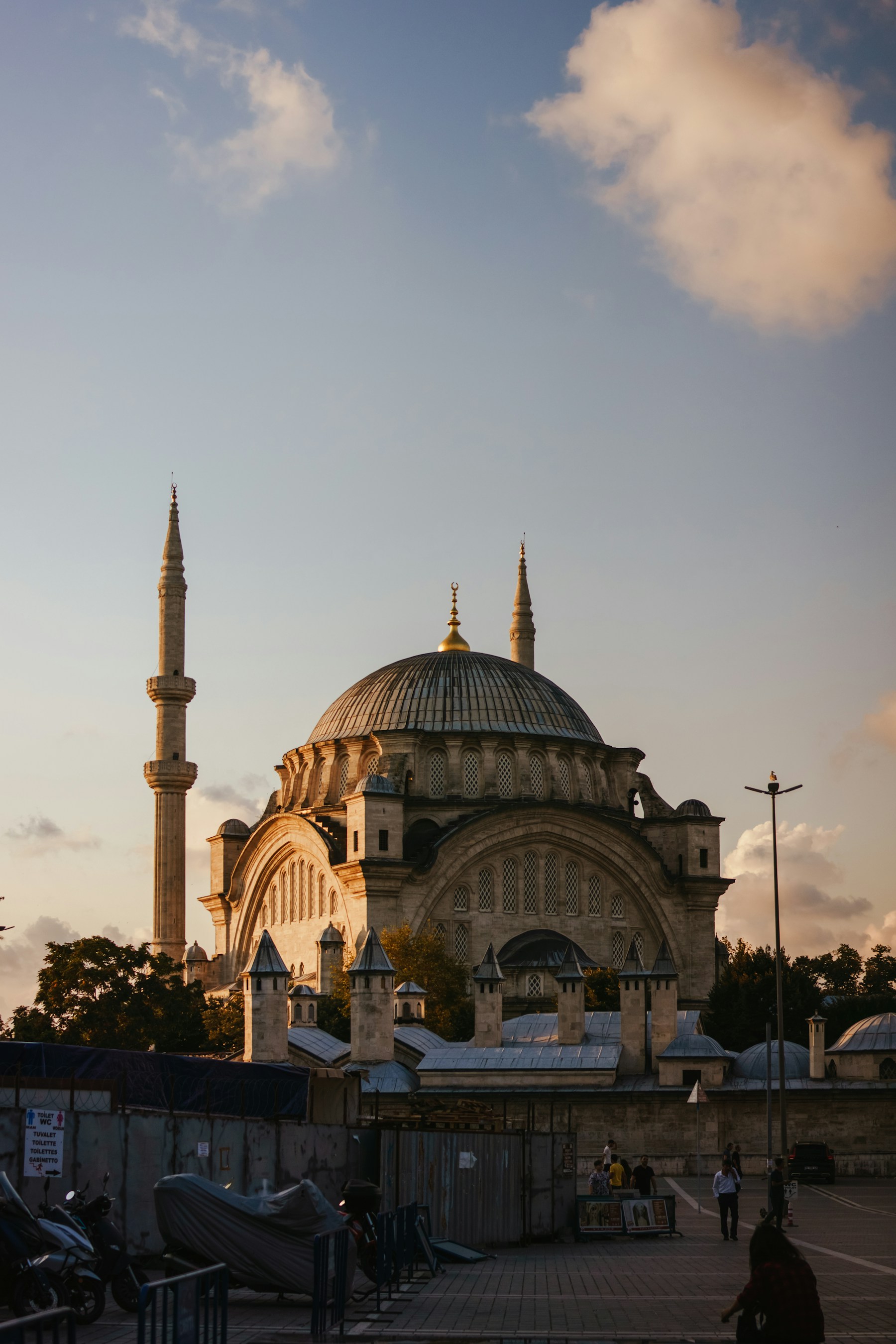
Hagia Sophia is a religious monument in Istanbul, Turkey, known for its vast central dome and layered sacred history.
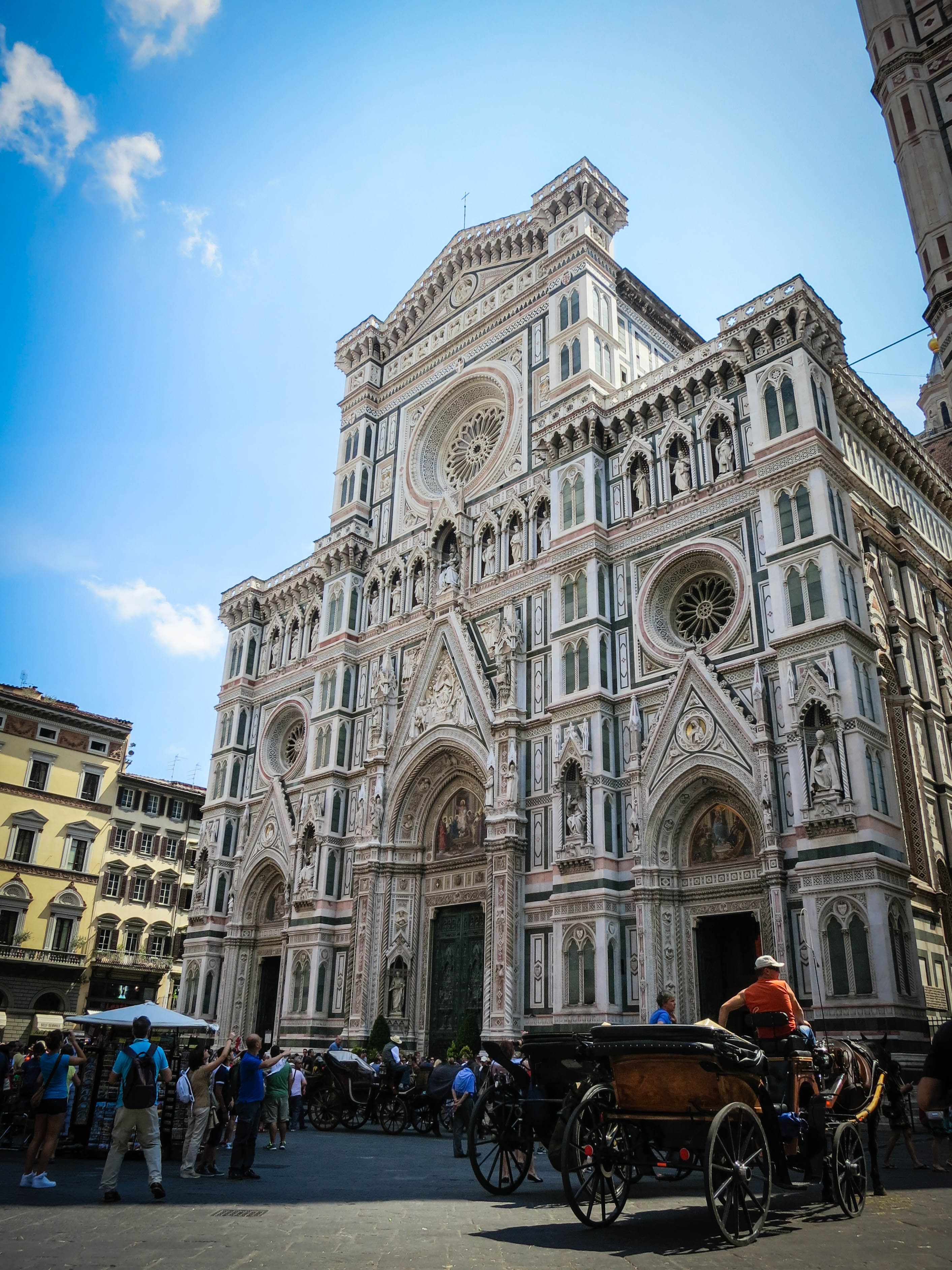
Florence Cathedral is a cathedral in Florence, Italy, known for Brunelleschi's dome rising above a richly patterned cathedral body.
References used for facts, location data, image credits, and architectural context on this page.