guide
Pantheon Rome Facts: Dome, Oculus, and Concrete Interior
The first fact is a spatial surprise
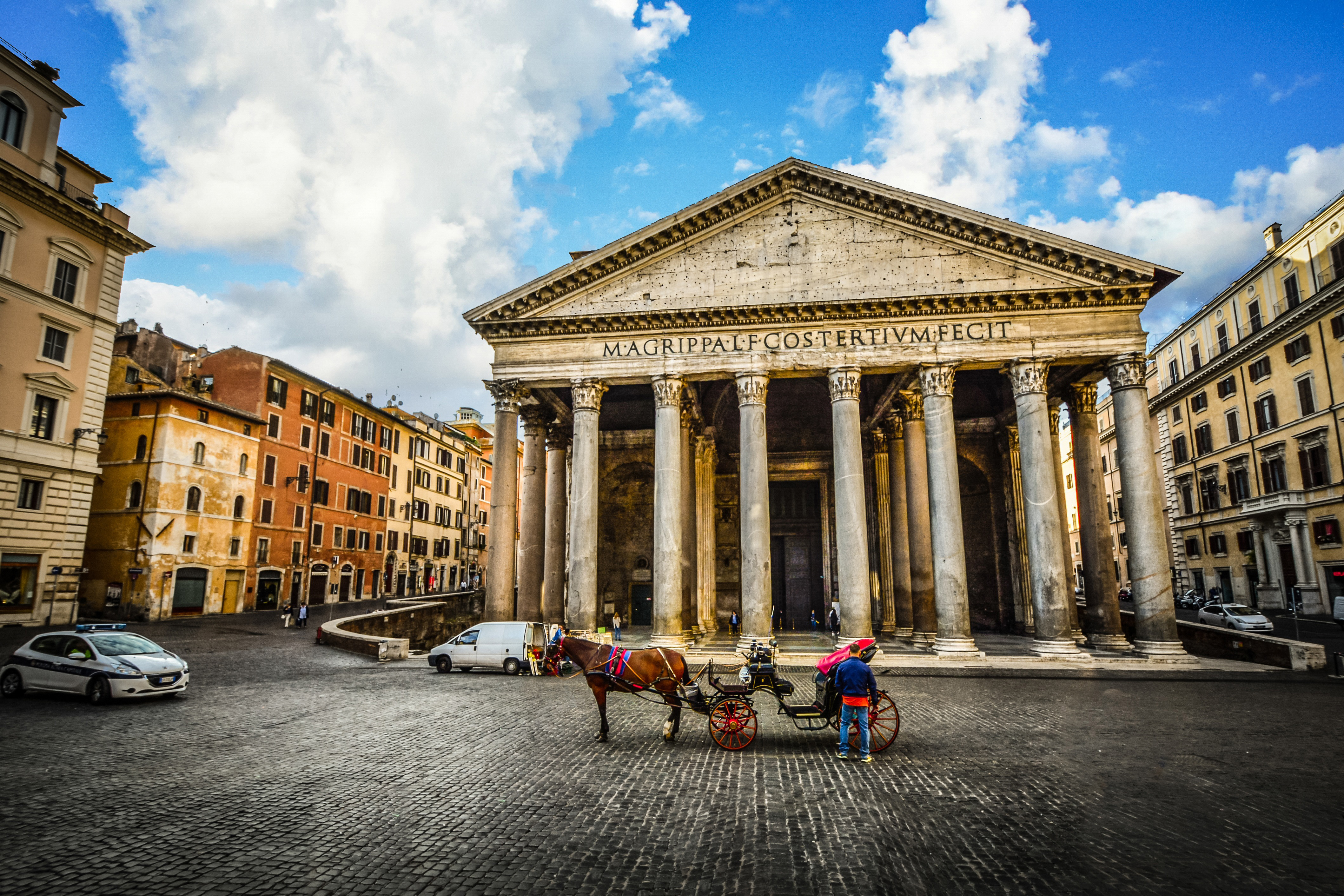
Pantheon Rome is often introduced as an ancient Roman temple, but the useful architectural fact is the mismatch between what the front promises and what the interior delivers. The portico presents a familiar classical face of columns, pediment, and inscription. Behind it is a vast circular room covered by a concrete dome. That shift from rectangular temple front to centralized rotunda is the reason the building stays so powerful: it changes architectural language at the threshold.
The inscription is not the whole authorship story
The facade inscription names Marcus Agrippa, but the building most visitors experience belongs to the later imperial rebuilding commonly associated with Hadrian's period. This matters because the Pantheon should not be read as a single simple date attached to one name. It is an ancient project with memory built into the front, technical ambition built into the rotunda, and later religious reuse built into its survival. The inscription is evidence, but it is not the whole building.
The dome is the central fact
The Pantheon's concrete dome turns the interior into a single architectural event. It is not only a roof over a room. It defines the room's geometry, weight, light, and emotional scale. The oculus at the top keeps the dome from feeling sealed. Light, weather, and the movement of the sun enter through that opening, so the building's most famous structural form also becomes its main instrument of perception.
Coffers help the eye read mass
The recessed coffers in the dome are practical and visual at once. They break up the large curved surface, give the eye a rhythm to follow, and make the dome feel measured rather than shapeless. A visitor who only looks for the oculus misses how the surrounding dome is scaled. The coffers make the concrete surface readable, turning enormous weight into a patterned ceiling that can be studied from below.
Survival is part of the fact sheet
The Pantheon is important not only because it was built well, but because it remained useful. Its conversion into a church helped preserve the structure while many other ancient Roman buildings were stripped, fragmented, or reduced to archaeology. That continuous life changes the facts. The building is both ancient monument and active inherited space, which is why it feels less like a ruin than a working architectural memory.
The city tightens the approach
The Pantheon is not approached across an empty ceremonial field. It sits within Rome's dense streets and a compact piazza, so the front can appear suddenly and at close range. That setting makes the portico feel urban, almost compressed, before the interior opens into a radically different volume. The surrounding city is therefore part of the fact pattern: narrow approach, sudden facade, deep porch, then the circular room.
What the facts should help you see
A useful quick reading should leave a route in the mind. First, read the portico and inscription. Second, notice the seam between the porch and the rotunda. Third, enter and look up to understand the dome, coffers, and oculus as one system. Fourth, remember that the building survived because it changed use. Those facts turn the Pantheon from a famous ancient name into a legible architectural sequence.