guide
Pantheon Rome Portico and Oculus Visit Notes
Begin in the piazza, not at the door
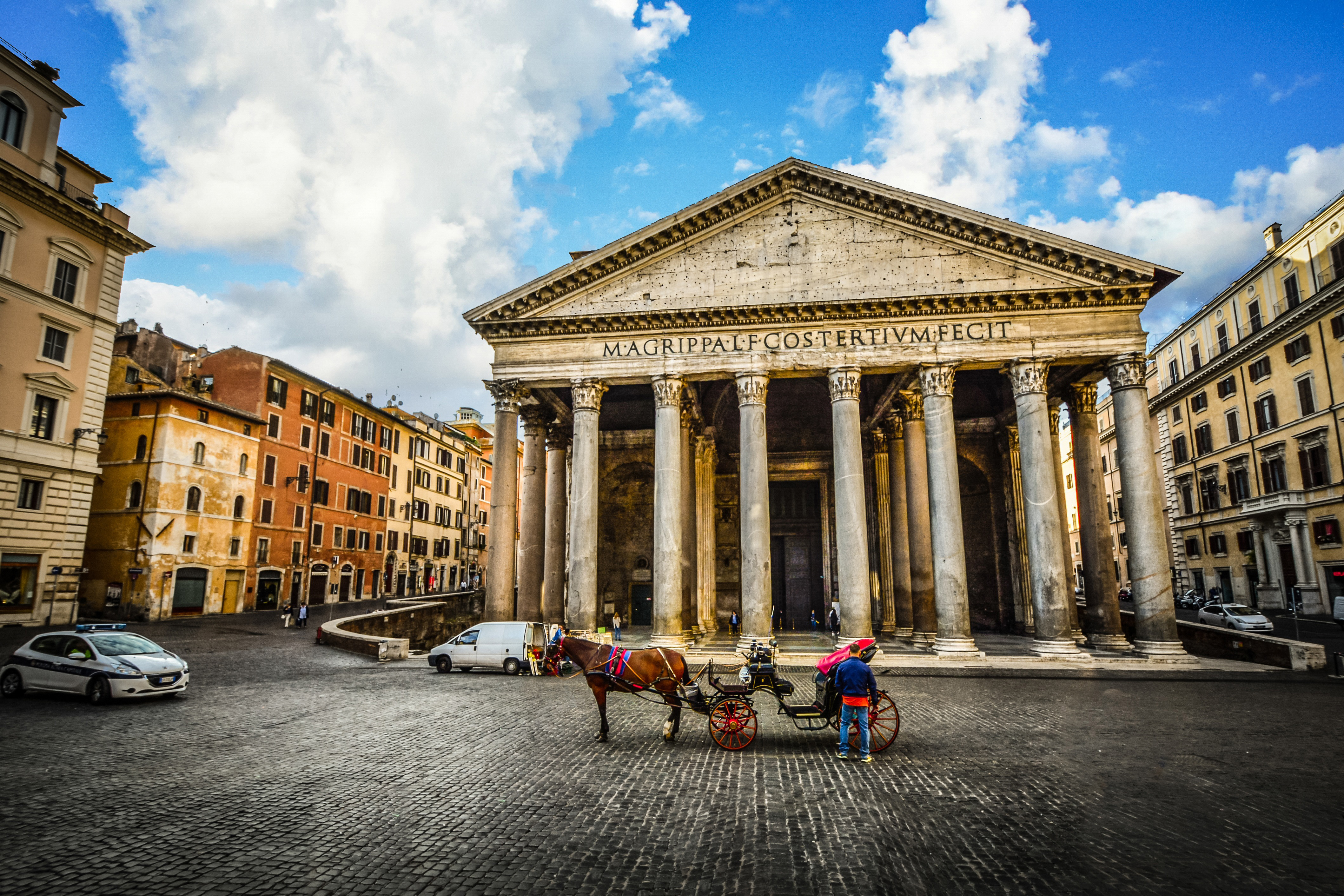
Start far enough back to see the Pantheon as an urban front. The surrounding buildings, paving, fountain, crowds, and narrow approach routes make the portico feel compressed into the city. This first view explains why the building is not only an isolated Roman object. It is a facade that still works as the end point of streets and the anchor of a public room. Give the piazza a few minutes before entering.
Read the portico as a threshold
Before going inside, stand under or near the columns and look at the depth of the porch. Notice how the pediment, inscription, column shafts, shadows, and doorway prepare a ceremonial entry. The portico is easy to photograph as a front, but it is more useful as a transition. It compresses light and scale so that the rotunda can open with greater force once the visitor crosses the threshold.
Let the rotunda reset your orientation
Inside, avoid walking straight to the center too quickly. Pause after entry and let the room overturn the expectation set by the portico. The circular wall, dome, niches, and floor pattern pull attention in every direction. The building is not a long hall with a front altar as the only focus. It is a centralized volume where turning in place is part of understanding the architecture.
Watch the oculus before photographing it
The oculus is more than a famous hole in the dome. Watch what its light does to the room. Depending on time and weather, the light may cut across coffers, walls, floor, or visitors. The point is not only to look upward. It is to see how the building lets the sky act inside the architecture. A short visit becomes better when the visitor waits long enough for light to become spatial evidence.
Use the coffers to understand scale
After the first upward view, follow the rings of coffers around the dome. They help the eye measure the curved surface and keep the dome from reading as an abstract smooth shell. Compare their rhythm with the lower wall, niches, and floor. This makes the interior more architectural and less merely spectacular. The dome is memorable because it is ordered, not just because it is large.
Look for continuity and change
A good Pantheon visit should include signs of reuse, repair, worship, tourism, and preservation. The building is ancient, but it is not a dead shell. Materials, surfaces, furnishings, inscriptions, tombs, and circulation patterns show that the monument has lived through different purposes. Those layers are not clutter around the main event. They are evidence of how the Pantheon survived.
Make a four-part visual record
Take one exterior image from the piazza to show the portico in the city, one threshold image showing columns and depth, one interior-wide image of the rotunda and dome, and one detail image of oculus light, coffers, wall niches, or floor geometry. Together these views explain sequence, structure, light, and reuse. A single upward oculus shot misses too much of the building's architectural intelligence.
Compare after the visit
After studying the Pantheon, compare it with the Colosseum for a different Roman use of concrete and public gathering, with Hagia Sophia for another dome-based spatial drama, and with later domed civic buildings for influence. The goal is not to rank famous interiors. It is to notice how the Pantheon concentrates force into one room while other buildings spread meaning through procession, crowd systems, or layered sacred space.