guide
Parthenon Acropolis Approach Visit Notes
Start below the monument
A useful Parthenon visit begins before the close view. Look at the Acropolis from the city and notice how the temple sits on the ridge rather than in an ordinary street setting. This long view explains why the building became more than a temple footprint. It works as a marker above Athens. Starting from below also prepares the eye for the difference between the distant silhouette and the close stone evidence found at the top.
Treat the approach as part of the architecture
As you move through the Acropolis, do not rush straight to the most familiar postcard angle. The changing path, rock surface, neighboring ancient structures, and shifting views all affect how the Parthenon appears. The building is not a single front waiting at the end of a flat axis. It is encountered through ascent and rotation. That movement makes side views, corners, and partial glimpses as important as the broad elevation.
Read the column rhythm slowly
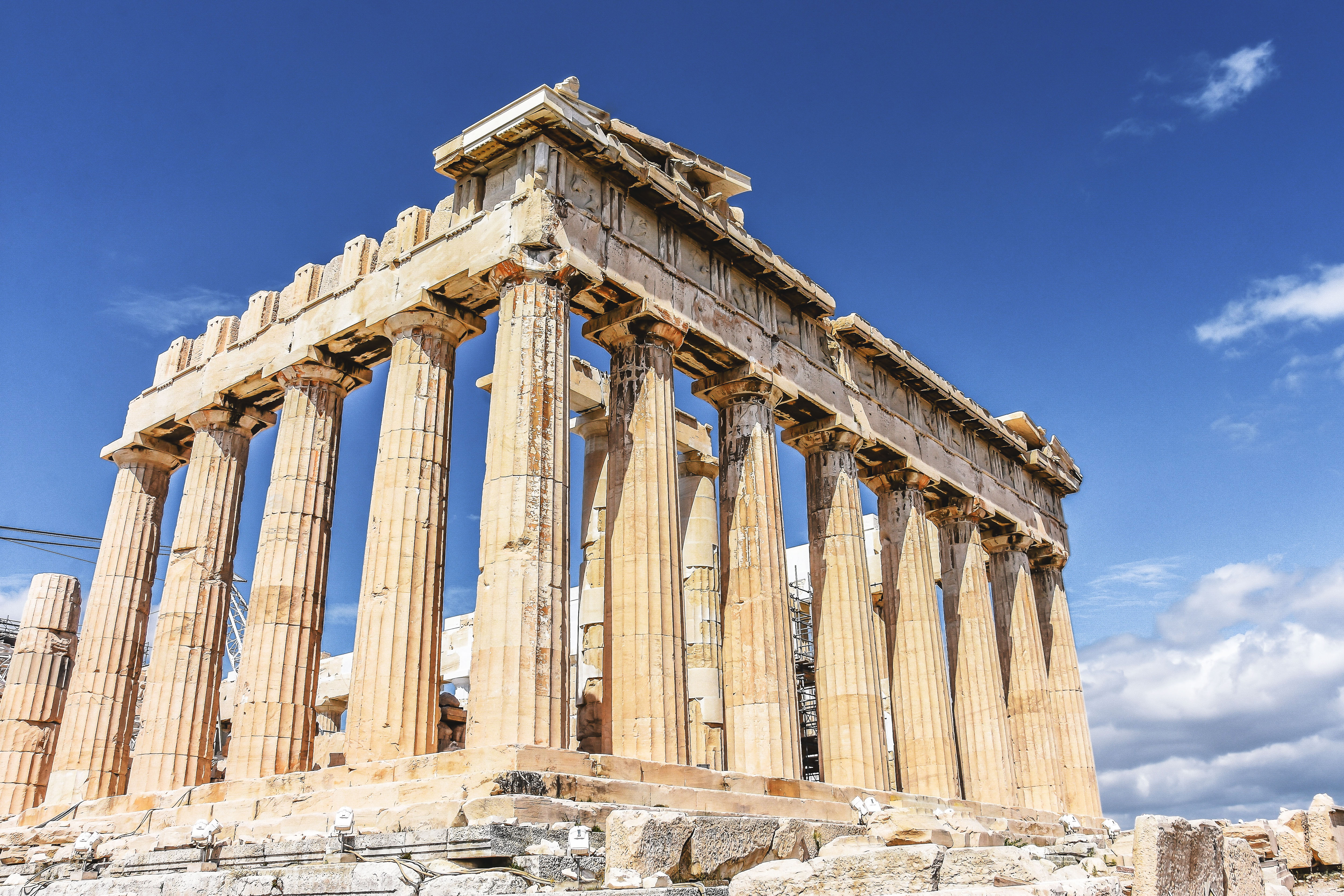
When close enough, follow the Doric columns across a long side and around a corner. Look for fluting, capital shape, spacing, shadows, and the way the entablature rests above them. The columns are the easiest detail to name, but naming them is not enough. The architectural question is how repetition creates pace and how the corner concentrates the whole system. A slow side reading often teaches more than one quick frontal photograph.
Look for refinements in the long lines
The Parthenon's optical refinements can be hard to see if you only search for dramatic effects. Instead, compare the long horizontal base and entablature lines with the apparent weight of the columns. The point is not to catch a trick. It is to understand that the temple was designed for perception. Slight curvature and adjustment help the stone body feel controlled, tense, and responsive rather than inert.
Use the surface as evidence
Spend time with the marble surface. Weathering, broken edges, block joints, repaired areas, fluting, and fragments are part of the current architectural experience. They show material and history together. A clean white mental image of the Parthenon misses too much. The real building is textured by damage and conservation, and those conditions help explain why the monument remains active as heritage rather than only a finished ancient object.
Keep neighboring monuments in view
Do not isolate the Parthenon from the rest of the Acropolis too quickly. Nearby structures, surviving foundations, approach routes, and open views across Athens help explain why the temple reads as part of a larger sacred and civic landscape. A visit becomes more architectural when the viewer asks how the Parthenon relates to the plateau, not only how it looks in a cropped photograph. The site context keeps scale, procession, and public memory in the same frame.
Photograph relationships, not only the icon
Make at least four kinds of architectural images: one long city or ridge view, one whole-temple view that keeps the colonnade readable, one corner or side view that shows column rhythm, and one close material detail. That record is stronger than a single heroic shot. It preserves site, form, rhythm, and material evidence. If scaffolding or conservation equipment is visible, do not automatically treat it as a flaw; it records the building's continuing life.
Compare after the visit
After studying the Parthenon, compare it with the Colosseum for ancient public scale, the Pantheon for another classical threshold and survival story, and Hagia Sophia for a very different sacred spatial system. The comparison should not flatten them into famous old monuments. Ask what each one makes visible first: colonnade and proportion, crowd structure, dome and interior light, or layered sacred volume.
The visit test
A strong visit should leave more than recognition. You should be able to explain how the Acropolis setting changes the building, how Doric rhythm organizes the exterior, how refinements shape perception, and how material damage affects the present reading. If those four answers are clear, the Parthenon has moved from postcard image to architectural evidence.