guide
Parthenon Facts: Acropolis Site, Marble, and Temple Form
The first fact is the Acropolis ridge
The Parthenon is often introduced as a classical temple in Athens, but its first architectural fact is its position on the Acropolis. The building is not understood only from a close facade view. It sits high above the city, where approach, skyline, rock, procession, and long-distance visibility become part of the design. That ridge setting turns a temple into an urban and civic marker. The building's power depends on being seen from below and then studied up close.
A Doric temple with controlled exceptions
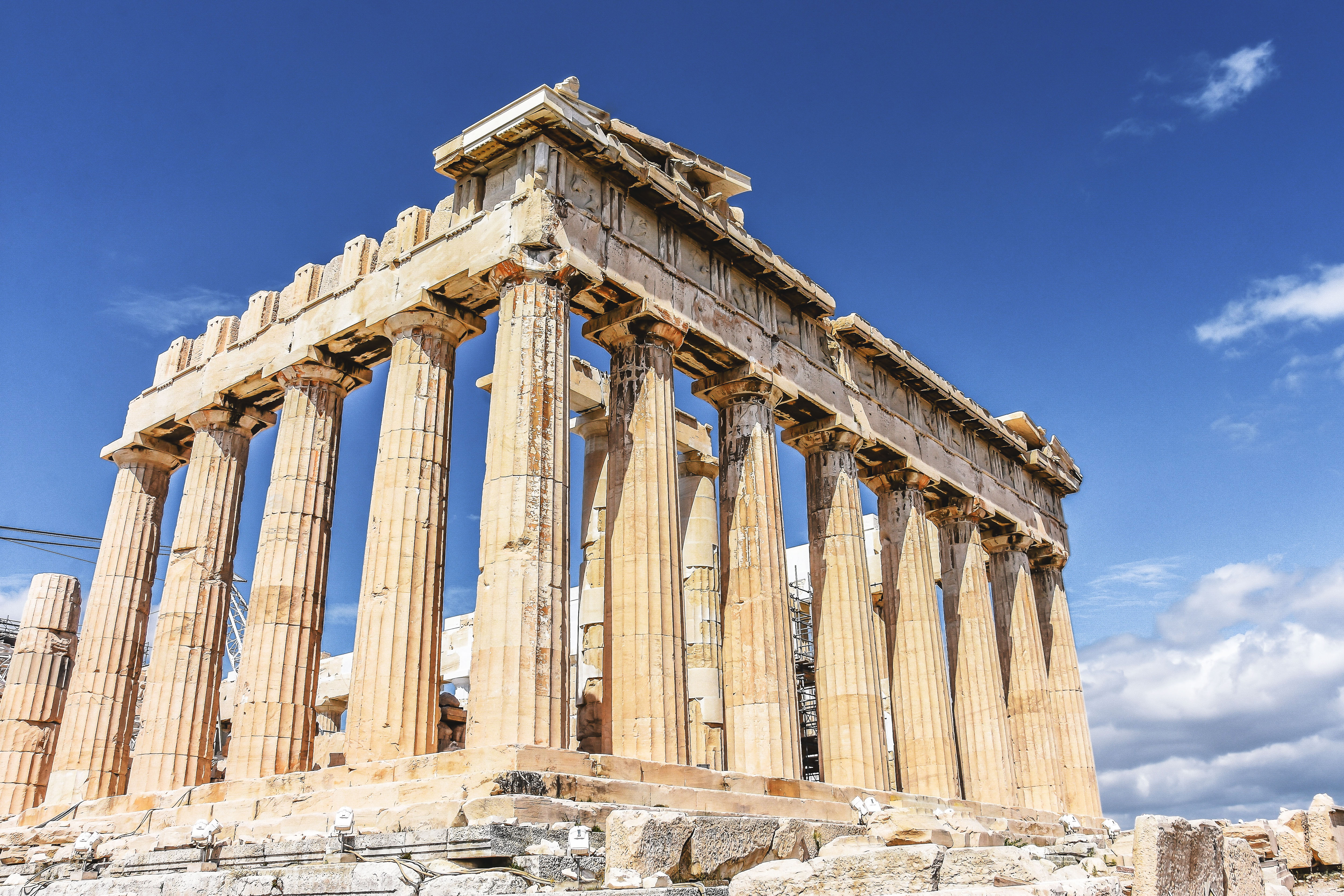
The Parthenon is usually read through the Doric order: fluted columns, simple capitals, triglyphs, metopes, and a strong horizontal entablature. Yet the building is not valuable because it follows a rulebook mechanically. It is valuable because the order is handled with discipline and adjustment. The proportional rhythm gives the temple clarity, while small refinements keep the stone body from feeling stiff. A useful fact sheet should therefore connect the order to perception, not stop at naming the column type.
Curvature is not decorative trivia
The subtle curvature of the stylobate and the slight adjustments in columns are among the fastest ways to move from recognition to architectural reading. These refinements do not shout from a distance. They make the long stone lines feel alive and optically controlled. Instead of treating the temple as a rigid diagram, the design responds to how a human eye sees mass, line, corner, and weight. That is why the Parthenon can look severe and carefully animated at the same time.
Pentelic marble makes light part of the facts
The atlas records marble and limestone for the Parthenon, but the visual lesson is mostly carried by the pale Pentelic marble. Its surface changes with daylight, weather, conservation state, and distance. The material is not only a sign of expense or permanence. It lets edges, fluting, joints, repair, and weathering remain readable. Close observation should look for how stone catches light on column shafts and broken surfaces rather than reducing the building to a white outline against the sky.
The plan was tied to procession
The Parthenon should also be read as part of movement across the Acropolis. A temple plan is never only a rectangle on a drawing; it controls how people approach, circle, pause, and understand sacred presence. The surrounding colonnade creates an exterior path of repeated supports and changing shadows, while the cella gives the building a more protected inner body. Even when visitors cannot experience the ancient ritual setting directly, the plan still explains why exterior rhythm and elevated placement matter so much.
Sculpture and structure once worked together
The present ruin can make sculpture feel separate from architecture, but the original program connected metopes, pediments, frieze, columns, and cella into one public story. Even where pieces are missing, the locations of sculptural zones still matter. They show that the temple was not a plain shelter decorated afterward. It was a coordinated stone body where structural rhythm and narrative surfaces worked together. The missing condition should be read as evidence of loss, not as proof that decoration was secondary.
What the basic facts should help you see
A useful Parthenon fact set should guide the eye through a sequence: the Acropolis position, the rectangular temple volume, the Doric colonnade, the slight curvature, the material surface, and the damaged but still legible sculptural zones. The date places it in fifth-century BCE Athens, but the visual evidence explains why that date still matters. The building condenses civic ambition, religious dedication, craft control, and later ruin into a form that can be read before it is fully explained.
Why it belongs in the core atlas
The Parthenon belongs in the public core because it gives readers a compact lesson in classical architecture without relying on nostalgia. Compare it with the Colosseum for ancient public scale, with the Pantheon for a different kind of classical front and interior drama, and with later neoclassical buildings for influence. The point is not to rank antiquity. It is to understand how a temple can become a reference system for proportion, civic memory, material craft, and visual discipline.