guide
Parthenon History Across Temple, Ruin, and Symbol
The history is not only ancient glory
The Parthenon's history is often flattened into a symbol of ancient Greece, but the building's real historical value is more layered. It belongs to fifth-century BCE Athens and the Acropolis building program, yet it also carries later religious change, military damage, removed sculpture, national symbolism, tourism, and conservation. The ruin seen today is not a clean survival from one moment. It is a long historical record in stone.
Civic ambition shaped the original project
The Parthenon was part of a larger Acropolis landscape tied to Athenian civic identity, religious dedication, and public display. Its refinement should not be separated from that context. Proportion, order, sculpture, and site were not neutral aesthetic choices. They helped make authority, devotion, and collective memory visible. That is why the building's architecture has always carried more than construction skill. It presents a city imagining itself through a highly controlled monumental language.
Reuse changed the building without erasing it
Over time, the Parthenon was adapted to different religious and political contexts. These changes matter because they show how a building can outlive its original program by absorbing new meanings. Adaptation did not preserve the temple in a pure state, but it kept the structure active in history. A useful historical reading avoids treating later phases as interruptions only. They are part of the reason the monument became a contested inherited object rather than a simple archaeological diagram.
Damage made the ruin condition central
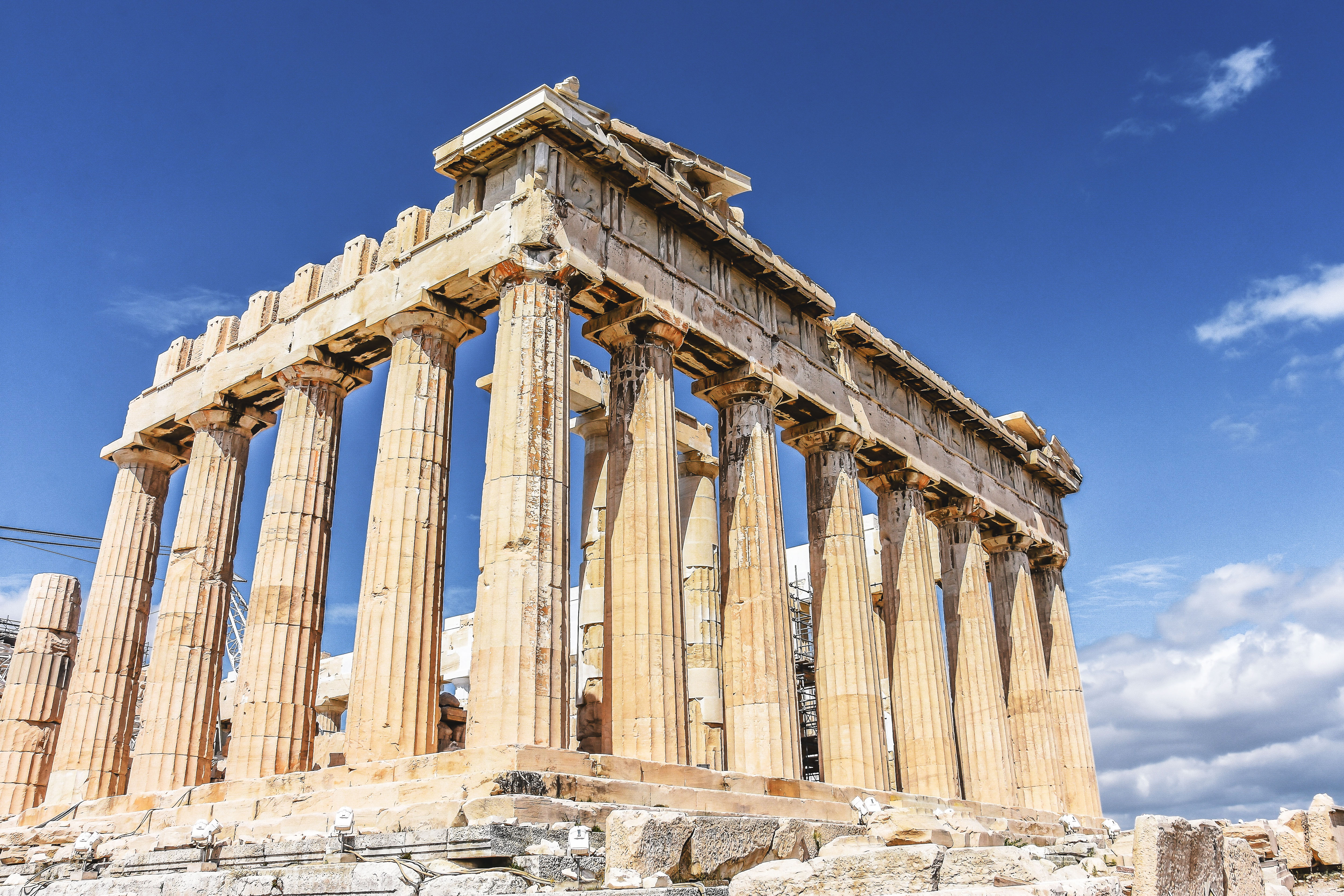
The seventeenth-century explosion that damaged the Parthenon transformed how the building would be seen by later viewers. Missing walls, broken columns, exposed interior space, displaced sculpture, and scaffolded conservation all shape the present architectural reading. The ruin condition is not just a sad afterimage of a lost temple. It changes the evidence available to visitors. We now read structure, material, loss, and repair at the same time.
The sculpture debate is part of the context
The Parthenon's sculpture has a complicated modern history because major fragments are separated from the building and from one another. That issue belongs to cultural heritage, museum history, national identity, and architectural interpretation. The building page does not need to resolve the debate, but it should make clear that sculpture and architecture were originally connected. When fragments are displaced, the building's historical meaning is also divided across sites, institutions, and arguments.
Conservation is part of the modern history
Modern conservation also changes how the Parthenon is encountered. Scaffolding, replacement blocks, cataloged fragments, and careful reconstruction work can interrupt the pure image of an ancient ruin, but they are not distractions from history. They show that preservation is an active, technical, and interpretive process. Every decision about stabilizing stone, placing fragments, or leaving absence visible shapes the public understanding of what the monument is and what parts of it remain uncertain. That makes the current site a record of ancient construction and modern care at the same time.
Influence turned the ruin into a reference system
The Parthenon influenced later ideas about classical architecture, civic dignity, proportion, and monumentality. That influence can be productive and misleading at the same time. Later buildings often borrow the image of columns and pediments without reproducing the Acropolis setting, sculptural program, or optical refinements. The sharper legacy is not that every classical-looking building descends from the Parthenon. It is that the temple became a benchmark for how architecture can make order visible. A responsible comparison therefore looks past the borrowed facade and asks whether later buildings also carry discipline, site meaning, and public memory.
The historical lesson
The Parthenon teaches that a famous monument is never only its original design. It is also the history of survival, damage, reuse, interpretation, removal, repair, and public argument. For readers, that means the building should be studied as both a fifth-century BCE achievement and a modern heritage condition. The visible ruin is not a lesser version of the guide. It is the evidence through which the guide must work.