why it matters
Why this building matters
Parthenon helps readers connect Ancient and Classical to visible design decisions: Doric columns, subtle curvature, temple on the Acropolis ridge.
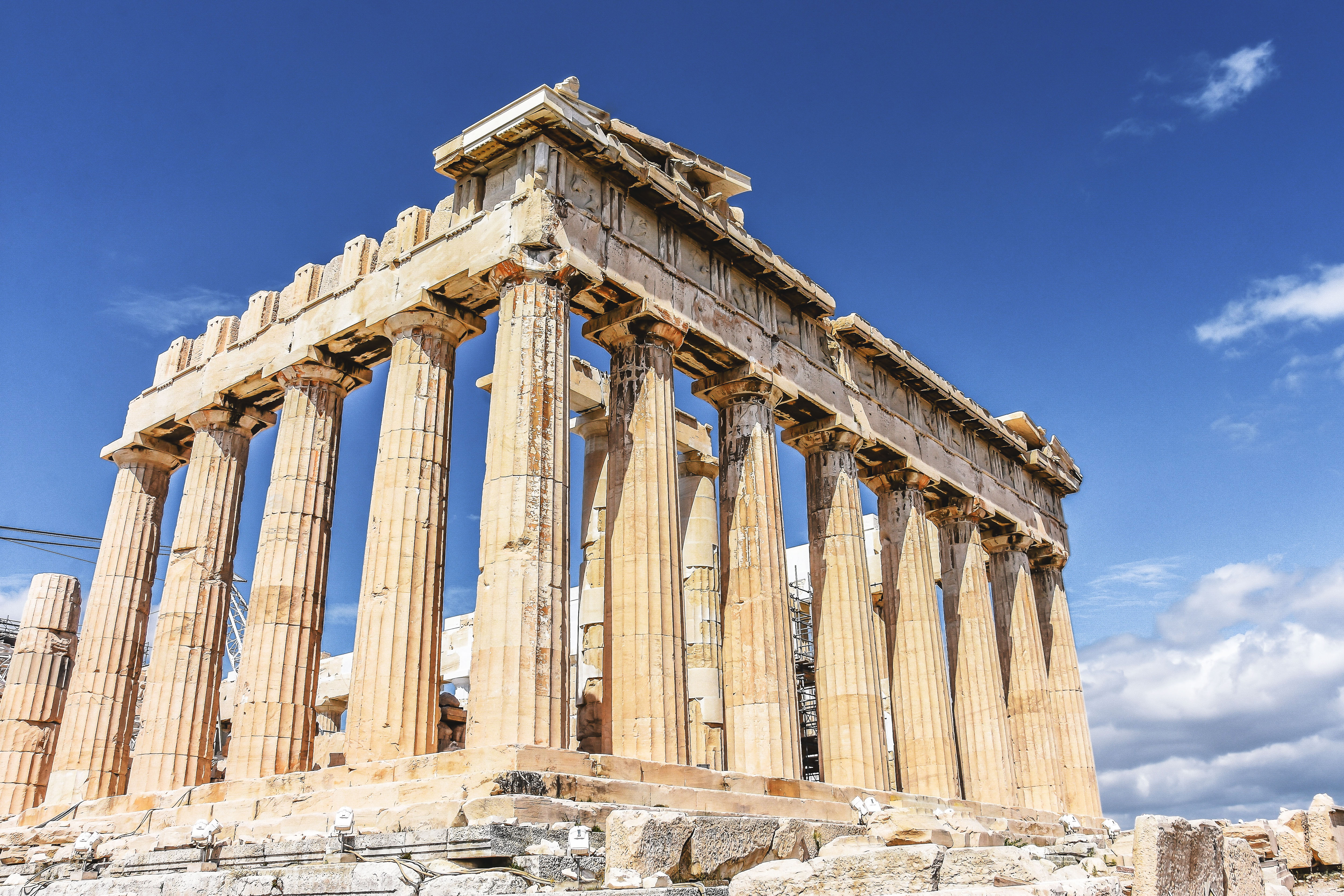
building detail
Parthenon is a temple in Athens, Greece, known for its Doric order, optical refinements, and Acropolis setting.
Photo credit: Kirk Fisher / CC0 / Public Domain.
why it matters
Parthenon helps readers connect Ancient and Classical to visible design decisions: Doric columns, subtle curvature, temple on the Acropolis ridge.
what to notice
explore by place and style
map notes
Use the coordinates as anchors for reading the buildings in relation to streets, water, skyline, and nearby landmarks.
37.9715, 23.726741.8902, 12.492241.0086, 28.9802Map coordinates are listed with provider attribution handled through the source records.
architecture guide
A fuller reading of the building's history, setting, form, materials, and public role.
The Parthenon is often introduced as a classical temple in Athens, but its first architectural fact is its position on the Acropolis. The building is not understood only from a close facade view. It sits high above the city, where approach, skyline, rock, procession, and long-distance visibility become part of the design. That ridge setting turns a temple into an urban and civic marker. The building's power depends on being seen from below and then studied up close.
The Parthenon is usually read through the Doric order: fluted columns, simple capitals, triglyphs, metopes, and a strong horizontal entablature. Yet the building is not valuable because it follows a rulebook mechanically. It is valuable because the order is handled with discipline and adjustment. The proportional rhythm gives the temple clarity, while small refinements keep the stone body from feeling stiff. A useful fact sheet should therefore connect the order to perception, not stop at naming the column type.
The subtle curvature of the stylobate and the slight adjustments in columns are among the fastest ways to move from recognition to architectural reading. These refinements do not shout from a distance. They make the long stone lines feel alive and optically controlled. Instead of treating the temple as a rigid diagram, the design responds to how a human eye sees mass, line, corner, and weight. That is why the Parthenon can look severe and carefully animated at the same time.
The atlas records marble and limestone for the Parthenon, but the visual lesson is mostly carried by the pale Pentelic marble. Its surface changes with daylight, weather, conservation state, and distance. The material is not only a sign of expense or permanence. It lets edges, fluting, joints, repair, and weathering remain readable. Close observation should look for how stone catches light on column shafts and broken surfaces rather than reducing the building to a white outline against the sky.
The Parthenon should also be read as part of movement across the Acropolis. A temple plan is never only a rectangle on a drawing; it controls how people approach, circle, pause, and understand sacred presence. The surrounding colonnade creates an exterior path of repeated supports and changing shadows, while the cella gives the building a more protected inner body. Even when visitors cannot experience the ancient ritual setting directly, the plan still explains why exterior rhythm and elevated placement matter so much.
The present ruin can make sculpture feel separate from architecture, but the original program connected metopes, pediments, frieze, columns, and cella into one public story. Even where pieces are missing, the locations of sculptural zones still matter. They show that the temple was not a plain shelter decorated afterward. It was a coordinated stone body where structural rhythm and narrative surfaces worked together. The missing condition should be read as evidence of loss, not as proof that decoration was secondary.
A useful Parthenon fact set should guide the eye through a sequence: the Acropolis position, the rectangular temple volume, the Doric colonnade, the slight curvature, the material surface, and the damaged but still legible sculptural zones. The date places it in fifth-century BCE Athens, but the visual evidence explains why that date still matters. The building condenses civic ambition, religious dedication, craft control, and later ruin into a form that can be read before it is fully explained.
The Parthenon belongs in the public core because it gives readers a compact lesson in classical architecture without relying on nostalgia. Compare it with the Colosseum for ancient public scale, with the Pantheon for a different kind of classical front and interior drama, and with later neoclassical buildings for influence. The point is not to rank antiquity. It is to understand how a temple can become a reference system for proportion, civic memory, material craft, and visual discipline.
The Parthenon's design is powerful because it does not depend on a complex outline. The main form is a rectangular temple raised on the Acropolis, surrounded by a disciplined colonnade. Its intelligence lies in how much architectural meaning is carried by proportion, rhythm, correction, and setting. A quick glance sees a classical ruin; a slower reading sees a system of repeated columns, compressed corners, measured horizontals, and small refinements that prevent the form from feeling merely mechanical.
The Doric columns are not only supports. They create the building's public rhythm and decide how the body is read from every side. Fluting catches light, column spacing sets pace, and the corner condition concentrates attention where two elevations meet. Because the building is approached from changing angles on a rocky site, the colonnade has to work as perimeter, screen, shadow device, and symbol at once. That makes the exterior sequence more important than a single front elevation.
The Parthenon is often admired for refinements such as slight curvature and carefully adjusted column behavior. These moves matter because they show architecture responding to perception. Long stone lines can seem to sag or deaden when treated as pure geometry. The refinements make the temple feel taut, balanced, and alive under the eye. They are not decorative flourishes. They are design decisions that bridge measured construction and human vision.
The corners are especially useful for design analysis because they compress several systems into one place. Column spacing, triglyph rhythm, entablature weight, side elevation, front elevation, and viewer angle all meet there. A weak corner would make the building feel like two flat facades pasted together. The Parthenon's corner condition helps the temple read as a complete stone volume, not only as a front with two long sides attached.
A temple can easily read as either heavy stone mass or open colonnade. The Parthenon holds those conditions together. The columns create gaps, shadow, and layered depth; the entablature and cella hold the building as a solid body. This balance lets the temple feel both accessible to the eye and ceremonially contained. The ruin condition now exposes more void than the original experience would have, but the underlying design still depends on the tension between enclosure and perimeter rhythm.
Pentelic marble gives the Parthenon a fine scale at close range. Chips, joints, fluting, weathered edges, repaired blocks, and surviving fragments stop the building from being only an abstract diagram of classical proportion. The material surface records craft, damage, restoration, and time. This is especially important for a famous monument: the most reproduced image is a distant outline, but the most architectural evidence often sits in the small stone transitions. The existing condition asks the viewer to read design through survival, not through an imagined perfect reconstruction alone.
The Parthenon is not a freestanding object on neutral ground. The Acropolis changes the design reading by adding ascent, exposed rock, city views, neighboring monuments, and long-distance recognition. The building participates in a larger sacred and civic landscape. Its form must therefore be read in two scales at once: as a refined temple body and as a marker above Athens. That dual scale is one reason the ruin remains legible even when many original elements are missing.
The Parthenon's design lesson is that classical architecture is not only a vocabulary of columns and pediments. It is a discipline of perception. Proportion, curvature, column rhythm, material surface, sculpture zones, and site placement are made to support one another. A shallow reading sees a famous old temple. A stronger reading asks how the building turns severe order into a vivid visual experience that still survives through fragment, repair, and distance.
The Parthenon's history is often flattened into a symbol of ancient Greece, but the building's real historical value is more layered. It belongs to fifth-century BCE Athens and the Acropolis building program, yet it also carries later religious change, military damage, removed sculpture, national symbolism, tourism, and conservation. The ruin seen today is not a clean survival from one moment. It is a long historical record in stone.
The Parthenon was part of a larger Acropolis landscape tied to Athenian civic identity, religious dedication, and public display. Its refinement should not be separated from that context. Proportion, order, sculpture, and site were not neutral aesthetic choices. They helped make authority, devotion, and collective memory visible. That is why the building's architecture has always carried more than construction skill. It presents a city imagining itself through a highly controlled monumental language.
Over time, the Parthenon was adapted to different religious and political contexts. These changes matter because they show how a building can outlive its original program by absorbing new meanings. Adaptation did not preserve the temple in a pure state, but it kept the structure active in history. A useful historical reading avoids treating later phases as interruptions only. They are part of the reason the monument became a contested inherited object rather than a simple archaeological diagram.
The seventeenth-century explosion that damaged the Parthenon transformed how the building would be seen by later viewers. Missing walls, broken columns, exposed interior space, displaced sculpture, and scaffolded conservation all shape the present architectural reading. The ruin condition is not just a sad afterimage of a lost temple. It changes the evidence available to visitors. We now read structure, material, loss, and repair at the same time.
The Parthenon's sculpture has a complicated modern history because major fragments are separated from the building and from one another. That issue belongs to cultural heritage, museum history, national identity, and architectural interpretation. The building page does not need to resolve the debate, but it should make clear that sculpture and architecture were originally connected. When fragments are displaced, the building's historical meaning is also divided across sites, institutions, and arguments.
Modern conservation also changes how the Parthenon is encountered. Scaffolding, replacement blocks, cataloged fragments, and careful reconstruction work can interrupt the pure image of an ancient ruin, but they are not distractions from history. They show that preservation is an active, technical, and interpretive process. Every decision about stabilizing stone, placing fragments, or leaving absence visible shapes the public understanding of what the monument is and what parts of it remain uncertain. That makes the current site a record of ancient construction and modern care at the same time.
The Parthenon influenced later ideas about classical architecture, civic dignity, proportion, and monumentality. That influence can be productive and misleading at the same time. Later buildings often borrow the image of columns and pediments without reproducing the Acropolis setting, sculptural program, or optical refinements. The sharper legacy is not that every classical-looking building descends from the Parthenon. It is that the temple became a benchmark for how architecture can make order visible. A responsible comparison therefore looks past the borrowed facade and asks whether later buildings also carry discipline, site meaning, and public memory.
The Parthenon teaches that a famous monument is never only its original design. It is also the history of survival, damage, reuse, interpretation, removal, repair, and public argument. For readers, that means the building should be studied as both a fifth-century BCE achievement and a modern heritage condition. The visible ruin is not a lesser version of the guide. It is the evidence through which the guide must work.
A useful Parthenon visit begins before the close view. Look at the Acropolis from the city and notice how the temple sits on the ridge rather than in an ordinary street setting. This long view explains why the building became more than a temple footprint. It works as a marker above Athens. Starting from below also prepares the eye for the difference between the distant silhouette and the close stone evidence found at the top.
As you move through the Acropolis, do not rush straight to the most familiar postcard angle. The changing path, rock surface, neighboring ancient structures, and shifting views all affect how the Parthenon appears. The building is not a single front waiting at the end of a flat axis. It is encountered through ascent and rotation. That movement makes side views, corners, and partial glimpses as important as the broad elevation.
When close enough, follow the Doric columns across a long side and around a corner. Look for fluting, capital shape, spacing, shadows, and the way the entablature rests above them. The columns are the easiest detail to name, but naming them is not enough. The architectural question is how repetition creates pace and how the corner concentrates the whole system. A slow side reading often teaches more than one quick frontal photograph.
The Parthenon's optical refinements can be hard to see if you only search for dramatic effects. Instead, compare the long horizontal base and entablature lines with the apparent weight of the columns. The point is not to catch a trick. It is to understand that the temple was designed for perception. Slight curvature and adjustment help the stone body feel controlled, tense, and responsive rather than inert.
Spend time with the marble surface. Weathering, broken edges, block joints, repaired areas, fluting, and fragments are part of the current architectural experience. They show material and history together. A clean white mental image of the Parthenon misses too much. The real building is textured by damage and conservation, and those conditions help explain why the monument remains active as heritage rather than only a finished ancient object.
Do not isolate the Parthenon from the rest of the Acropolis too quickly. Nearby structures, surviving foundations, approach routes, and open views across Athens help explain why the temple reads as part of a larger sacred and civic landscape. A visit becomes more architectural when the viewer asks how the Parthenon relates to the plateau, not only how it looks in a cropped photograph. The site context keeps scale, procession, and public memory in the same frame.
Make at least four kinds of architectural images: one long city or ridge view, one whole-temple view that keeps the colonnade readable, one corner or side view that shows column rhythm, and one close material detail. That record is stronger than a single heroic shot. It preserves site, form, rhythm, and material evidence. If scaffolding or conservation equipment is visible, do not automatically treat it as a flaw; it records the building's continuing life.
After studying the Parthenon, compare it with the Colosseum for ancient public scale, the Pantheon for another classical threshold and survival story, and Hagia Sophia for a very different sacred spatial system. The comparison should not flatten them into famous old monuments. Ask what each one makes visible first: colonnade and proportion, crowd structure, dome and interior light, or layered sacred volume.
A strong visit should leave more than recognition. You should be able to explain how the Acropolis setting changes the building, how Doric rhythm organizes the exterior, how refinements shape perception, and how material damage affects the present reading. If those four answers are clear, the Parthenon has moved from postcard image to architectural evidence.
continue reading
related buildings
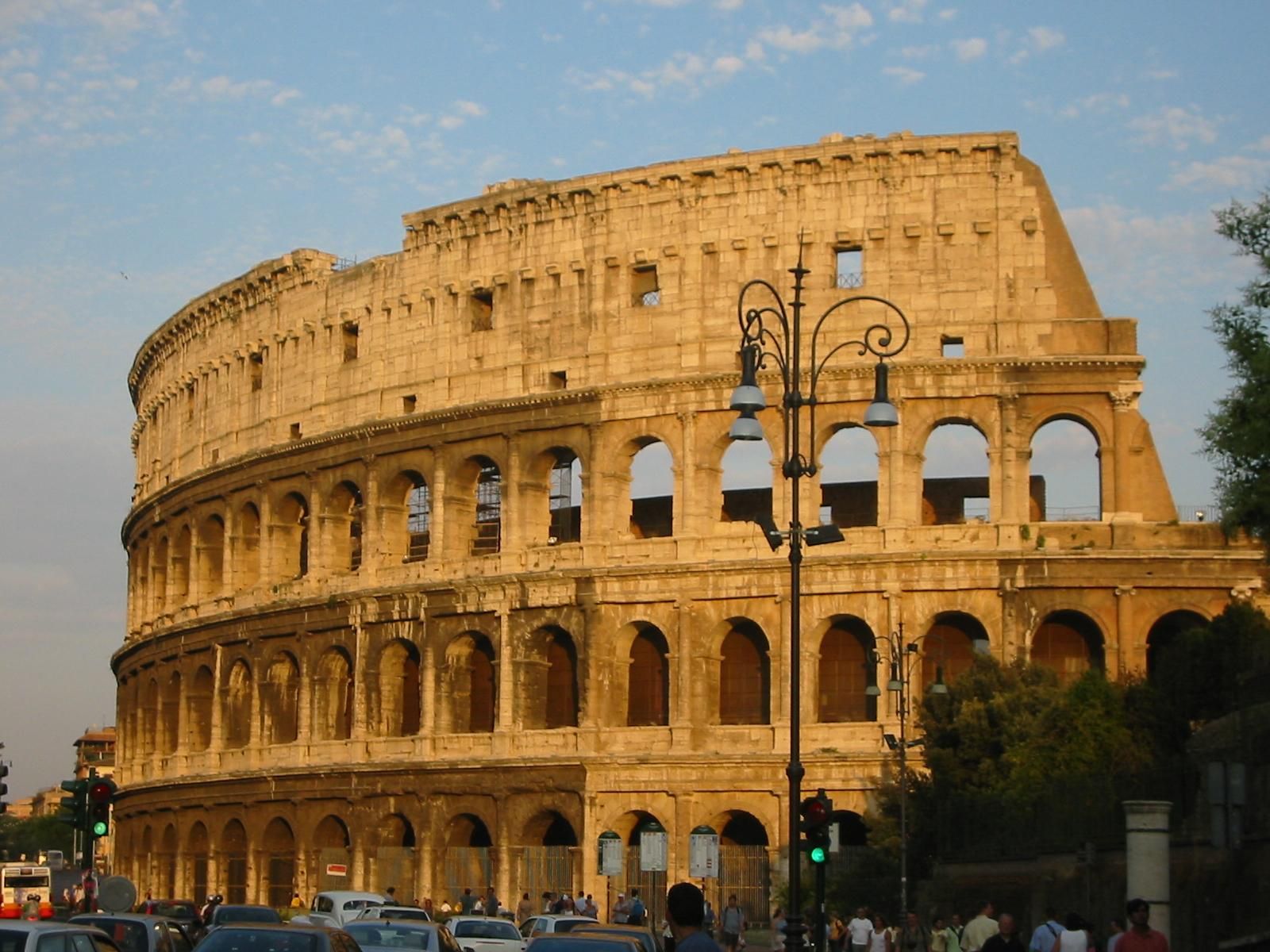
Colosseum is a amphitheater in Rome, Italy, known for its stacked arcades and enormous oval arena.

Hagia Sophia is a religious monument in Istanbul, Turkey, known for its vast central dome and layered sacred history.
References used for facts, location data, image credits, and architectural context on this page.