guide
Marina Bay Sands Promenade and SkyPark Visit Notes
Begin across Marina Bay
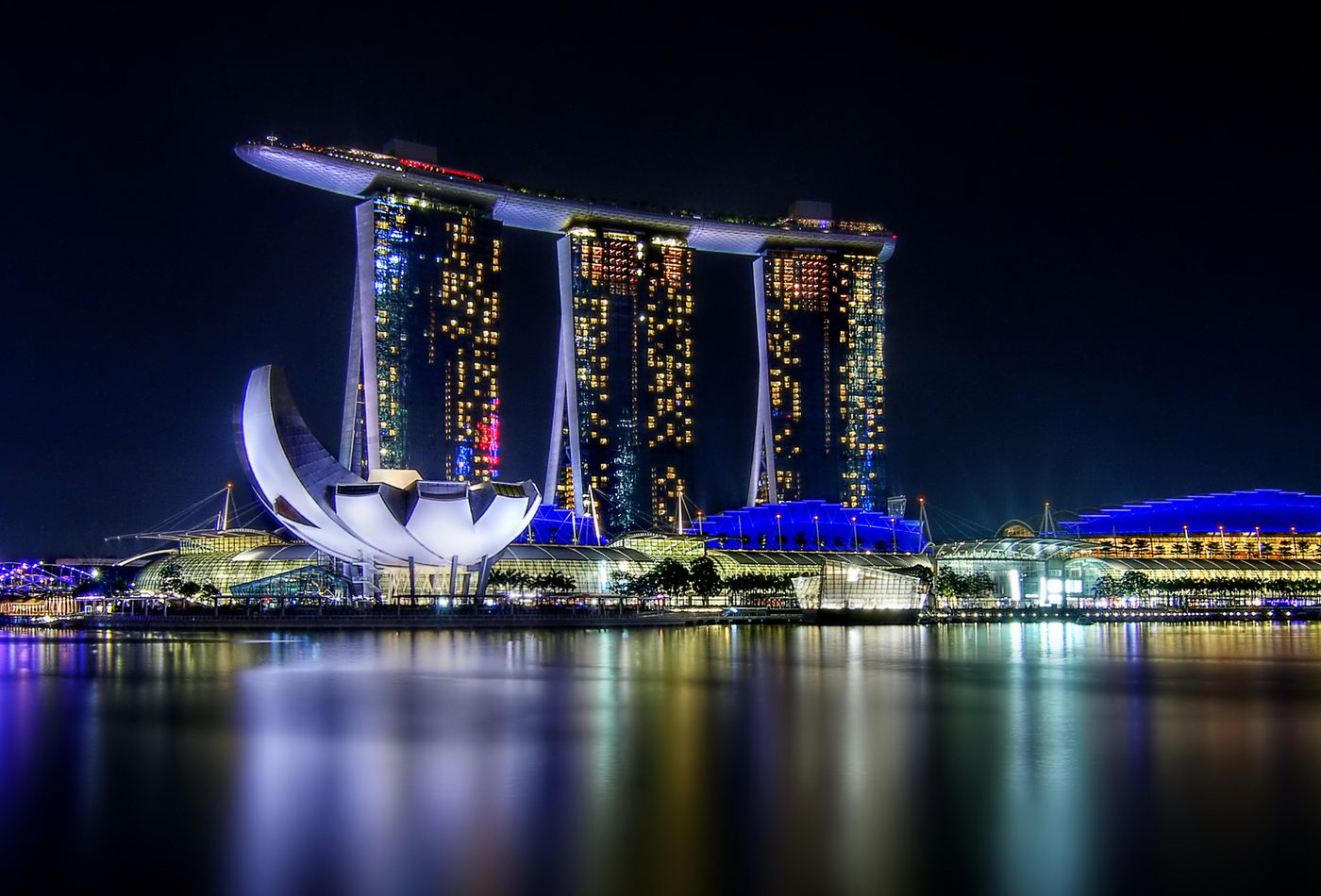
The best first read of Marina Bay Sands is from across Marina Bay, where the three towers and SkyPark can be seen as one figure. Do not begin only at the base. From too close, the project becomes a large resort complex with many entrances and commercial edges. From across the water, the section becomes legible: vertical hotel slabs below, long public deck above, and water in front acting as both mirror and urban room.
Use the waterfront promenade
Walk the waterfront slowly and watch how the building changes against the bay. The towers may look like separate slabs from some angles, then merge again under the SkyPark. This shifting reading is useful because it shows how the project depends on movement and distance. Pause when the deck, towers, water, and surrounding skyline fit into one view. That is the moment when the building's city-image role is clearest.
Study the base after the silhouette
After the wide view, move closer and test the ground condition. Look for hotel arrival, retail thresholds, convention routes, landscape, water edges, and pedestrian movement. The base is where the building stops being a clean diagram and becomes a working integrated resort. That complexity should not be ignored. It reveals the difference between the simple skyline figure and the dense commercial program that supports it.
Read the SkyPark as elevated ground
If you can see or visit the SkyPark, read it as an elevated ground plane rather than only as a roof. It binds the towers, holds views, supports leisure and landscape, and gives the building its public memory. The important architectural question is how a deck so high above the city can still feel like a destination. The answer lies in the way height, panorama, pool, garden, and skyline image are combined.
Compare day and night
Marina Bay Sands changes strongly between day and night. By day, the relationship between towers, deck, glass, water, and tropical light is easier to read. At night, the building becomes part of a larger illuminated bay scene. Both views matter. The day view explains the architectural section; the night view explains the building's role in Singapore's public image. A serious visit should try to remember both, even if only one can be photographed well.
Make three useful photographs
Make one wide bay photograph that shows the whole three-tower-and-SkyPark figure, one base photograph that shows entrances or promenade movement, and one detail or elevated photograph that records the deck, facade, water reflection, or skyline relationship. Those three images keep the visit architectural. They document silhouette, ground condition, and public image instead of reducing the building to a single luxury-resort postcard.
Compare after the visit
After studying Marina Bay Sands, compare it with Sydney Opera House, Burj Khalifa, and The Shard. Sydney helps explain waterfront civic image; Burj Khalifa clarifies district-making through height; The Shard shows a sharper tower in a historic city. Marina Bay Sands differs because its strongest move is horizontal: a sky park binding three vertical towers into one bay-facing icon. That comparison helps the visit stay focused on architecture rather than spectacle alone.