guide
Marina Bay Sands Facts: Three Towers and SkyPark
The skyline fact is a section
Marina Bay Sands is an integrated resort in Singapore designed by Moshe Safdie and completed in 2010. The basic fact is easy to remember: three hotel towers support a long SkyPark across the top. The more useful architectural fact is that the famous skyline figure is a section, not only an image. Hotel rooms, casino and retail uses, convention space, public decks, pools, gardens, and waterfront routes are stacked and linked into one urban machine.
Three towers make one figure
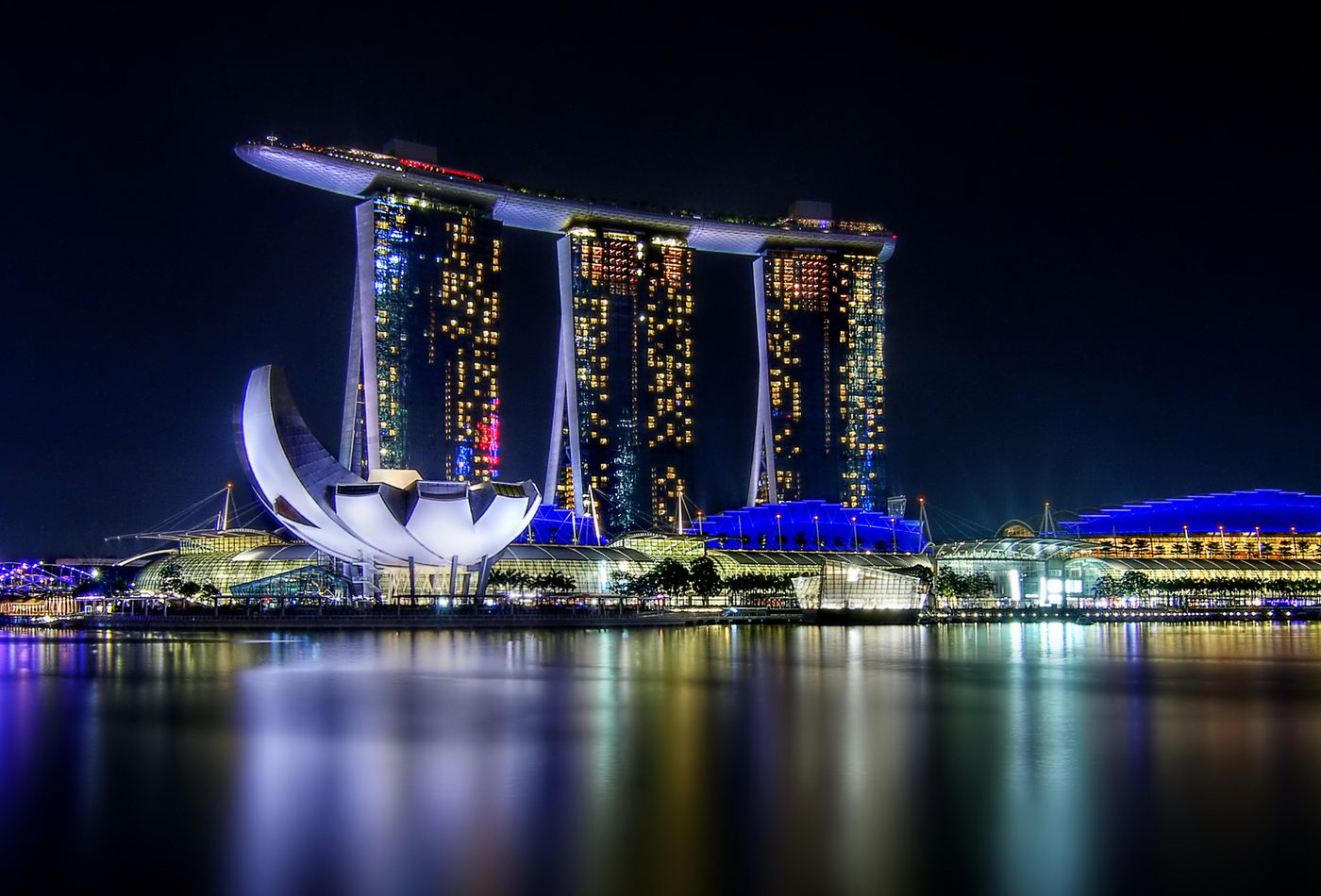
The three towers are separate vertical slabs, but the SkyPark makes them read as one building from across Marina Bay. That top element is essential. Without it, the project would be three large hotel towers near the water. With it, the composition becomes a single skyline sign, almost like a bridge or ship placed high above the city. The building is therefore best read through the tension between repeated vertical supports and one continuous horizontal crown.
The SkyPark is not just a roof
The SkyPark carries observation, leisure, landscape, and image-making functions. It is the part of the building that turns private resort infrastructure into a public city symbol. Its long, boat-like profile is visible from far away, but its architectural importance is also sectional: it links the towers, creates an elevated ground plane, and converts height into a destination. A fact page should treat it as program, structure, and sign at the same time.
The waterfront setting changes the meaning
Marina Bay Sands sits on Singapore's Marina Bay waterfront, so reflection, skyline, promenade movement, and long-distance views are part of the building's identity. The resort is not hidden inside a district. It faces the bay as a staged urban backdrop. That placement makes the building work like civic theater even though its program is commercial. The water gives the composition distance, symmetry, and a mirror that strengthens the three-tower-and-deck image.
Integrated resort means mixed public readings
The type matters. Marina Bay Sands combines hotel, casino, convention, retail, dining, entertainment, observation, and landscape functions. Different visitors therefore read the building through different uses: a guest reads the towers, a tourist reads the deck, a city walker reads the waterfront silhouette, and a planner reads a large development anchor. The architecture is the management of those overlapping readings, not just the dramatic top.
Concrete, steel, glass, light, and water
The visible material set of concrete, steel, and glass creates the main structural and envelope language, but light and water are just as important to the public image. By day, the towers can read as pale vertical planes; by night, the project becomes part of a wider illuminated bay composition. The building's recognizability depends on this environmental frame. Its materials are experienced through reflection, distance, weather, and skyline contrast.
What to notice first
Start with the relationship between tower spacing, SkyPark length, and waterfront axis. Those three clues explain the building faster than a general claim about spectacle. The towers show the hotel logic; the SkyPark shows the desire to make one urban figure; and the bay shows why the project became a city image rather than only a resort. Marina Bay Sands belongs in the core atlas because it teaches how commercial architecture can become a skyline symbol through section, program, and setting.