guide
Marina Bay Sands History in Singapore's Waterfront Shift
A commercial icon in a planned waterfront
Marina Bay Sands is historically important because it became one of the clearest images of twenty-first-century Singapore. It did not grow slowly out of an old street fabric. It arrived within a planned waterfront district shaped by land reclamation, tourism strategy, infrastructure, finance, and public image-making. That history makes the building different from a monument that becomes symbolic over centuries. Marina Bay Sands was designed to become instantly legible.
Integrated resort as urban policy
The building's history is tied to the integrated resort model. Hotel rooms, casino, convention facilities, retail, dining, performance, and observation were assembled into one development that could support tourism and business travel. This matters historically because the architecture is part of an economic and policy decision, not only an aesthetic one. The building's form made that decision visible on the skyline.
Moshe Safdie's role
Moshe Safdie's authorship matters because the complex is more than a developer diagram. The three towers and SkyPark form a clear architectural proposition: stack a resort vertically, then bind it with an elevated public landscape. Safdie's broader work often explores habitat, public space, and large social settings. At Marina Bay Sands, those interests are translated into a commercial and touristic context, which makes the project both powerful and debatable.
The SkyPark changed the skyline memory
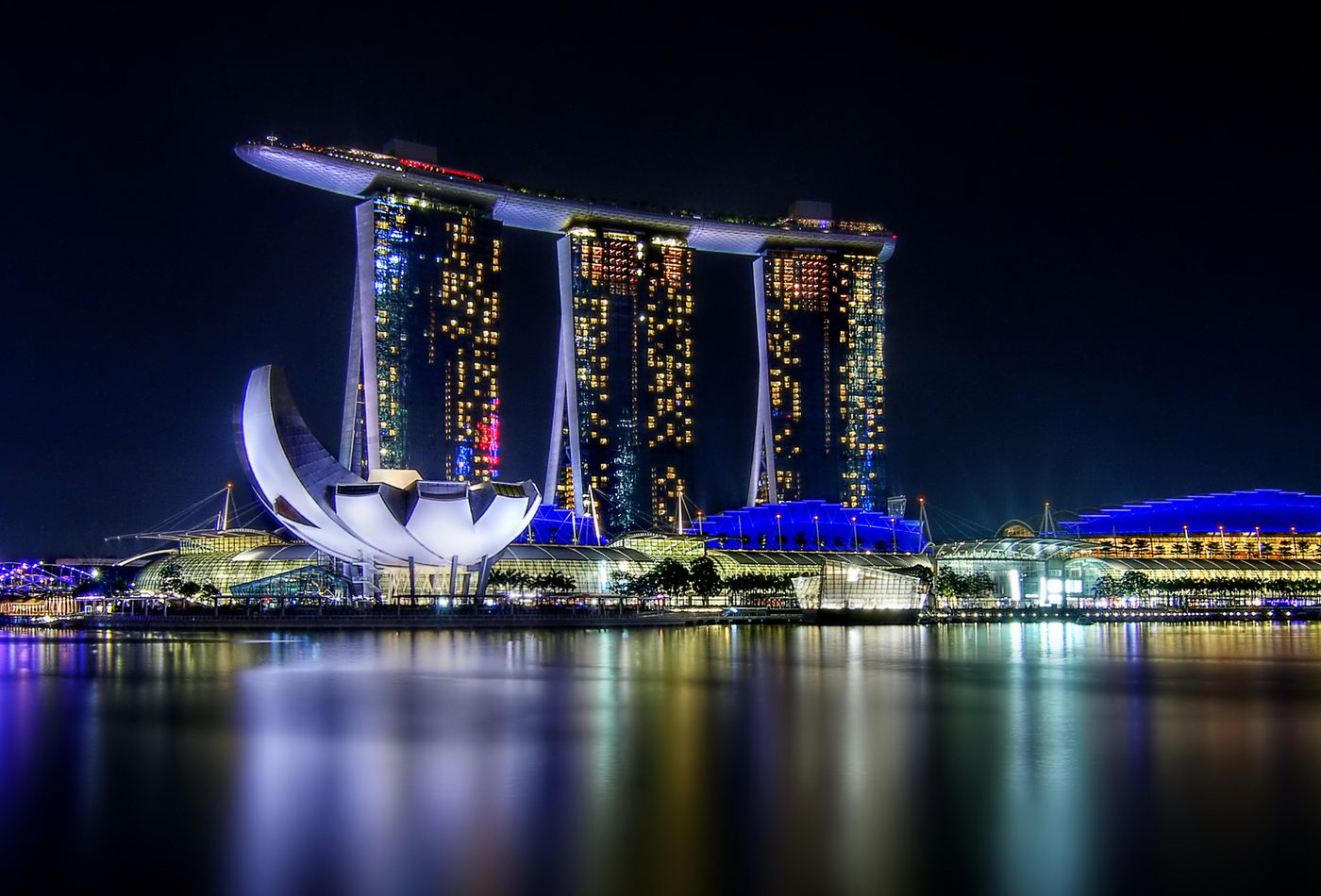
The SkyPark gave Singapore a new shorthand image. Before it is understood as a hotel deck, it is recognized as a long object balancing above three towers. That recognition changed the city's visual memory. The project became a recurring image in tourism, events, night views, and aerial photographs. Its historical force comes from that repetition: the building compresses a larger waterfront redevelopment story into one unmistakable profile.
A debate about publicness
The project raises an important historical debate. Can a commercial resort become a public city symbol, and what kind of publicness does it offer? Marina Bay Sands creates promenades, views, events, and a strong civic image, but much of its program is commercial, controlled, and destination-driven. The building's importance depends on this tension. It is both a successful urban image and a reminder that skyline identity can be produced by private leisure infrastructure.
Comparison with older icons
Historically, Marina Bay Sands belongs beside buildings such as Sydney Opera House and Burj Khalifa, but the comparison should be precise. Sydney is a cultural building that became a civic symbol through harbor presence. Burj Khalifa is a supertall district anchor. Marina Bay Sands is a resort complex that became a national and tourism image through a bay-facing section. Each shows a different way architecture can become city identity.
Historical reading check
A useful history page should not describe Marina Bay Sands only as futuristic or luxurious. It should show how planning, tourism, commercial development, waterfront design, authorship, and public image meet in one project. If those forces stay visible, the building becomes a historical document rather than a postcard. It records how a compact city-state used architecture to make a new bay district globally recognizable.