guide
Hagia Sophia Dome and Interior Visit Notes
Begin outside with the mass
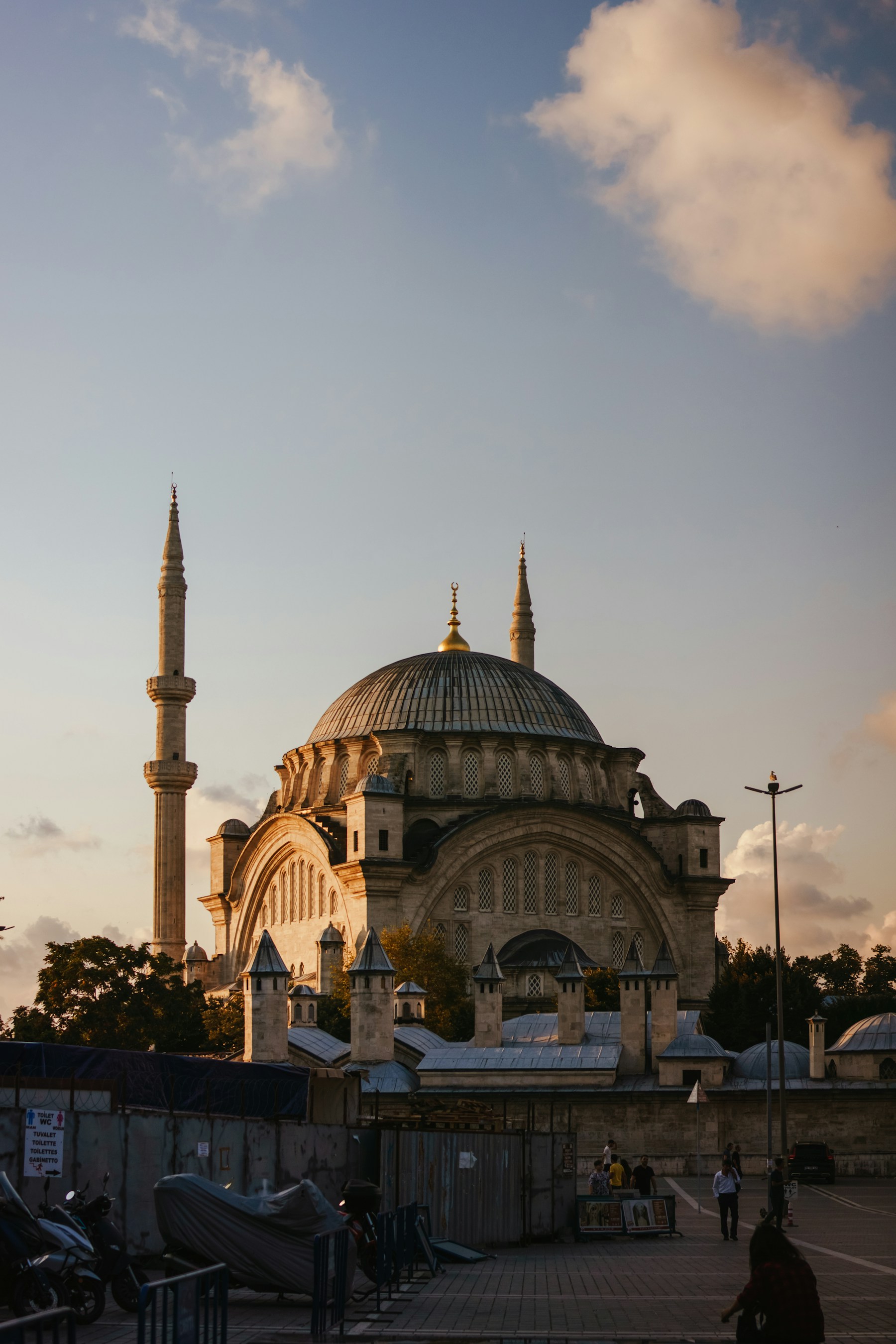
Start the visit outside, where Hagia Sophia reads as an accumulated mass of dome, buttresses, minarets, lower roofs, and surrounding urban space. Do not look only for the perfect postcard angle. The exterior teaches that the building has been supported, extended, and reframed over centuries. A useful first photograph should include the central dome and at least one minaret or buttress, because that combination makes the layered history visible before entering.
Use the threshold as a time shift
The move from exterior to interior should feel like a time shift. Outside, the building can look heavy and compressed. Inside, the space opens upward through dome, light, and layered surfaces. Pause after entry to register that change. The threshold is not only a doorway. It is the moment when the building stops being an Istanbul landmark and becomes a spatial system of arches, galleries, and suspended height.
Look up before looking sideways
Inside, look up first. The central dome, its ring of windows, pendentives, and neighboring semi-domes explain the building's main design move. Try to trace how force seems to move from dome to arches to piers. Then look sideways to the galleries and walls. This order matters because Hagia Sophia's details make more sense after the structural drama is understood. The dome is the organizing event, not just one decorated surface among many.
Compare Christian and Islamic layers carefully
Do not treat mosaics and calligraphy as rival decorations. Read them as evidence of different religious lives sharing the same architecture. Look for how Christian imagery, Islamic inscriptions, mihrab orientation, chandeliers, floor use, and large roundels occupy the vast interior. The point is not to decide which layer is original or dominant during a short visit. The architectural question is how the building allows multiple systems of meaning to remain visible.
Use the galleries to change scale
If access allows, use upper or side viewpoints to change scale. From below, the dome can feel distant and atmospheric. From higher or oblique views, the arches, surfaces, and gallery edges become more legible. This shift helps the visitor understand Hagia Sophia as a section rather than a single hall. Even if gallery access is limited, look for side views and partial angles that show depth behind the main central space.
Study one repair or support condition
A strong visit should include at least one moment of structural attention. Look for buttressing outside, massive piers inside, irregular surfaces, patched materials, or places where the building feels adjusted rather than pristine. These are not defects to crop out. They are evidence that Hagia Sophia has survived through repair. The building's greatness depends partly on its ongoing negotiation with gravity, earthquakes, conversion, and public use.
Keep Istanbul in the final frame
After the interior, return to the surrounding city view. Hagia Sophia faces other monuments, tourist routes, public squares, and the wider historic peninsula. That setting changes the visit. The building is not an isolated masterpiece in a museum case. It is part of Istanbul's layered urban memory. A final exterior view should reconnect dome, minarets, crowds, skyline, and ground level, so the architectural record does not end only with the interior.
Build a five-view record
A useful visual record should include five views: an exterior mass with dome and minaret, a threshold or entry view, a central dome view, one layer comparison with mosaic or calligraphy, and one structural or repair detail. Those five images preserve the main questions of the building: urban presence, spatial transition, dome engineering, religious layering, and long-term survival. They also protect the visit from becoming one repeated wide-angle interior photograph.