guide
Colosseum Arcades and Arena Edge Visit Notes
Start from the outside curve
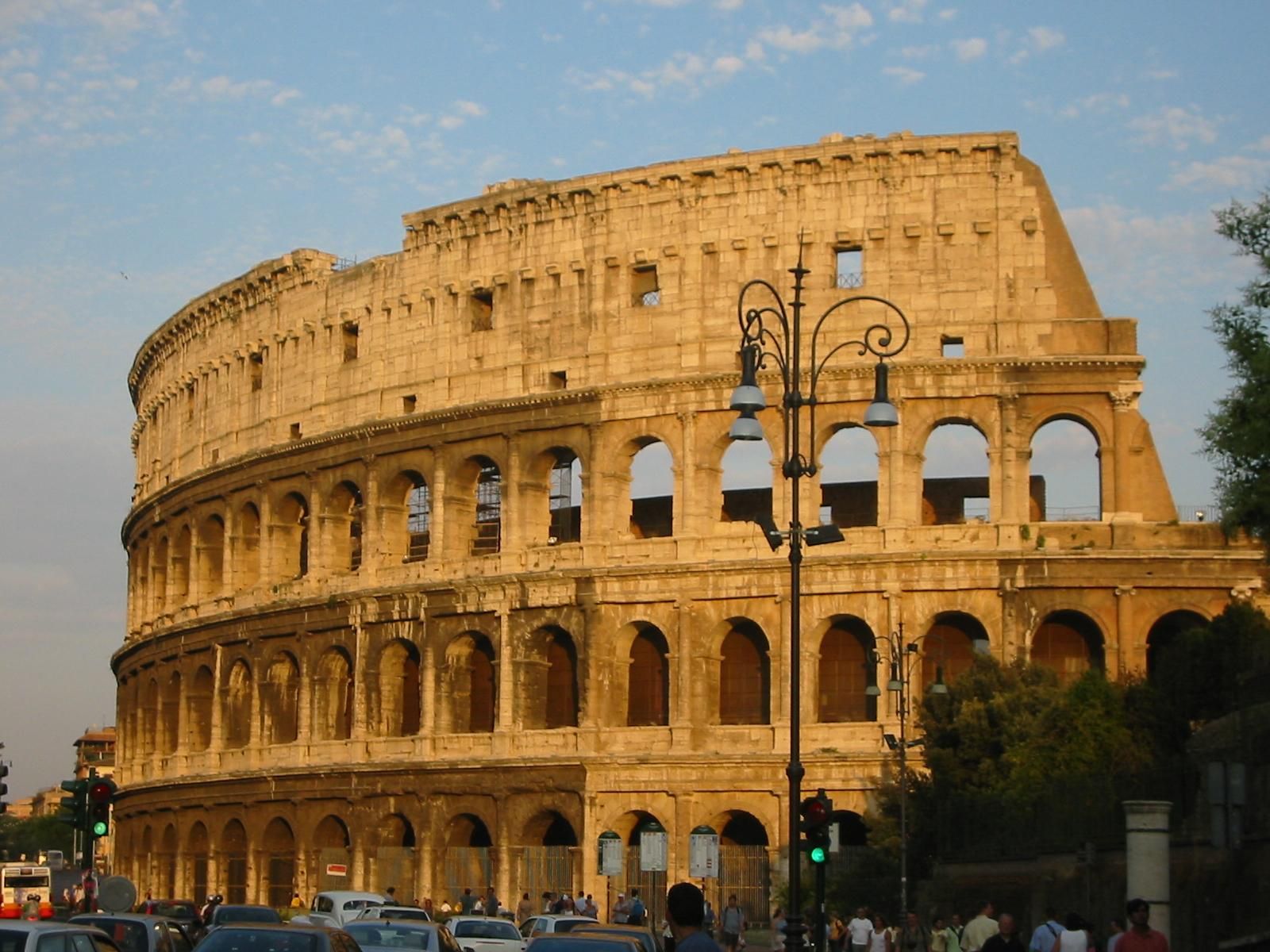
Begin with the exterior rather than rushing to the arena. Stand far enough back to read the oval curve and the stacked arcades together. The Colosseum is often photographed as a fragment, but the first architectural reading should establish continuity: repeated arches, bay rhythm, wall height, and the way the building turns around its arena. This outside view explains scale and civic presence.
Count the layers, not only the arches
The arches are the obvious feature, but the better visit asks how many layers the building has. Look behind the outer facade for corridors, stair paths, seating supports, wall thickness, and openings that lead inward. The Colosseum becomes much more interesting when it is read as a thick building. Every passage is a clue to how people once moved through the amphitheater.
Use the arena edge as a section drawing
At the arena, look across rather than only down. The seating tiers, exposed substructures, and surrounding walls create a sectional view through the building. Try to understand what would have been visible to spectators and what was hidden below or behind. The modern visitor gets a rare chance to see both the public face of spectacle and the technical spaces that supported it.
Look for material changes
Train your eye on material shifts: stone blocks, repaired areas, brick, concrete, metal stabilization, missing surfaces, and shadowed vaults. These changes prevent the building from feeling like one continuous ancient texture. They reveal construction, damage, repair, and interpretation. A good close view should make the Colosseum feel less like a backdrop and more like a layered document.
Read the city around it
Do not isolate the amphitheater from Rome. From nearby approaches, note traffic, archaeological fragments, slopes, monuments, crowds, and changing ground levels. The Colosseum is powerful because it still anchors the city, but it is also pressured by the modern city around it. That tension helps explain why it functions as both ruin and urban landmark. A useful visit should keep ancient evidence and modern management in the same frame: barriers, routes, conservation zones, and sightlines all affect how the ruin is read today.
Build a three-frame architectural record
Make one exterior image that shows the curve and stacked arcades, one interior or arena-edge image that shows seating and substructure, and one close detail of stone, arch, vault, or repaired fabric. These three frames create a better architectural record than a single postcard shot. They preserve form, section, and material evidence in one visit sequence. If time is limited, prioritize photographs that explain relationships: outer wall to inner passage, arena floor to service level, repaired stone to older fabric, and the monument to the city around it.
Compare it with other crowd and concrete buildings
After studying the Colosseum, compare it with the Pantheon for Roman concrete and centralized space, with the Parthenon for a different kind of ancient public monument, and with modern stadiums for crowd circulation. The point is not to say one is better. It is to see how architecture organizes bodies, sightlines, materials, and public memory across very different periods.