guide
Aqua Tower Design: Balcony Slabs and Urban Texture
The design starts with repetition under pressure
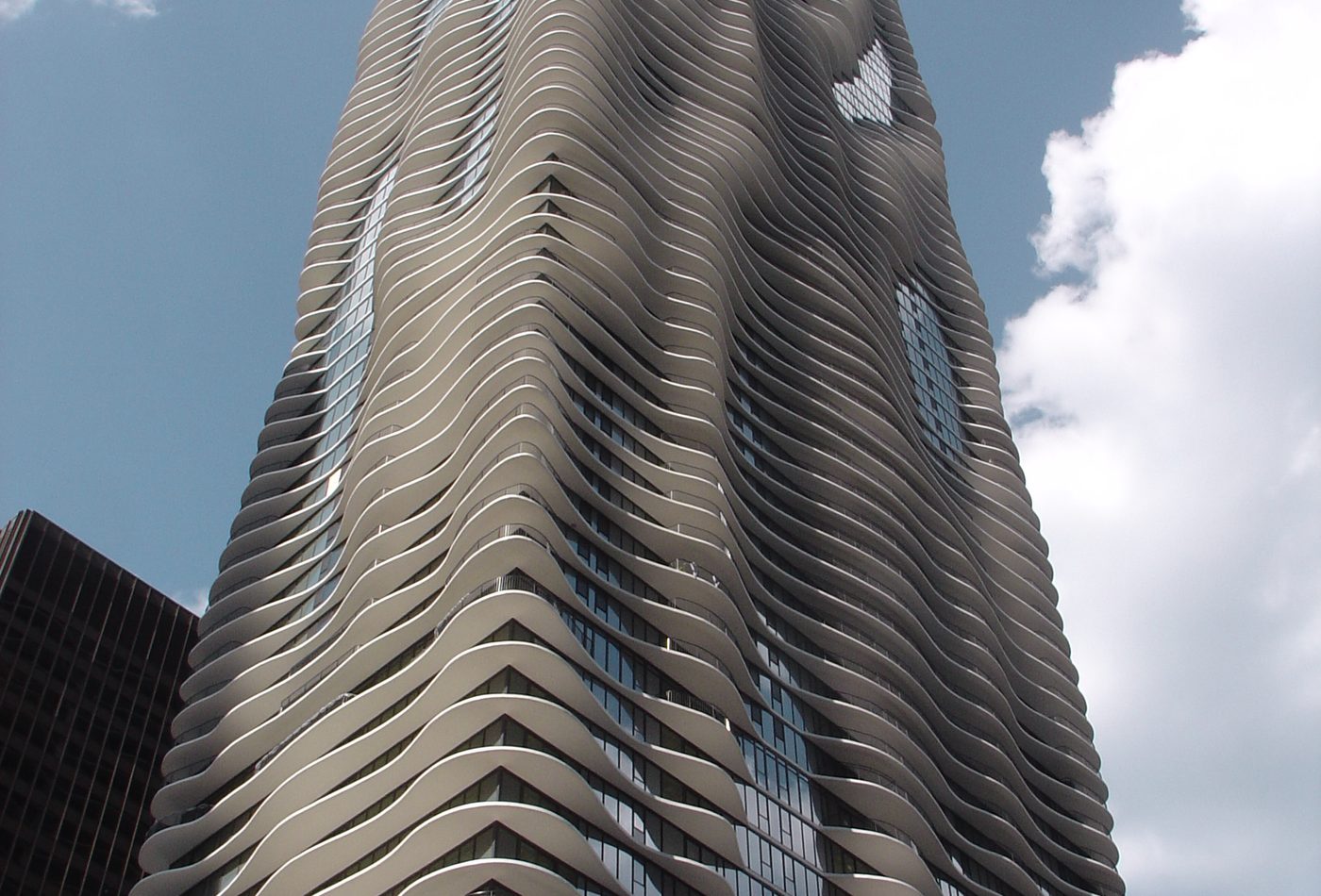
Aqua Tower is most interesting because it begins with a repetitive high-rise problem and then refuses to let repetition become flat. Many residential towers stack similar floor plates and balconies until the facade becomes predictable. Aqua uses the repeated balcony as the place where difference enters the system. Each projection can answer a local condition: a view to open, a neighbor to screen, a balcony to enlarge, shade to cast, or a wind condition to soften. The result is not random. It is variation inside a disciplined tower frame.
The surface is thick, not merely patterned
A common mistake is to describe Aqua as a wavy facade and stop there. The wave matters because it has depth. The concrete balcony slabs project from the glass skin and produce shadows that change through the day. That thickness makes the elevation legible from a distance and useful up close. A printed pattern or decorative cladding could imitate movement, but it would not give residents outdoor space, shade the glass, or create the same shadow field. Aqua's architectural strength is that image and section are tied together.
Balconies become environmental devices
The balconies also work as environmental devices. Their projections can reduce direct sun on parts of the facade, create outdoor rooms, and shape how wind is felt near occupied edges. The building's best design lesson is not that every tower should look organic. It is that a familiar element can do several jobs at once. At Aqua, the balcony is amenity, facade, shading device, privacy edge, and skyline identity. When one part carries that many roles, the building becomes more coherent than a tower with a separate decorative gesture.
The glass wall remains important
The glass curtain wall is easy to treat as background because the balconies dominate photographs, but the glass is essential to the design. It provides the continuous vertical plane that makes the balcony projections readable. Without the contrast between flat glass and irregular concrete edge, the ripple would lose clarity. The glass also ties the tower to the broader language of Chicago high-rises: reflection, height, repetition, and city light. Aqua is therefore both familiar and strange. It belongs to the glass tower family while bending that family through slab geometry.
Bird visibility and surface texture matter
Aqua is also often discussed through its attention to birds and glass visibility. In a city with lakefront migration routes and many reflective towers, a high-rise facade is not only a human image. It can become part of an environmental problem. The project is useful because it keeps that issue within the architectural reading instead of separating it as a technical add-on. Balcony depth, texture, and more visible glass conditions make the tower less like a sheer invisible wall. That does not turn the building into a simple ecological solution, but it does make the facade more responsible and more interesting.
How to compare the design
Compare Aqua Tower with The Shard and Marina Bay Sands through how each building creates identity. The Shard uses taper, sharpness, and skyline height. Marina Bay Sands uses the dramatic horizontal SkyPark across three towers. Aqua uses repeated local balcony decisions to create a collective surface. That difference matters for design analysis. Aqua is not trying to win by height alone or by a single crown. It works through accumulated small variations that the eye reads as one larger movement.