guide
Aqua Tower Facts: Balconies, Lakeshore East, and Studio Gang
The first fact is the balcony field
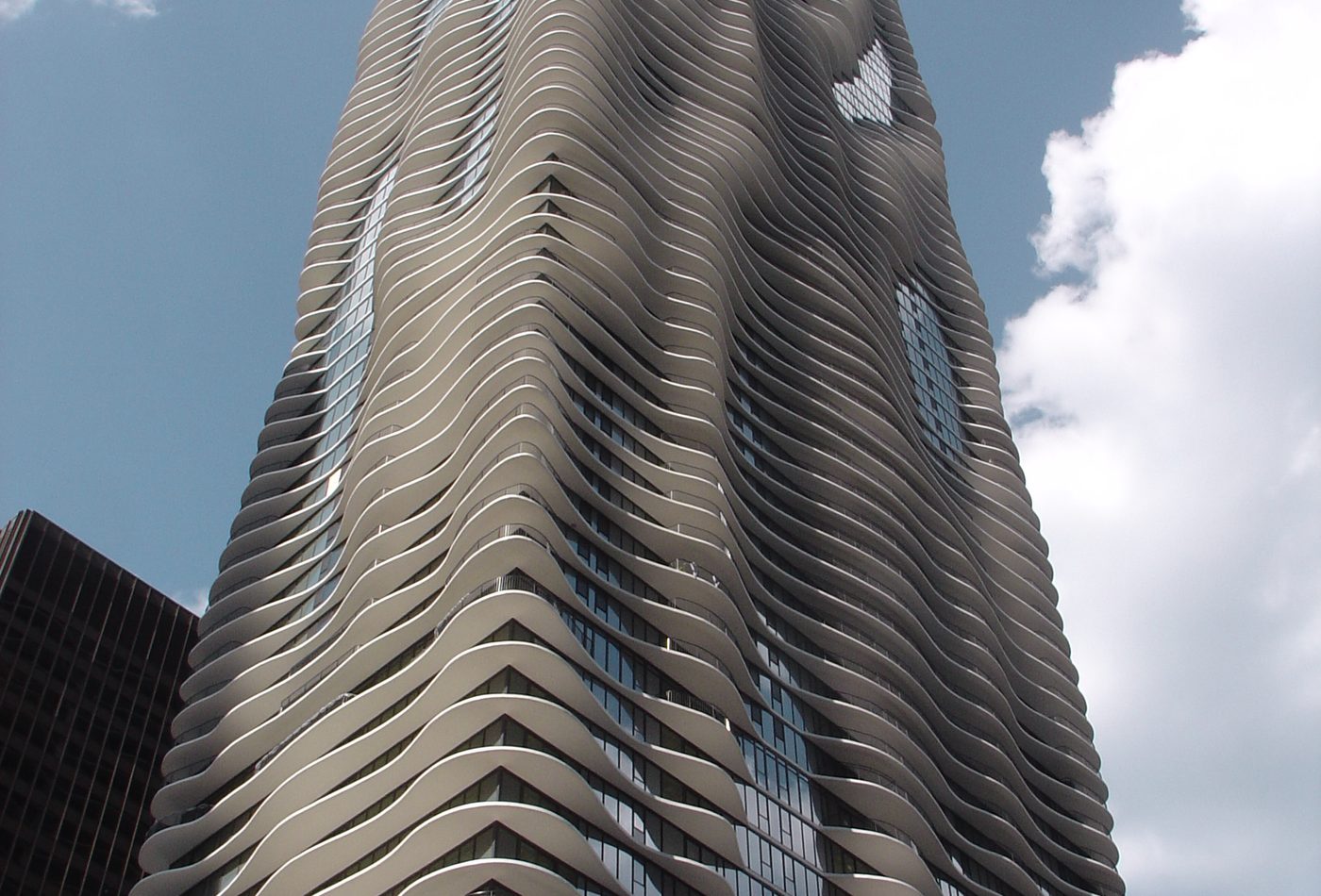
Aqua Tower is usually recognized before its plan or program is understood because the balconies make the tower look as if it is moving. The building is a tall rectangular structure in Chicago, completed in 2009, but the visible fact that matters first is the irregular concrete balcony field. Those slab edges project, recede, thicken, and thin from floor to floor. They make the facade read less like a flat curtain wall and more like a vertical topography. A useful fact page should start there because the balconies are not decoration added after the tower is solved. They are the main architectural reading tool.
Studio Gang made use and image overlap
The building is associated with Studio Gang and Jeanne Gang, and that authorship matters because the tower does not treat balconies as repetitive apartment extras. The balcony shapes respond to several practical pressures: views toward city and water, outdoor space, solar exposure, wind, and privacy between neighboring units. That means the famous ripple is produced by use as well as image. The facade looks fluid because individual residential and hotel conditions vary, not because a simple graphic wave was pasted onto a generic high-rise.
Lakeshore East gives the tower its urban role
Aqua Tower stands in the Lakeshore East area of Chicago, where high-rise housing, hotel use, park space, streets, and nearby water all shape the viewing experience. It is not an isolated object on a blank skyline. From some points the tower is read against other Chicago high-rises; from others it is read through the neighborhood scale of entries, park edges, and pedestrian movement. The tower's surface helps it stand out in a city already famous for tall buildings. That is the urban problem Aqua had to solve: how can another tower in Chicago earn a distinct presence without ignoring the discipline of high-rise construction?
Mixed use is part of the architecture
Aqua is a mixed-use tower, so the building has to contain several kinds of occupancy rather than one simple stack. Its public identity comes from the exterior, but its architectural difficulty comes from coordinating hotel, residential, amenity, parking, and ground-level conditions inside one vertical system. The balconies help the residential parts feel individual, while the glass and base conditions connect the tower to the larger district. Treating the project only as a sculptural facade misses this mix of program, real estate, and urban address.
Concrete and glass do different jobs
The material reading is simple but important. Glass gives the tower its high-rise skin, reflection, and city-light character. Concrete gives the balcony edges their mass, shadow, and readable depth. The contrast matters because the ripple would be much weaker if it were only a surface pattern printed on glass. The projecting slabs create real shadows and real outdoor space. In photographs, those shadows often explain the building better than color does. The facade changes with light because the balcony edges are physical, not just graphic.
Why Aqua belongs in the core atlas
Aqua Tower belongs in the core atlas because it teaches a contemporary high-rise lesson: a repeated residential element can become the identity of the whole building when it is shaped by use, climate, view, and city image. Compare it with The Shard and Marina Bay Sands. The Shard turns a commercial tower into a sharp skyline figure; Marina Bay Sands binds several towers with a horizontal SkyPark; Aqua turns hundreds of balcony decisions into one memorable surface. That makes it valuable for readers who want to understand how ordinary building parts can become architectural argument.