guide
Notre-Dame de Paris Seine and Portal Visit Notes
Start with the river and island
The best first read of Notre-Dame is not a close crop of the facade. Begin by understanding the island and river setting. From the Seine edges and bridges, the cathedral appears as part of Paris's geography. This establishes why the building is more than an isolated Gothic object. Its towers, roofline, buttresses, and long body help fix the Ile de la Cite in the mental map of the city.
Use the west facade as a lesson in order
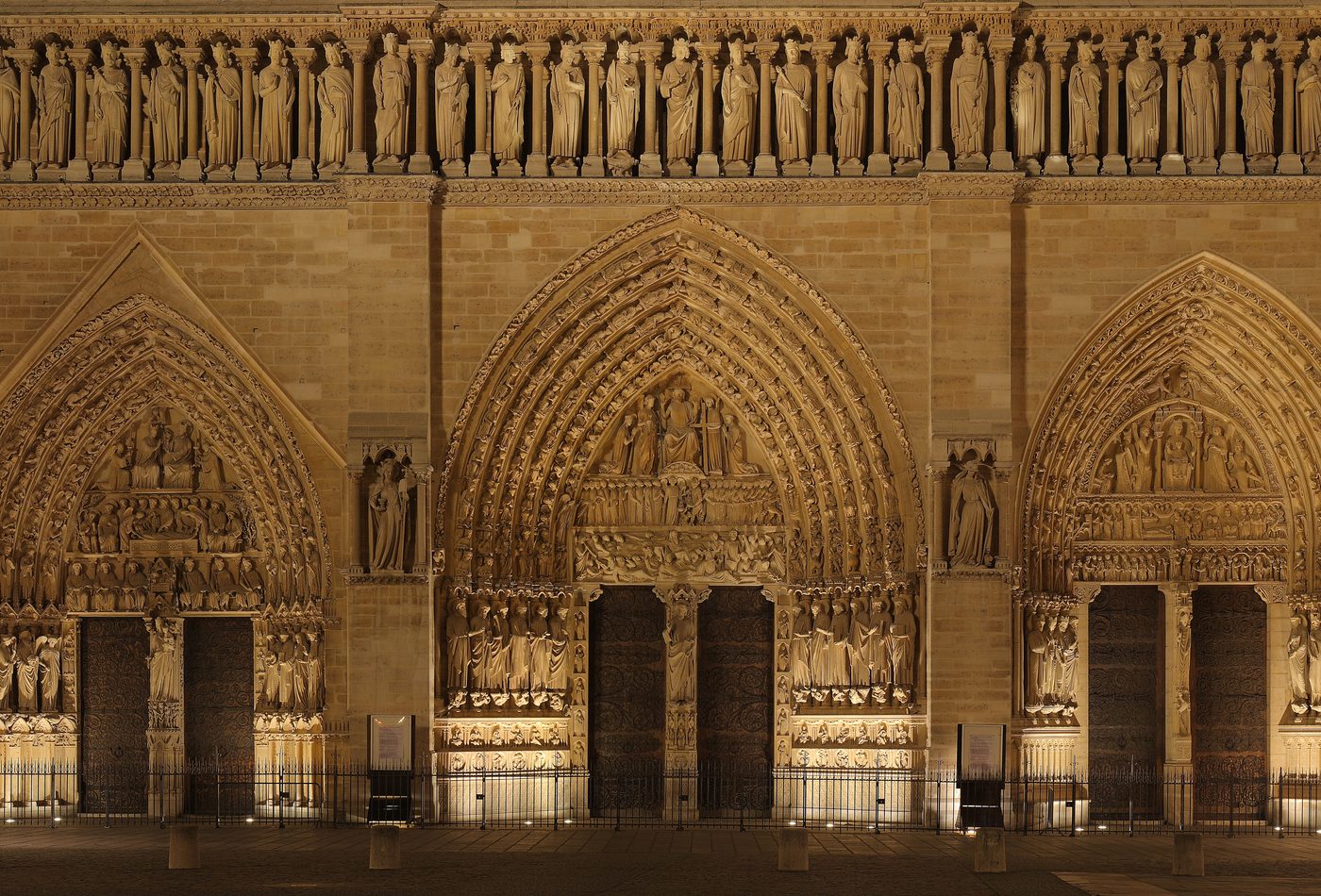
Move next to the west front and read it slowly. Start at the portals, then lift your eye through sculpture, gallery bands, rose window, and twin towers. The facade is not just a famous photograph. It is a teaching surface for Gothic hierarchy: threshold below, image and geometry in the middle, vertical aspiration above. A quick frontal photo will catch the icon, but a slow reading explains why the icon holds together.
Walk far enough to see the buttresses
Do not stop after the west facade. Notre-Dame's exterior support system is one of the clearest ways to understand the building. From side and rear angles, the flying buttresses show how the cathedral handles thrust and opens wall surfaces for light. This is where the building becomes more than a facade. The outside begins to reveal the interior ambition of height, vaulting, and luminous space.
Look for restoration layers
Because Notre-Dame has passed through major restoration phases, a visual visit should include signs of repair, replacement, and conservation. Look for how stone, roofline, sculpture, and reconstructed elements sit within the older fabric. The aim is not to police what is original. It is to notice that the cathedral's public image depends on care across centuries. Restoration is not hidden behind the experience; it is part of the experience.
Photograph three scales
A useful visual study should include three scales. First, make an urban image with the Seine, island, or bridge context. Second, make a facade image that shows portals, rose window, and towers together. Third, make a structural or material detail: buttress, stone carving, glass, roofline, or repaired fabric. Those three frames tell a richer architectural story than a single postcard view because they connect city, composition, and construction.
Compare with other cathedral lessons
If you know Sagrada Familia or Chartres Cathedral from the atlas, compare the visit through time and structure. Sagrada Familia keeps construction visibly ongoing; Chartres gives another Gothic lesson in stained glass and facade presence; Notre-Dame adds the dense Paris setting and a very public restoration narrative. The comparison helps prevent the visit from flattening all cathedrals into the same words: old, Gothic, famous, beautiful.
Leave with one question
After looking, ask one question: what makes this building still active as architecture? A thin answer says it is famous. A stronger answer connects the Ile de la Cite, west facade order, flying buttresses, rose windows, restoration, fire, reopening, and public memory. That is the point of visiting Notre-Dame as an architecture reader. The building is not only seen; it is understood as a structure continually held in public care.