guide
Neuschwanstein Castle Ridge and Viewpoint Visit Notes
Start before the castle fills the frame
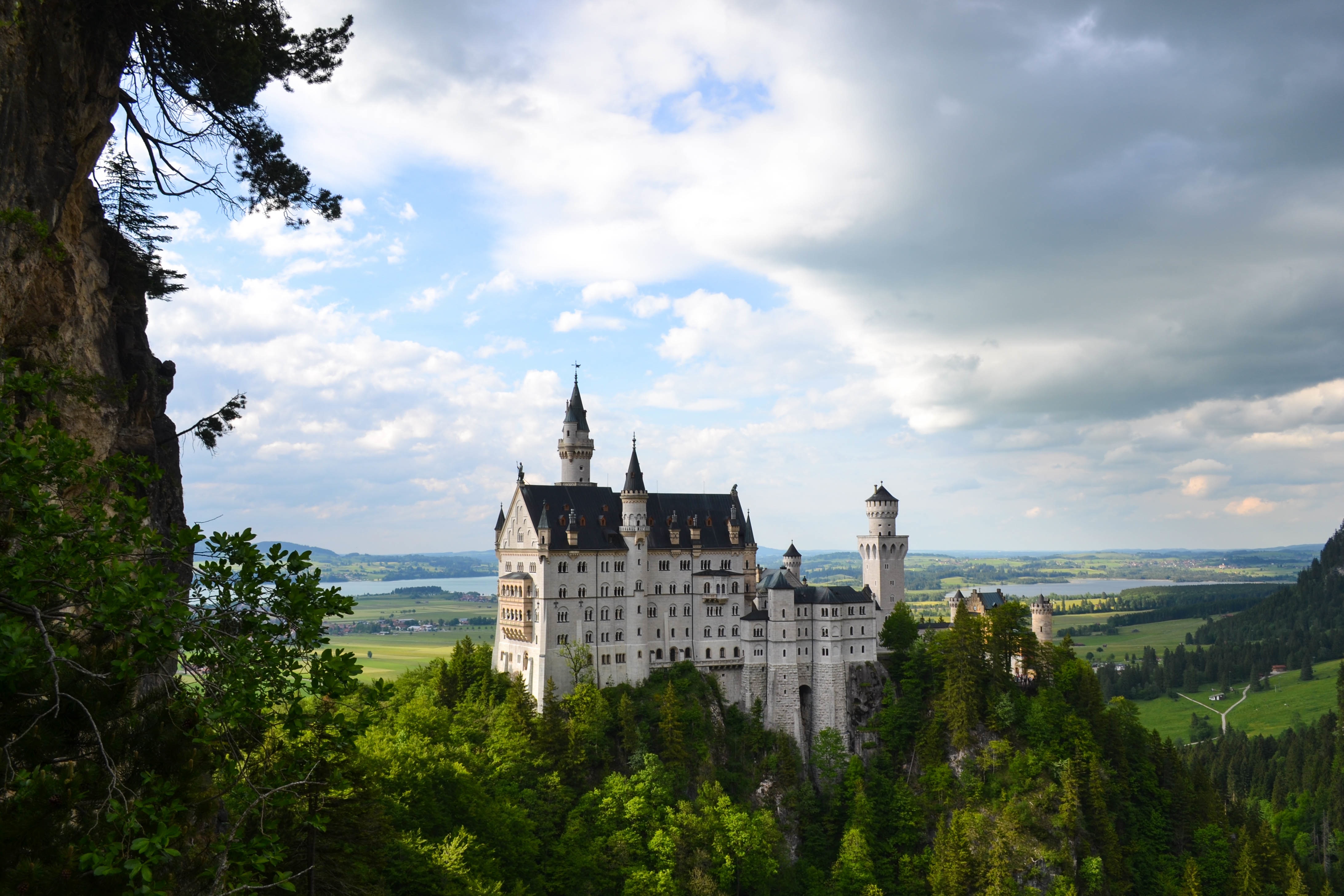
The best first reading of Neuschwanstein Castle begins at a distance. Before focusing on doors, rooms, or decorative parts, look at how the building sits on the ridge. The castle needs forest, slope, sky, and mountain horizon to complete its image. A close view alone can make it seem like an object. A distant view explains why it became famous: the towers and pale walls appear as part of a deliberately staged Alpine scene.
Use the approach as a sequence
Do not treat the approach only as a way to reach the entrance. Read it as a sequence of changing views. As the path rises or turns, the castle shifts from distant picture to mass, wall, tower, and courtyard. That movement is part of the architecture. Neuschwanstein is especially useful for learning how anticipation shapes perception. The building has already started working before the visitor arrives at its immediate base.
Compare the towers instead of counting them
The towers are the most memorable parts, but the useful observation is not simply how many there are. Compare their heights, roof shapes, positions, and relationship to the main mass. Some towers sharpen the skyline; others make the body seem older and more layered. Together they turn a royal retreat into a castle image. A good visit studies how the towers organize the silhouette rather than treating them as decorative extras.
Look for the staged medieval effect
As you move closer, ask which details make the building feel medieval and which details reveal its nineteenth-century staging. Rooflines, windows, gate-like moments, wall surfaces, and courtyard relationships all contribute to the historicist mood. The point is not to expose the castle as false. The point is to see how deliberately the older language has been selected and arranged. That makes the building more architecturally interesting than a simple fantasy label.
Let the landscape stay in the picture
Many photographs crop tightly around the castle, but the landscape is essential evidence. Include the ridge, forest, valley, or mountain backdrop whenever possible. Those surrounding elements explain the castle's power better than a close facade study alone. Neuschwanstein is not a building that happens to have a view. It is a composition that depends on views, both outward from the site and inward toward the silhouette.
Read material through weather and distance
The pale exterior, dark roofs, masonry body, and timber or interior details change with distance and weather. In soft light, the castle can feel almost flat and pictorial; in sharper light, wall thickness, window rhythm, and roof edges become clearer. This shift matters because Neuschwanstein is both image and constructed object. A useful visit moves between the long scenic view and the closer material reading instead of choosing only one.
Compare it with another mountain or historicist site
After studying Neuschwanstein, compare it with Mont Saint-Michel or another dramatic historic site. The comparison is useful because Mont Saint-Michel grows from settlement, abbey function, tide, and rock, while Neuschwanstein is more deliberately composed as royal fantasy. That contrast prevents lazy praise. It shows that two buildings can both be picturesque while producing drama in very different ways: one through accumulated function, the other through staged historicist image.
Make a four-part visual record
A strong architecture-focused photo set should include one distant view with landscape, one approach view showing how the castle rises from the ridge, one tower or roofline study, and one close material or courtyard detail. Those four views record the building's main architectural questions: setting, sequence, silhouette, and constructed surface. They also keep the visit from collapsing into one postcard image, which is the easiest way to miss the design.