why it matters
Why this building matters
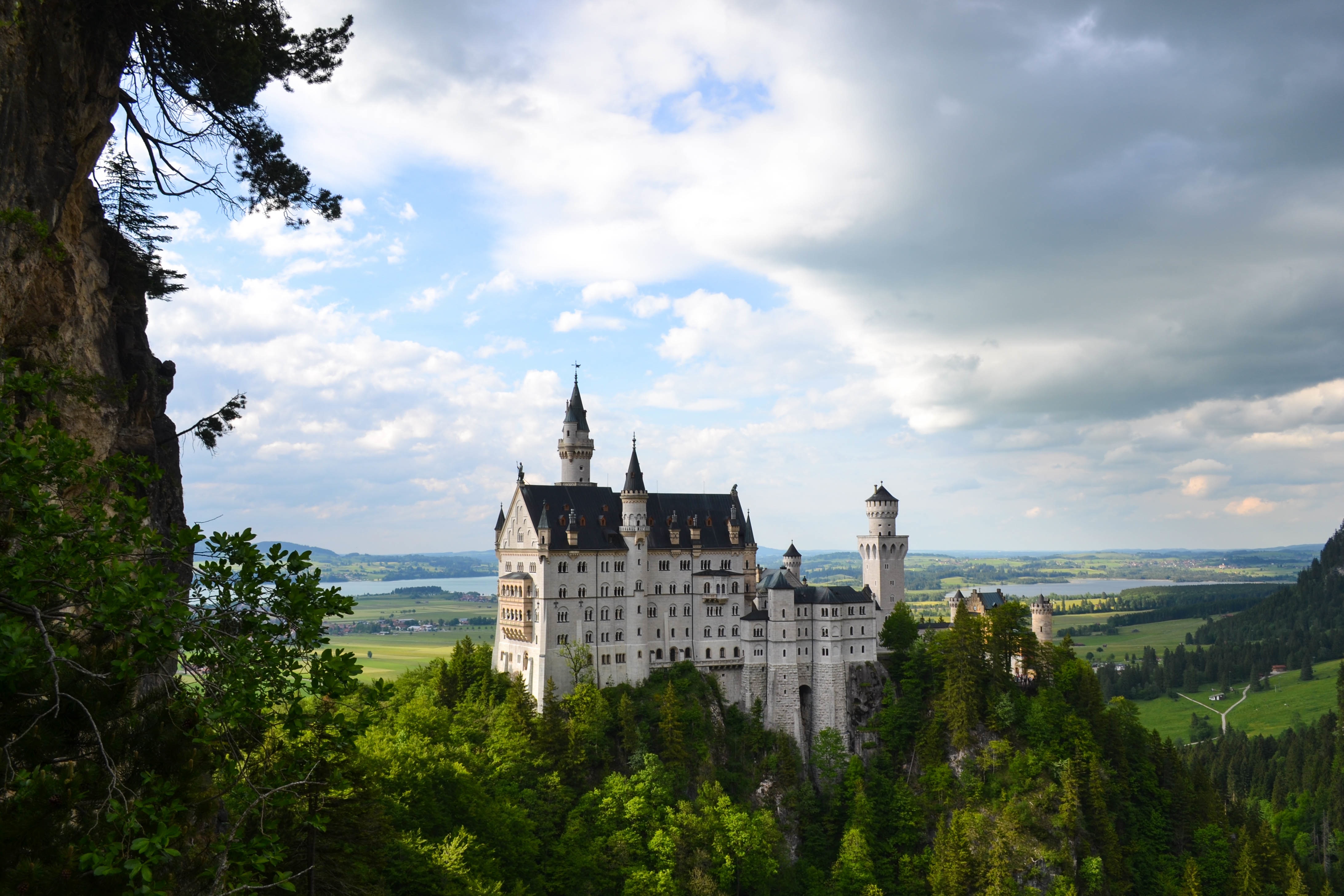
Neuschwanstein Castle helps readers connect Historicist to visible design decisions: towers and turrets, mountain backdrop, picturesque composition.
building detail
Neuschwanstein Castle is a castle in Schwangau, Germany, known for its theatrical mountain silhouette and romantic historicism.
Photo credit: Ashley Knedler / CC0 / Public Domain.
why it matters
Neuschwanstein Castle helps readers connect Historicist to visible design decisions: towers and turrets, mountain backdrop, picturesque composition.
what to notice
explore by place and style
map notes
Use the coordinates as anchors for reading the buildings in relation to streets, water, skyline, and nearby landmarks.
47.5576, 10.749848.6360, -1.511555.7525, 37.6231Map coordinates are listed with provider attribution handled through the source records.
architecture guide
A fuller reading of the building's history, setting, form, materials, and public role.
Neuschwanstein Castle is often remembered as if it were a surviving medieval fortress, but the more useful fact is that it is a nineteenth-century royal project. Its architectural power comes from historicist imagination rather than military necessity. Towers, turrets, steep roofs, and pale walls are arranged to produce a romantic medieval image for King Ludwig II. That distinction matters because the building should be read as image-making, retreat, and cultural fantasy before it is read as defense.
The castle's setting above Schwangau is not background scenery. The steep site, surrounding forest, distant lakes, and Alpine horizon are part of the composition. Neuschwanstein needs this landscape to complete its effect. From below, the towers appear lifted out of the ridge; from higher viewpoints, the building becomes one element in a wider mountain picture. The fact to remember is that site and silhouette work together, so the castle's public image is architectural and scenic at the same time.
The easiest way to identify Neuschwanstein is through its tower cluster and uneven roofline. Those vertical accents create a castle profile that feels older, more complex, and more legendary than the building's actual date. The towers are not only decorative pieces added to a box. They organize the skyline, break the mass into readable parts, and create the sense that the building has grown from a storybook landscape. That is why the silhouette remains legible even from a long distance.
The style label matters because historicist architecture looks backward without being old in the same way as the sources it borrows from. Neuschwanstein uses medieval and Romanesque associations to construct mood, memory, and royal self-image. The result is neither archaeological reconstruction nor modern minimal invention. It is a deliberate nineteenth-century composition that uses older forms to create atmosphere. This makes the castle a strong example of how architecture can turn history into staged emotional experience.
The building's material story includes limestone, brick, timber, painted interiors, and carefully controlled surface image. Those materials help the castle feel solid enough to belong to the ridge while also theatrical enough to behave like a stage set. Pale exterior walls catch mountain light, dark roofs sharpen the outline, and timber and interior decoration shift the reading from fortress to royal retreat. The material facts should therefore be tied to atmosphere, not listed as neutral construction data.
Neuschwanstein became important because it turned private royal imagination into one of the world's most recognizable castle images. The building is not only a Bavarian landmark. It is a reference point for how castles are imagined by travelers, illustrators, films, theme parks, and tourism culture. That influence can make the architecture seem obvious, but it is actually a strong lesson in public memory: a building can become famous by making a fantasy spatially convincing.
Use the basic facts as viewing tools: nineteenth-century date, Schwangau ridge, historicist style, towered silhouette, limestone and brick construction, and theatrical relationship to the mountains. Together they explain why Neuschwanstein is more than a pretty castle view. It is an architectural composition where landscape, royal imagination, historical quotation, and visitor memory reinforce each other. The most important fact is the gap between what the castle looks like and what it actually is.
A reader should leave this page able to separate three ideas that are often blended together: medieval appearance, nineteenth-century construction, and modern fairy-tale reputation. Neuschwanstein is useful precisely because all three are visible at once. If a description only says that it is beautiful or famous, it misses the architectural question: how did a relatively recent royal retreat become the default global image of an old mountain castle?
Neuschwanstein Castle is designed to work as a picture before it is understood as a plan. That does not make it shallow. It means the architecture begins with controlled distance, framed approach, ridge placement, and a silhouette that can be remembered after one glance. The building gathers towers, roofs, walls, and forest edge into a single scenic composition. A good design reading therefore starts outside the walls, where the castle first turns landscape into theater.
The castle's outline is not a simple symmetrical palace front. Towers rise at different heights, roof pitches vary, and the mass seems to step with the site. This controlled asymmetry keeps the silhouette animated. It suggests age, growth, and narrative complexity, even though the building was deliberately composed. That is the design trick: the castle feels as if it belongs to a layered medieval past while actually expressing a nineteenth-century desire for picturesque effect.
The steep ridge is doing architectural work. It lifts the castle above the surrounding landscape, makes the walls seem more dramatic, and turns approach into anticipation. Without the ridge, the towers would still be memorable, but they would lose much of their force. The site gives the building vertical drama before the architecture adds its own vertical accents. In design terms, ground and building are collaborating to produce a single theatrical profile.
Neuschwanstein does not copy one medieval precedent with documentary discipline. It selects effects: tower, gate, courtyard, steep roof, picturesque wall, decorated interior, and scenic overlook. Those elements are arranged to create a romantic idea of the Middle Ages rather than a practical fortress. That selectivity is the design's key historical mechanism. The castle borrows from history in order to make a mood, not to reproduce military or civic reality.
The castle looks backward, but its construction belongs to a modernizing nineteenth century. This split between appearance and making is central to the design. The visitor sees medieval romance, but the project depends on contemporary organization, engineering, and royal patronage. The building's architecture therefore lives in the space between image and reality. That tension should not be treated as a flaw. It is the reason Neuschwanstein is so revealing as historicist architecture.
The exterior material palette helps the castle read clearly against forest and mountain weather. Pale walls catch available light, dark roofs draw the profile, and timber and interior finishes support the retreat-like atmosphere. The materials do not simply imitate an old fortress. They support a visual performance in which the castle appears solid, remote, and dreamlike. This is why the building can look convincing in a broad landscape view and still feel deliberately composed up close.
Neuschwanstein is unusually dependent on where the viewer stands. From some positions it reads as a vertical castle crown on the ridge; from others the mass is partly hidden by forest, rock, or approach routes. This means the design is not exhausted by a front elevation. It is closer to a sequence of staged views. The best design analysis follows movement: first distant recognition, then rising approach, then close reading of towers and walls.
The design lesson is that architectural authenticity is not the only reason a building can matter. Neuschwanstein matters because it demonstrates how form, site, historical quotation, and public imagination can make a constructed fantasy durable. The castle is not important because it is medieval. It is important because it shows how powerfully architecture can manufacture the feeling of medieval romance. Its success lies in making that feeling spatial, visible, and repeatable through countless views.
Neuschwanstein Castle is tied to King Ludwig II and to a desire for retreat, imagination, and staged royal identity. It was not planned as a medieval stronghold built for siege. It was a nineteenth-century project shaped by personal fantasy, cultural memory, and a selective love of older forms. That origin changes the historical reading. The building is less a document of medieval power than a document of how a modern king wanted the medieval past to feel.
Historicism was not only copying the past. It was a way for nineteenth-century architecture to use older styles to express identity, memory, and desire. Neuschwanstein uses this method with unusual intensity. Its towers, gables, and interiors point backward, but the building's date places it in a modern age of tourism, photography, and image circulation. The historical tension is therefore built in: the castle looks old, but it became famous through modern ways of seeing.
The death of Ludwig II in 1886 altered the story of Neuschwanstein. The castle became attached not only to royal fantasy, but also to incompletion, biography, and public curiosity. A private world imagined for a king became a place the public could visit and reproduce in memory. This shift is crucial. The building moved from personal retreat to public image, and that change helped turn architectural fantasy into a widely shared cultural object.
Neuschwanstein's modern history cannot be separated from tourism. Visitors arrive with an image already formed by photographs, illustrations, films, and popular ideas of fairy-tale castles. That repetition has made the building durable in public memory. Tourism can flatten the castle into a simple postcard, but it also shows how powerful its composition is. A building that was designed around scenic effect became especially suited to an age of image circulation.
The landscape is not just a place where history happened. It is part of how history is remembered. The Alpine setting allows the castle to perform isolation, romance, and distance from everyday urban life. That helps explain why the building's story has lasted. The ridge, forest, and horizon make the royal fantasy visible to people who know little about Ludwig II or nineteenth-century Bavaria. Landscape carries historical meaning because it makes the narrative immediately legible.
The main historical debate is not whether Neuschwanstein is real or fake. It is what kind of reality architecture can create. The castle is not an authentic medieval fortress, yet it is authentically a nineteenth-century expression of romantic historicism. That distinction is important. Calling it fake ends the discussion too early. The richer interpretation asks why a deliberately staged building became more influential in modern castle imagery than many older defensive structures.
Neuschwanstein's legacy spread because it offered a compact visual formula: remote setting, pale walls, towers, steep roofs, and a sense of inaccessible romance. That formula travelled into tourism culture and popular imagination far beyond Schwangau. The building now shapes how many people picture castles before they ever study medieval architecture. Its historical importance lies in that influence. It shows how a late historicist building can redefine public memory of a much older architectural category.
A useful history page should make the famous image less automatic. In Neuschwanstein's case, the important shift is from medieval fantasy to nineteenth-century evidence. The castle records royal imagination, selective historicism, scenic composition, public tourism, and the modern power of images. Once those layers are visible, the building becomes more interesting than a fairy-tale label. It becomes a case study in how architecture manufactures longing for a past that never quite existed.
The best first reading of Neuschwanstein Castle begins at a distance. Before focusing on doors, rooms, or decorative parts, look at how the building sits on the ridge. The castle needs forest, slope, sky, and mountain horizon to complete its image. A close view alone can make it seem like an object. A distant view explains why it became famous: the towers and pale walls appear as part of a deliberately staged Alpine scene.
Do not treat the approach only as a way to reach the entrance. Read it as a sequence of changing views. As the path rises or turns, the castle shifts from distant picture to mass, wall, tower, and courtyard. That movement is part of the architecture. Neuschwanstein is especially useful for learning how anticipation shapes perception. The building has already started working before the visitor arrives at its immediate base.
The towers are the most memorable parts, but the useful observation is not simply how many there are. Compare their heights, roof shapes, positions, and relationship to the main mass. Some towers sharpen the skyline; others make the body seem older and more layered. Together they turn a royal retreat into a castle image. A good visit studies how the towers organize the silhouette rather than treating them as decorative extras.
As you move closer, ask which details make the building feel medieval and which details reveal its nineteenth-century staging. Rooflines, windows, gate-like moments, wall surfaces, and courtyard relationships all contribute to the historicist mood. The point is not to expose the castle as false. The point is to see how deliberately the older language has been selected and arranged. That makes the building more architecturally interesting than a simple fantasy label.
Many photographs crop tightly around the castle, but the landscape is essential evidence. Include the ridge, forest, valley, or mountain backdrop whenever possible. Those surrounding elements explain the castle's power better than a close facade study alone. Neuschwanstein is not a building that happens to have a view. It is a composition that depends on views, both outward from the site and inward toward the silhouette.
The pale exterior, dark roofs, masonry body, and timber or interior details change with distance and weather. In soft light, the castle can feel almost flat and pictorial; in sharper light, wall thickness, window rhythm, and roof edges become clearer. This shift matters because Neuschwanstein is both image and constructed object. A useful visit moves between the long scenic view and the closer material reading instead of choosing only one.
After studying Neuschwanstein, compare it with Mont Saint-Michel or another dramatic historic site. The comparison is useful because Mont Saint-Michel grows from settlement, abbey function, tide, and rock, while Neuschwanstein is more deliberately composed as royal fantasy. That contrast prevents lazy praise. It shows that two buildings can both be picturesque while producing drama in very different ways: one through accumulated function, the other through staged historicist image.
A strong architecture-focused photo set should include one distant view with landscape, one approach view showing how the castle rises from the ridge, one tower or roofline study, and one close material or courtyard detail. Those four views record the building's main architectural questions: setting, sequence, silhouette, and constructed surface. They also keep the visit from collapsing into one postcard image, which is the easiest way to miss the design.
continue reading
related buildings
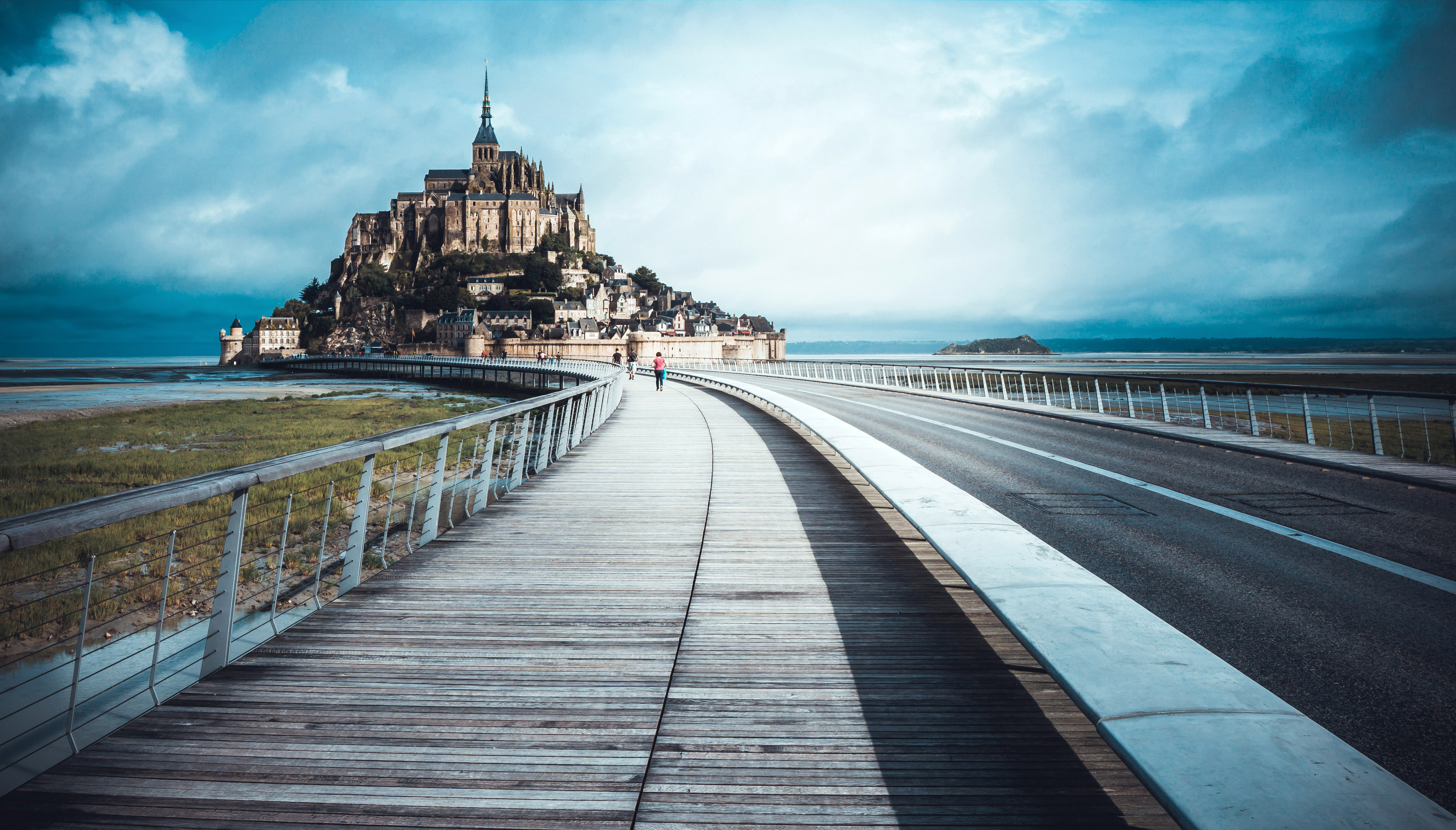
Mont Saint-Michel Abbey is a abbey in Mont Saint-Michel, France, known for its abbey rising from a tidal island.
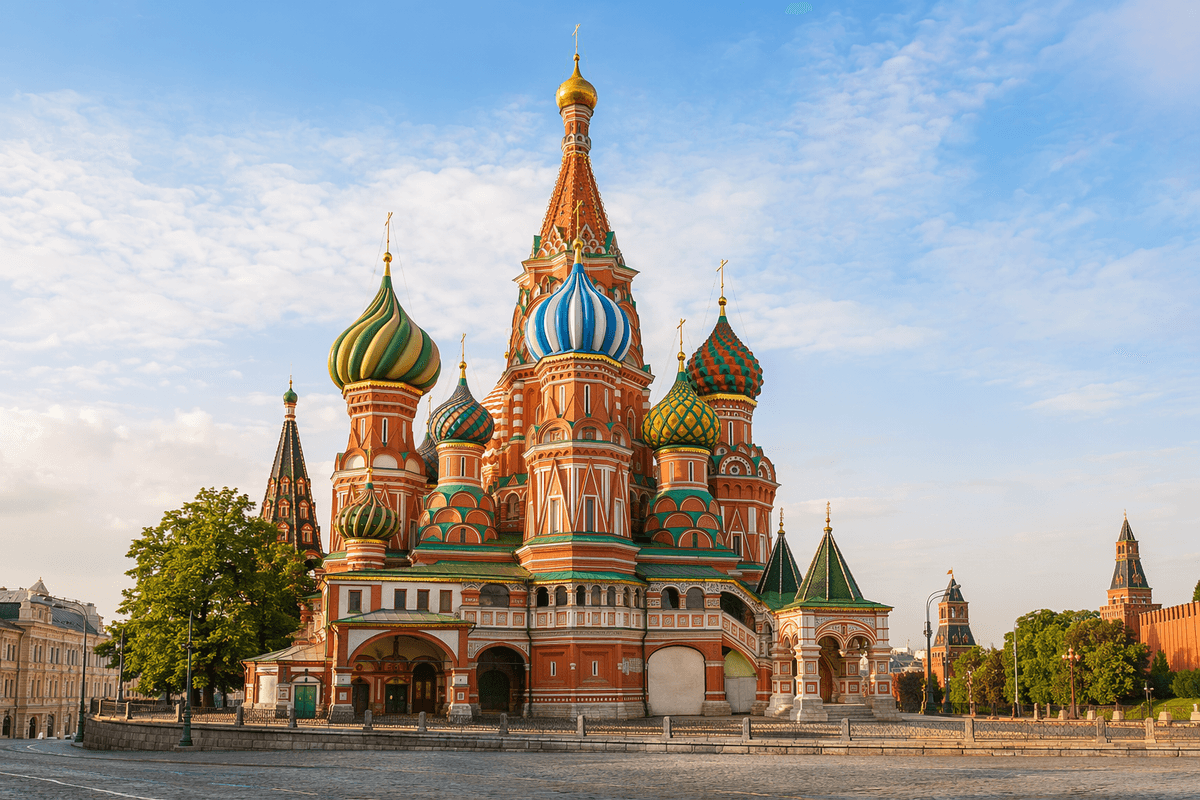
St Basil's Cathedral is a cathedral in Moscow, Russia, known for its clustered towers and colorful onion domes.
References used for facts, location data, image credits, and architectural context on this page.