why it matters
Why this building matters
Mont Saint-Michel Abbey helps readers connect Gothic and Romanesque to visible design decisions: vertical abbey silhouette, tidal approach, stone terraces and cloisters.
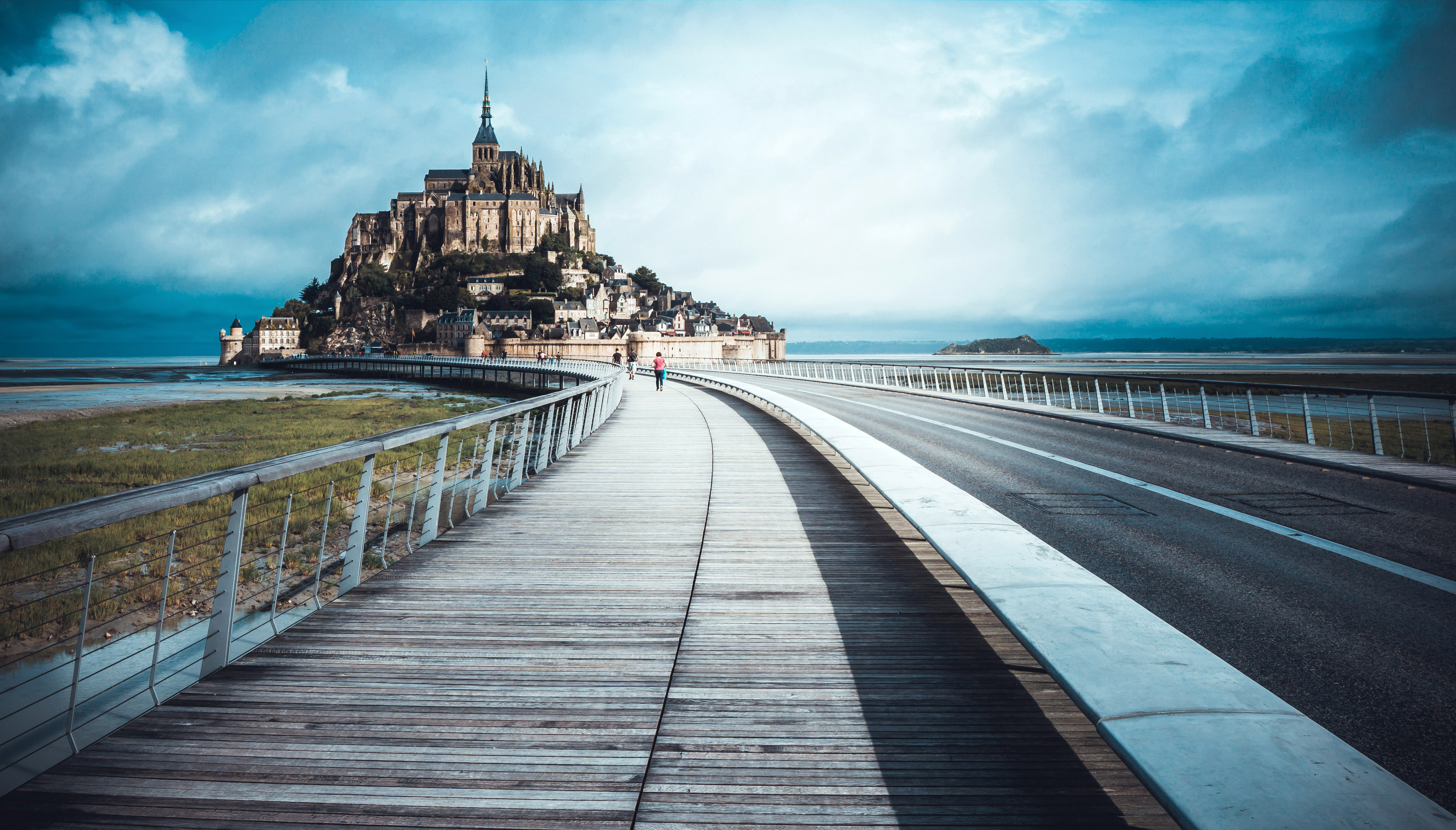
building detail
Mont Saint-Michel Abbey is a abbey in Mont Saint-Michel, France, known for its abbey rising from a tidal island.
Photo credit: Okamatsu Fujikawa / CC0 / Public Domain.
why it matters
Mont Saint-Michel Abbey helps readers connect Gothic and Romanesque to visible design decisions: vertical abbey silhouette, tidal approach, stone terraces and cloisters.
what to notice
explore by place and style
map notes
Use the coordinates as anchors for reading the buildings in relation to streets, water, skyline, and nearby landmarks.
48.6360, -1.511537.1761, -3.588147.5576, 10.7498Map coordinates are listed with provider attribution handled through the source records.
architecture guide
A fuller reading of the building's history, setting, form, materials, and public role.
Mont Saint-Michel Abbey cannot be understood as a building placed on neutral ground. The first fact is the tidal island itself. Rock, bay, causeway, salt marsh, and changing water levels make the architecture feel both reachable and remote. That setting gives the abbey its public force before any detail is inspected. The building is famous because it turns geography into an architectural event: a mass that rises from the bay and organizes the visitor's eye upward.
The name often points to the abbey, but the visible form is a stacked ensemble. Defensive walls, houses, narrow routes, terraces, church volumes, and monastic structures gather around the rock. The abbey crowns that accumulation rather than standing alone. This matters for a factual reading because Mont Saint-Michel is not only a religious monument. It is a village, fortress-like edge, pilgrimage destination, and vertical settlement compressed into one recognizable profile.
Many buildings are read from a front facade; Mont Saint-Michel is read through ascent. The visitor moves from bay level toward lanes, stairs, terraces, and finally the abbey complex above. That climb turns the site into a sequence of thresholds. It also explains why the building's height feels earned. The architecture is not merely tall. It makes vertical movement the main way to understand the relationship between daily settlement, defense, worship, and horizon.
The material facts are plain but important: granite, stone, timber, and weathered masonry meet a bay environment that changes constantly. Surfaces read differently in sun, mist, rain, and tidal light. The materials help the island feel ancient and continuous with the rock, while roofs and towers sharpen the silhouette above the settlement. A good fact page should connect material to setting. Here, stone is not just a construction material; it is part of the island's public identity.
Mont Saint-Michel carries a long building history rather than one clean completion story. Medieval religious use, defensive needs, later changes, preservation, tourism, and modern access all affect how the site is seen now. A date such as 1523 can only point to one layer of a longer process. The more useful fact is that the island grew through accumulation. Its present image comes from many decisions made across time, not from one architect's single finished composition.
The modern approach route matters because it controls how visitors first read the island. A causeway or bridge can make Mont Saint-Michel feel more connected to the mainland, but the bay still keeps the sense of separation alive. This tension is central to the place. The architecture depends on being both accessible and apart. The best first reading watches how the approach slowly turns a distant silhouette into walls, lanes, roofs, and finally the abbey crown.
Mont Saint-Michel belongs in a core architecture atlas because it teaches a lesson that many single-object landmarks cannot. It shows how architecture can grow from topography, pilgrimage, defense, settlement, and changing access. Compare it with Neuschwanstein Castle for picturesque distance, Florence Cathedral for vertical civic image, and the Parthenon for a monument that depends on its elevated site. In each case, architecture and ground are inseparable, but Mont Saint-Michel makes that dependence unusually visible.
A reader should leave the facts page with three anchors: the tidal bay makes the building's public image possible, the abbey is part of a layered settlement rather than a freestanding object, and the climb from approach to crown is the main way the architecture becomes legible.
Mont Saint-Michel Abbey works because the island compresses many architectural roles into a steep vertical body. At the bottom are arrival, walls, lanes, services, and settlement. Above them rise terraces, monastic rooms, church volumes, and the abbey crown. The design is not a single facade but a vertical ordering of public and sacred space. This compression makes the whole island read like one building even though it is an accumulated ensemble.
The long approach is part of the design reading. From the causeway, the island appears as a distant mass before details become visible. That slow reveal is powerful because it lets the viewer read the profile as a whole: rock below, settlement in the middle, abbey above. The route creates anticipation and scale. It also prevents the monument from becoming only a close-up object; the first design lesson is distance.
The strongest design effect is the way rock and masonry seem to belong to the same upward movement. The island base anchors the settlement, while walls and buildings extend the natural form rather than replacing it. This is different from a palace on flat ground. Here the architecture appears to grow from the terrain. The boundary between natural pedestal and built form is intentionally hard to separate in the long view.
The village route is not a secondary tourist corridor. It organizes perception by breaking the monument into stages. Narrow lanes compress the body, stairs redirect the eye, and small openings reveal water, walls, or roofs. Each stage changes the visitor's scale. By the time the abbey is reached, the climb has already explained the building's hierarchy. The design depends on movement from crowded lower space toward more exposed upper space.
The abbey does not simply sit at the top; it gives the entire island a visual direction. Rooflines, towers, buttressed masses, and church volumes draw attention upward. This upward pull is why the island can be recognized from far away. Without the crown, the settlement would still be dramatic, but it would lose the clear vertical target that organizes the composition. The abbey turns topography into an architectural ascent.
The tide is a design condition even though it is not built by architects. Water, mudflat, and distance change how the island is framed. At some moments the place feels surrounded and remote; at others the exposed bay makes the approach seem longer and more horizontal. That changing frame affects the architecture's meaning. Mont Saint-Michel is therefore not a fixed object in a fixed foreground. It is a monument whose setting keeps editing the view.
The design lesson is that a powerful landmark can be an accumulated section rather than a clean object. Mont Saint-Michel combines route, rock, defense, settlement, worship, and horizon into one legible mass. Its drama comes from the fact that no single part explains the whole. The architecture becomes memorable because each layer supports the next, and because the visitor can read that layering through approach, climb, and long-distance silhouette.
Mont Saint-Michel's history is not only a sequence of dates. It is visible in the climb from bay level to the abbey. The lower settlement, defensive edges, crowded lanes, monastic spaces, and church volumes show different uses layered over time. That is why the site feels older than a single monument. The visitor moves through history physically, passing from practical settlement toward sacred and symbolic height.
The island's religious history matters because pilgrimage depends on approach. A destination separated by tide, mudflat, and distance carries a stronger sense of arrival than a church in a normal street grid. Mont Saint-Michel turned that separation into meaning. The effort of reaching and climbing the site helped make the abbey feel like a spiritual and spatial goal. The architecture records that movement even for visitors who arrive today as tourists.
The site also carries defensive associations. Walls, compact settlement, and elevated position make the island feel protected, even when the viewer is focused on the abbey. This mixture is important. Mont Saint-Michel is not a pure church isolated from worldly concerns, and it is not a simple fortress either. Its historical force comes from the coexistence of devotion, settlement, defense, and geography in one tightly compressed place.
The tidal bay is part of the historical record. It shaped access, danger, isolation, work, and public imagination. A landlocked abbey could be architecturally important, but it would not produce the same narrative. At Mont Saint-Michel, water and mudflat made the island legible as a threshold between ordinary territory and a charged destination. The landscape keeps the old idea of separation visible even when modern routes make arrival easier.
Modern preservation and tourism changed how the site is understood. Once a place becomes a major heritage image, its history is partly managed through access, conservation, signage, route control, and photography. That does not erase older meanings. It adds another layer. Mont Saint-Michel today is read through medieval memory and modern heritage practice at the same time. The current visitor experience is therefore historical evidence too.
The risk with Mont Saint-Michel is that the famous silhouette becomes the whole story. A single distant image can hide the village fabric, the labor of ascent, the defensive edges, and the layered uses that made the island what it is. A better historical reading uses the silhouette as the beginning, not the conclusion. It asks what kinds of life, movement, belief, and preservation had to accumulate for that image to exist.
Mont Saint-Michel remains powerful because it is several things at once: abbey, village, island, pilgrimage goal, fortified image, heritage site, and tidal landscape. That layered identity allows different readers to enter the story from different directions. Architects can study section and approach. Travelers can understand route and view. Historians can read religion, settlement, and preservation. The site survives public repetition because it is not reducible to one category.
A useful history page should make the island's image less automatic. In this case, the key shift is from postcard silhouette to accumulated place. Mont Saint-Michel matters because rock, tide, abbey, village, wall, pilgrimage, tourism, and preservation all shape the same architectural body. Once those layers are visible, the site becomes richer than a beautiful object in the bay.
The best architecture-focused visit to Mont Saint-Michel begins before the gate or village street. Use the approach to study distance. From the causeway, the island changes from silhouette to stacked settlement to individual walls and roofs. That slow shift is the first architectural lesson. Do not rush it. The building is designed by accumulation, and the approach lets the visitor read that accumulation before entering the narrow lanes.
The bay is not empty background. It explains why the island feels separate and why the abbey appears more dramatic than its size alone would suggest. Look at the water, mudflat, horizon, and road surface as part of the composition. A close view of stonework is useful, but the long view tells you why the place became a landmark. Mont Saint-Michel needs its foreground to make sense.
Before climbing, look at the lower walls and settlement edge. They show how the island meets visitors, controls entry, and protects the compact village fabric. This lower band is easy to skip because the abbey crown pulls the eye upward. Resist that shortcut. The lower edge explains how daily movement and defensive image support the sacred architecture above. Without it, the island would feel less grounded and less legible.
Treat the climb as if you are walking through an architectural section. Each stair, lane, terrace, and turn changes the relationship between body, building, and view. Tight spaces make the island feel dense; openings reveal bay and horizon; upper levels explain the hierarchy. This sequence is the visit's main value. Mont Saint-Michel is not best understood by one photograph, but by the way the climb builds meaning step by step.
During the ascent, compare small settlement scale with the larger abbey masses above. Roofs, windows, shopfronts, and narrow lanes make the lower island feel human and compressed. The abbey crown feels larger, more formal, and more distant. That contrast is intentional to the visitor's experience. It helps the site move from everyday activity toward a more symbolic architectural climax.
Weather and light can change the site more than expected. Mist can make the island seem detached from the mainland; strong sun sharpens stone, roof, and wall edges; wet conditions can make the causeway and bay foreground more reflective. These changes are not merely atmospheric. They affect how the architecture's mass, separation, and verticality are read. A useful visit records at least one long view and one close stone view under the same light.
When you reach the upper abbey area, use it as the final evidence rather than the only destination. Ask how the climb prepared the crown, how the crown organizes the island below, and how the view outward changes the meaning of the route. This keeps the visit architectural. The reward is not only arrival at a famous place, but understanding how the island made that arrival feel inevitable.
A good visual record should include one long approach with bay and causeway, one lower wall or village edge, one climb or stair sequence, and one upper abbey or outward view. Those four views preserve the site's main design questions: separation, defense, ascent, and crown. They also protect the visit from becoming one repeated postcard image, which is the easiest way to miss the architecture.
continue reading
related buildings
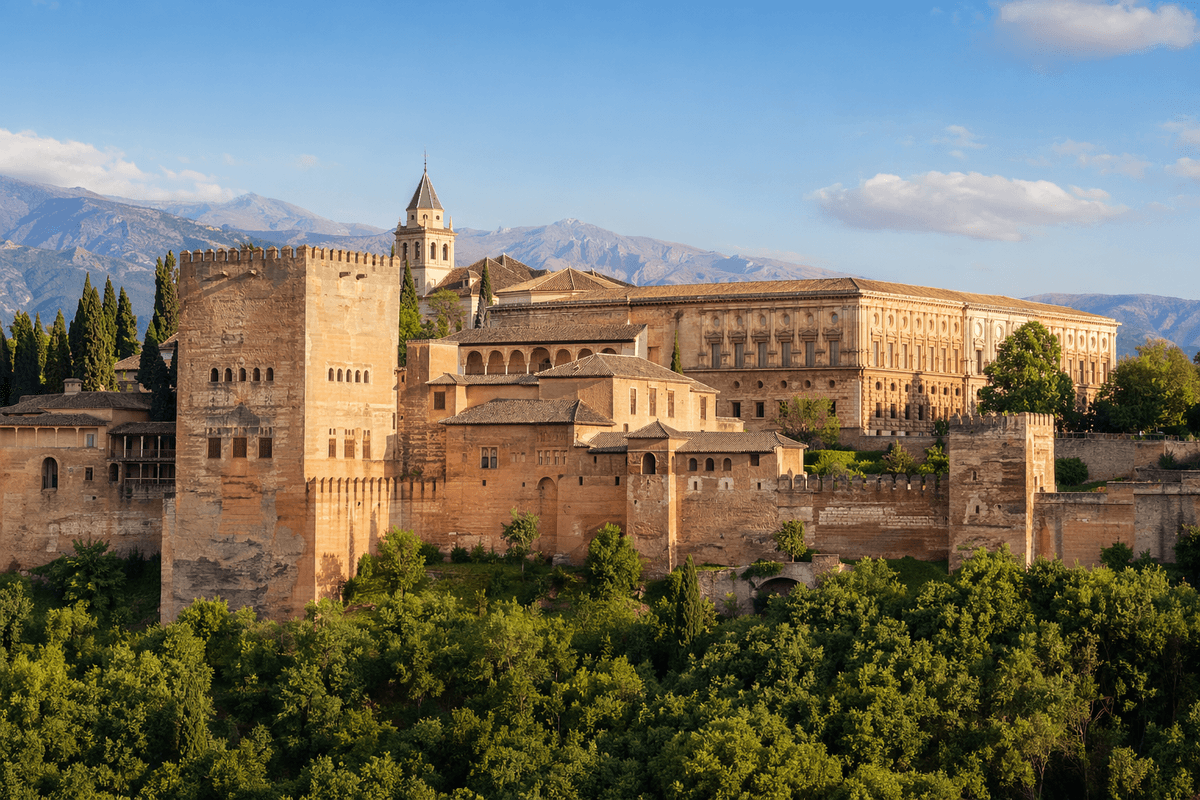
Alhambra is a palace fortress in Granada, Spain, known for its courtyards, carved surfaces, water channels, and hilltop setting.
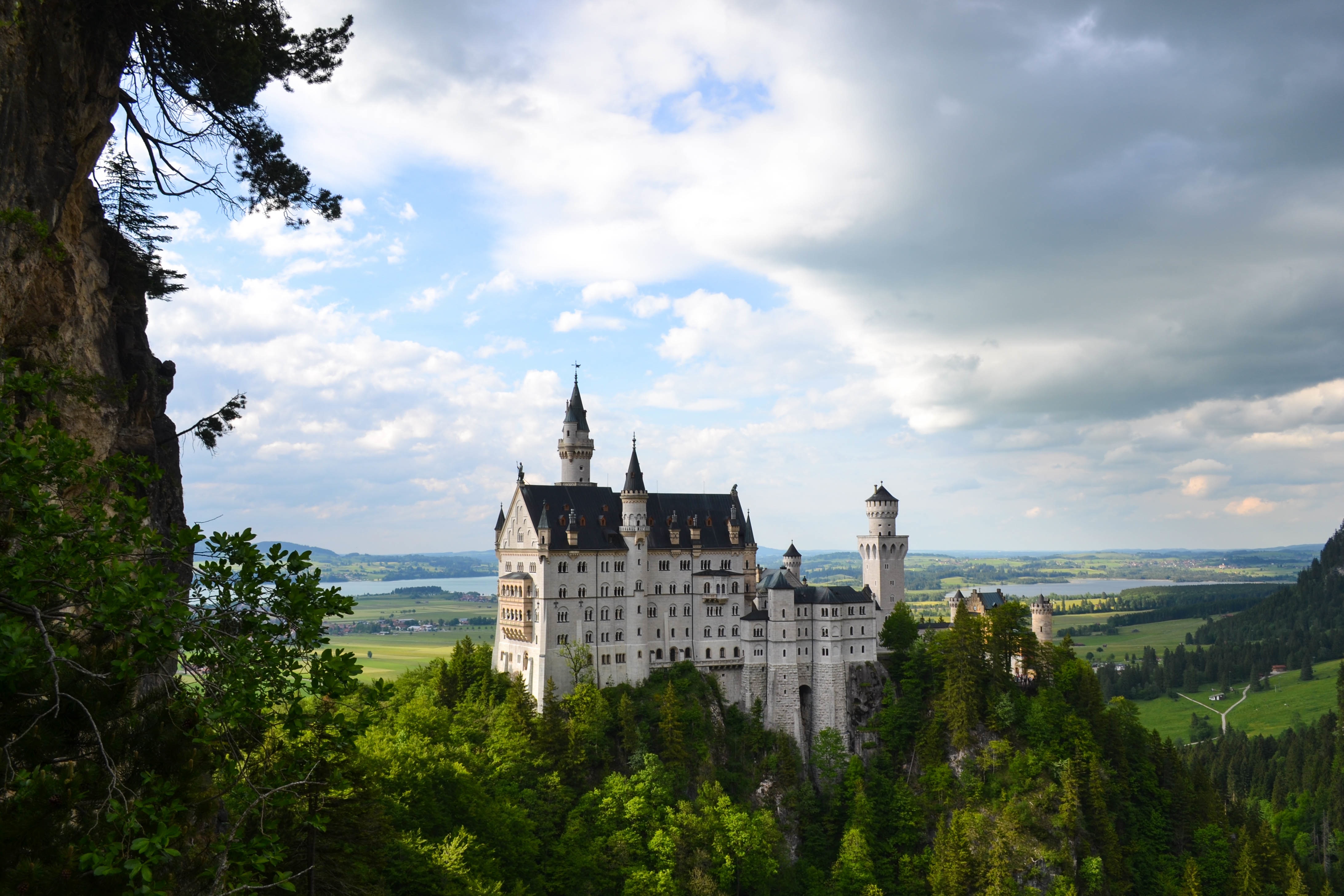
Neuschwanstein Castle is a castle in Schwangau, Germany, known for its theatrical mountain silhouette and romantic historicism.
References used for facts, location data, image credits, and architectural context on this page.