guide
Mont Saint-Michel Abbey Facts: Tide, Rock, and Monastic Ascent
The island setting is the first fact
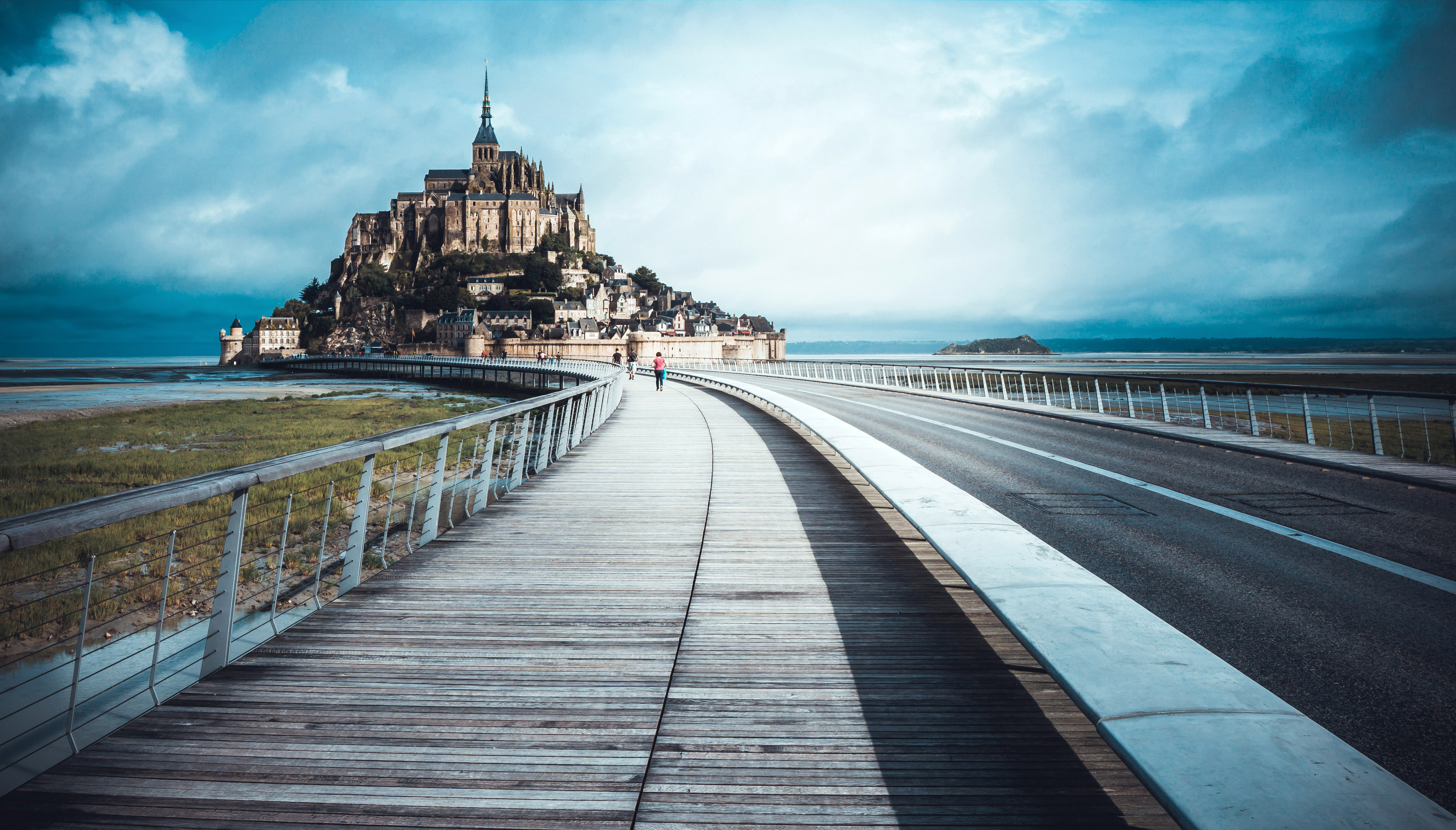
Mont Saint-Michel Abbey cannot be understood as a building placed on neutral ground. The first fact is the tidal island itself. Rock, bay, causeway, salt marsh, and changing water levels make the architecture feel both reachable and remote. That setting gives the abbey its public force before any detail is inspected. The building is famous because it turns geography into an architectural event: a mass that rises from the bay and organizes the visitor's eye upward.
The abbey crowns a layered settlement
The name often points to the abbey, but the visible form is a stacked ensemble. Defensive walls, houses, narrow routes, terraces, church volumes, and monastic structures gather around the rock. The abbey crowns that accumulation rather than standing alone. This matters for a factual reading because Mont Saint-Michel is not only a religious monument. It is a village, fortress-like edge, pilgrimage destination, and vertical settlement compressed into one recognizable profile.
Ascent is part of the architecture
Many buildings are read from a front facade; Mont Saint-Michel is read through ascent. The visitor moves from bay level toward lanes, stairs, terraces, and finally the abbey complex above. That climb turns the site into a sequence of thresholds. It also explains why the building's height feels earned. The architecture is not merely tall. It makes vertical movement the main way to understand the relationship between daily settlement, defense, worship, and horizon.
Granite, stone, and tide shape the image
The material facts are plain but important: granite, stone, timber, and weathered masonry meet a bay environment that changes constantly. Surfaces read differently in sun, mist, rain, and tidal light. The materials help the island feel ancient and continuous with the rock, while roofs and towers sharpen the silhouette above the settlement. A good fact page should connect material to setting. Here, stone is not just a construction material; it is part of the island's public identity.
The date is not a single moment
Mont Saint-Michel carries a long building history rather than one clean completion story. Medieval religious use, defensive needs, later changes, preservation, tourism, and modern access all affect how the site is seen now. A date such as 1523 can only point to one layer of a longer process. The more useful fact is that the island grew through accumulation. Its present image comes from many decisions made across time, not from one architect's single finished composition.
The causeway changes the first reading
The modern approach route matters because it controls how visitors first read the island. A causeway or bridge can make Mont Saint-Michel feel more connected to the mainland, but the bay still keeps the sense of separation alive. This tension is central to the place. The architecture depends on being both accessible and apart. The best first reading watches how the approach slowly turns a distant silhouette into walls, lanes, roofs, and finally the abbey crown.
Why it belongs in the core atlas
Mont Saint-Michel belongs in a core architecture atlas because it teaches a lesson that many single-object landmarks cannot. It shows how architecture can grow from topography, pilgrimage, defense, settlement, and changing access. Compare it with Neuschwanstein Castle for picturesque distance, Florence Cathedral for vertical civic image, and the Parthenon for a monument that depends on its elevated site. In each case, architecture and ground are inseparable, but Mont Saint-Michel makes that dependence unusually visible.
Reader check
A reader should leave the facts page with three anchors: the tidal bay makes the building's public image possible, the abbey is part of a layered settlement rather than a freestanding object, and the climb from approach to crown is the main way the architecture becomes legible.