guide
Mont Saint-Michel Abbey History Across Pilgrimage and Preservation
The history is built into the climb
Mont Saint-Michel's history is not only a sequence of dates. It is visible in the climb from bay level to the abbey. The lower settlement, defensive edges, crowded lanes, monastic spaces, and church volumes show different uses layered over time. That is why the site feels older than a single monument. The visitor moves through history physically, passing from practical settlement toward sacred and symbolic height.
Pilgrimage shaped the island's meaning
The island's religious history matters because pilgrimage depends on approach. A destination separated by tide, mudflat, and distance carries a stronger sense of arrival than a church in a normal street grid. Mont Saint-Michel turned that separation into meaning. The effort of reaching and climbing the site helped make the abbey feel like a spiritual and spatial goal. The architecture records that movement even for visitors who arrive today as tourists.
Defense and devotion share the same body
The site also carries defensive associations. Walls, compact settlement, and elevated position make the island feel protected, even when the viewer is focused on the abbey. This mixture is important. Mont Saint-Michel is not a pure church isolated from worldly concerns, and it is not a simple fortress either. Its historical force comes from the coexistence of devotion, settlement, defense, and geography in one tightly compressed place.
The bay made history visible
The tidal bay is part of the historical record. It shaped access, danger, isolation, work, and public imagination. A landlocked abbey could be architecturally important, but it would not produce the same narrative. At Mont Saint-Michel, water and mudflat made the island legible as a threshold between ordinary territory and a charged destination. The landscape keeps the old idea of separation visible even when modern routes make arrival easier.
Preservation changed the public story
Modern preservation and tourism changed how the site is understood. Once a place becomes a major heritage image, its history is partly managed through access, conservation, signage, route control, and photography. That does not erase older meanings. It adds another layer. Mont Saint-Michel today is read through medieval memory and modern heritage practice at the same time. The current visitor experience is therefore historical evidence too.
The famous silhouette can flatten the story
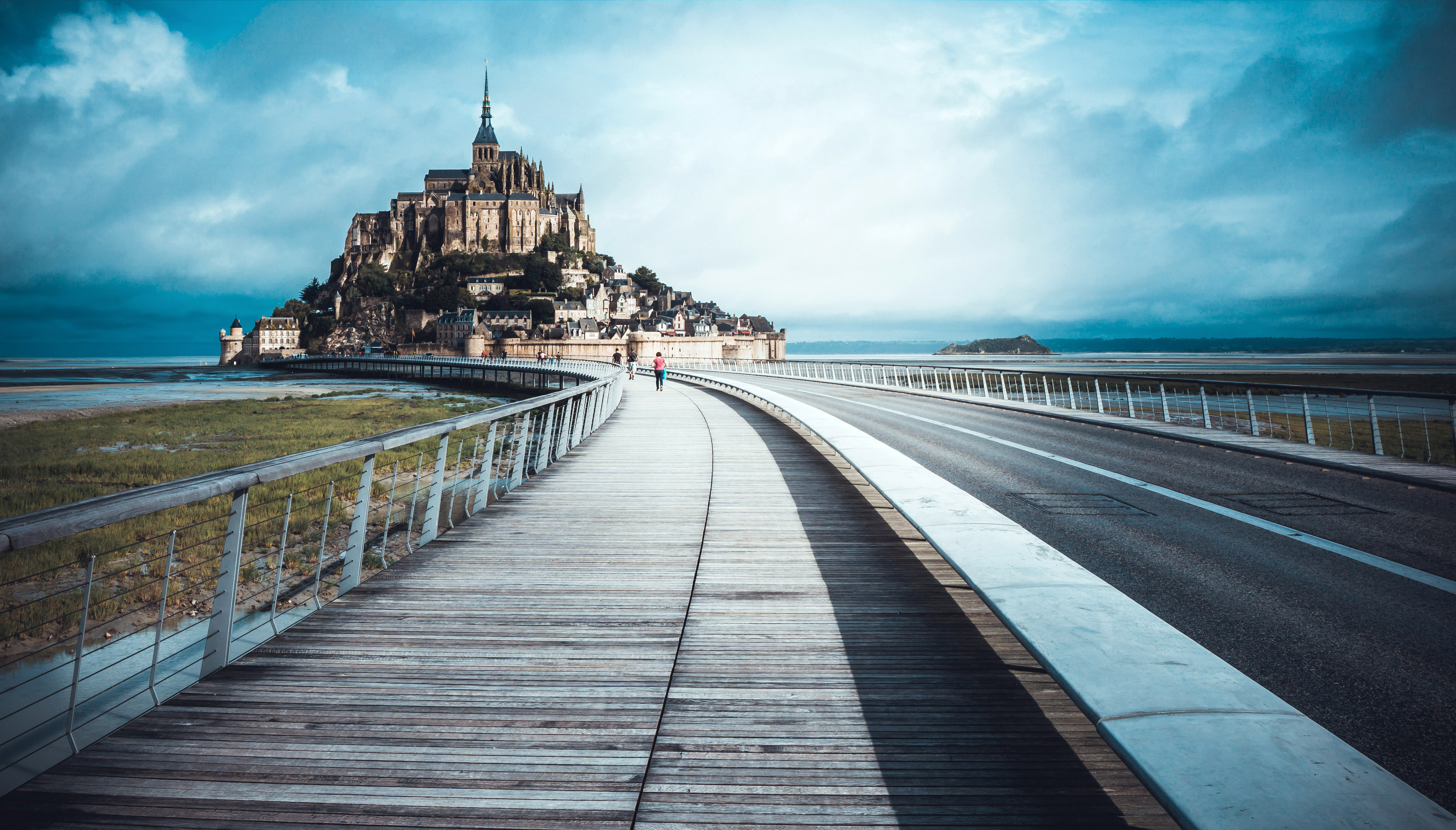
The risk with Mont Saint-Michel is that the famous silhouette becomes the whole story. A single distant image can hide the village fabric, the labor of ascent, the defensive edges, and the layered uses that made the island what it is. A better historical reading uses the silhouette as the beginning, not the conclusion. It asks what kinds of life, movement, belief, and preservation had to accumulate for that image to exist.
The legacy depends on layered identity
Mont Saint-Michel remains powerful because it is several things at once: abbey, village, island, pilgrimage goal, fortified image, heritage site, and tidal landscape. That layered identity allows different readers to enter the story from different directions. Architects can study section and approach. Travelers can understand route and view. Historians can read religion, settlement, and preservation. The site survives public repetition because it is not reducible to one category.
Historical reading check
A useful history page should make the island's image less automatic. In this case, the key shift is from postcard silhouette to accumulated place. Mont Saint-Michel matters because rock, tide, abbey, village, wall, pilgrimage, tourism, and preservation all shape the same architectural body. Once those layers are visible, the site becomes richer than a beautiful object in the bay.