guide
Mont Saint-Michel Abbey Causeway and Visit Notes
Begin before the gate
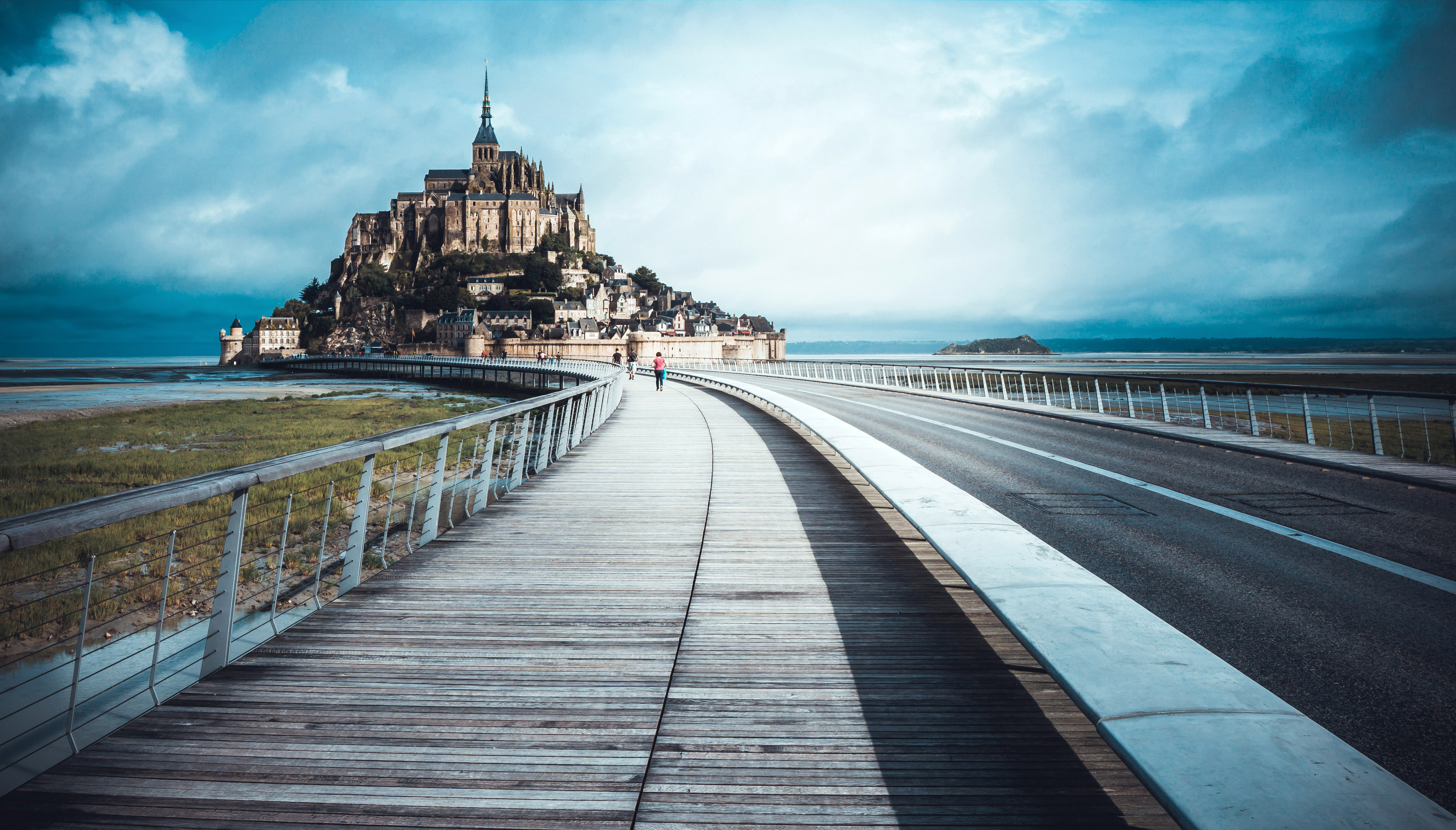
The best architecture-focused visit to Mont Saint-Michel begins before the gate or village street. Use the approach to study distance. From the causeway, the island changes from silhouette to stacked settlement to individual walls and roofs. That slow shift is the first architectural lesson. Do not rush it. The building is designed by accumulation, and the approach lets the visitor read that accumulation before entering the narrow lanes.
Keep the bay in the frame
The bay is not empty background. It explains why the island feels separate and why the abbey appears more dramatic than its size alone would suggest. Look at the water, mudflat, horizon, and road surface as part of the composition. A close view of stonework is useful, but the long view tells you why the place became a landmark. Mont Saint-Michel needs its foreground to make sense.
Read the lower edge first
Before climbing, look at the lower walls and settlement edge. They show how the island meets visitors, controls entry, and protects the compact village fabric. This lower band is easy to skip because the abbey crown pulls the eye upward. Resist that shortcut. The lower edge explains how daily movement and defensive image support the sacred architecture above. Without it, the island would feel less grounded and less legible.
Use the climb as a section
Treat the climb as if you are walking through an architectural section. Each stair, lane, terrace, and turn changes the relationship between body, building, and view. Tight spaces make the island feel dense; openings reveal bay and horizon; upper levels explain the hierarchy. This sequence is the visit's main value. Mont Saint-Michel is not best understood by one photograph, but by the way the climb builds meaning step by step.
Compare village scale with abbey scale
During the ascent, compare small settlement scale with the larger abbey masses above. Roofs, windows, shopfronts, and narrow lanes make the lower island feel human and compressed. The abbey crown feels larger, more formal, and more distant. That contrast is intentional to the visitor's experience. It helps the site move from everyday activity toward a more symbolic architectural climax.
Watch how weather changes the reading
Weather and light can change the site more than expected. Mist can make the island seem detached from the mainland; strong sun sharpens stone, roof, and wall edges; wet conditions can make the causeway and bay foreground more reflective. These changes are not merely atmospheric. They affect how the architecture's mass, separation, and verticality are read. A useful visit records at least one long view and one close stone view under the same light.
Make the abbey crown the final evidence
When you reach the upper abbey area, use it as the final evidence rather than the only destination. Ask how the climb prepared the crown, how the crown organizes the island below, and how the view outward changes the meaning of the route. This keeps the visit architectural. The reward is not only arrival at a famous place, but understanding how the island made that arrival feel inevitable.
Build a four-view record
A good visual record should include one long approach with bay and causeway, one lower wall or village edge, one climb or stair sequence, and one upper abbey or outward view. Those four views preserve the site's main design questions: separation, defense, ascent, and crown. They also protect the visit from becoming one repeated postcard image, which is the easiest way to miss the architecture.