guide
Neuschwanstein Castle Facts: Towers, Ridge, and Royal Fantasy
It is a nineteenth-century castle image, not a medieval fortress
Neuschwanstein Castle is often remembered as if it were a surviving medieval fortress, but the more useful fact is that it is a nineteenth-century royal project. Its architectural power comes from historicist imagination rather than military necessity. Towers, turrets, steep roofs, and pale walls are arranged to produce a romantic medieval image for King Ludwig II. That distinction matters because the building should be read as image-making, retreat, and cultural fantasy before it is read as defense.
The ridge is part of the architecture
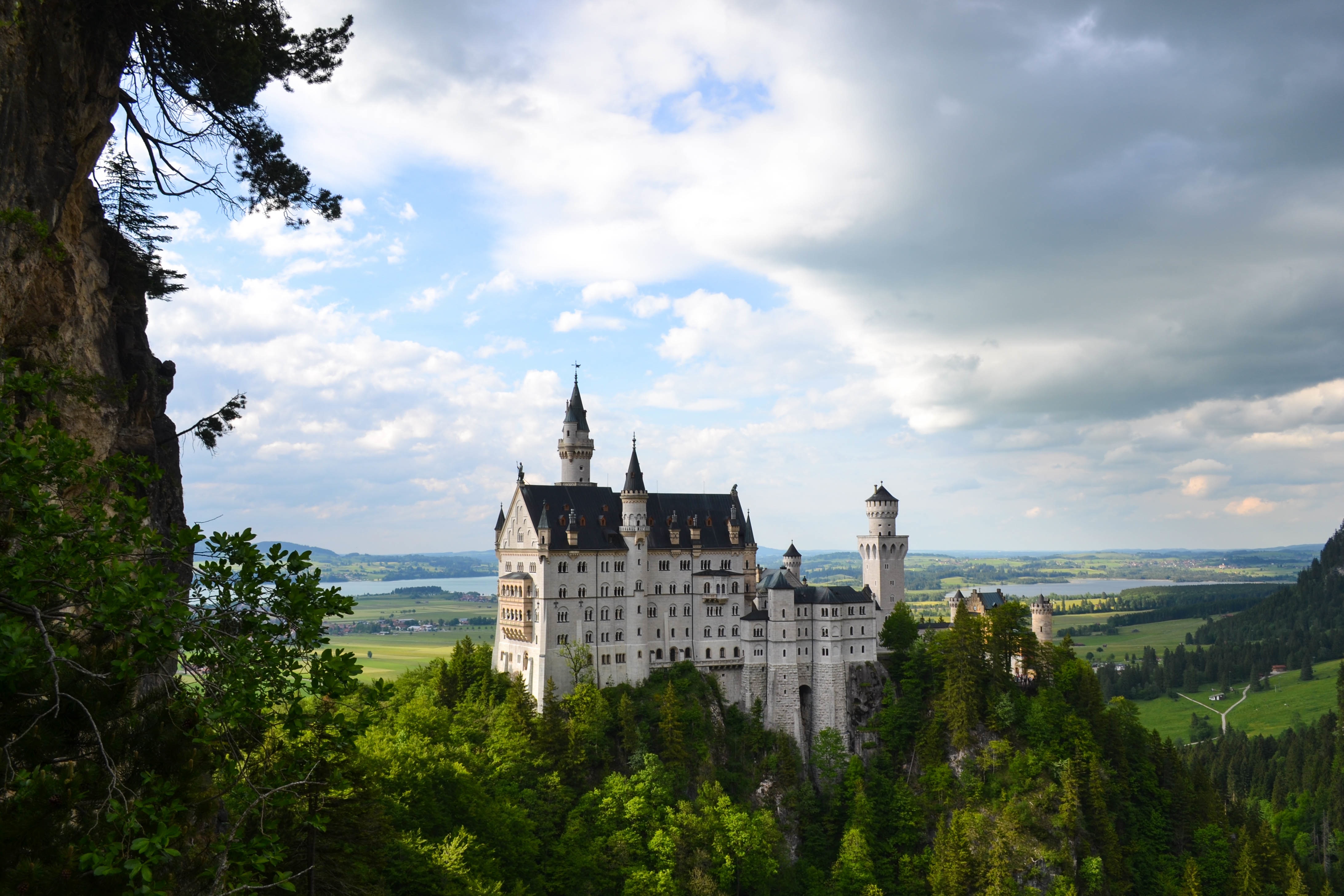
The castle's setting above Schwangau is not background scenery. The steep site, surrounding forest, distant lakes, and Alpine horizon are part of the composition. Neuschwanstein needs this landscape to complete its effect. From below, the towers appear lifted out of the ridge; from higher viewpoints, the building becomes one element in a wider mountain picture. The fact to remember is that site and silhouette work together, so the castle's public image is architectural and scenic at the same time.
Towers and rooflines do most of the visual work
The easiest way to identify Neuschwanstein is through its tower cluster and uneven roofline. Those vertical accents create a castle profile that feels older, more complex, and more legendary than the building's actual date. The towers are not only decorative pieces added to a box. They organize the skyline, break the mass into readable parts, and create the sense that the building has grown from a storybook landscape. That is why the silhouette remains legible even from a long distance.
Historicist style is the key category
The style label matters because historicist architecture looks backward without being old in the same way as the sources it borrows from. Neuschwanstein uses medieval and Romanesque associations to construct mood, memory, and royal self-image. The result is neither archaeological reconstruction nor modern minimal invention. It is a deliberate nineteenth-century composition that uses older forms to create atmosphere. This makes the castle a strong example of how architecture can turn history into staged emotional experience.
Materials support the contrast between mass and theater
The building's material story includes limestone, brick, timber, painted interiors, and carefully controlled surface image. Those materials help the castle feel solid enough to belong to the ridge while also theatrical enough to behave like a stage set. Pale exterior walls catch mountain light, dark roofs sharpen the outline, and timber and interior decoration shift the reading from fortress to royal retreat. The material facts should therefore be tied to atmosphere, not listed as neutral construction data.
It matters because it made fantasy public
Neuschwanstein became important because it turned private royal imagination into one of the world's most recognizable castle images. The building is not only a Bavarian landmark. It is a reference point for how castles are imagined by travelers, illustrators, films, theme parks, and tourism culture. That influence can make the architecture seem obvious, but it is actually a strong lesson in public memory: a building can become famous by making a fantasy spatially convincing.
What the basic facts should help you see
Use the basic facts as viewing tools: nineteenth-century date, Schwangau ridge, historicist style, towered silhouette, limestone and brick construction, and theatrical relationship to the mountains. Together they explain why Neuschwanstein is more than a pretty castle view. It is an architectural composition where landscape, royal imagination, historical quotation, and visitor memory reinforce each other. The most important fact is the gap between what the castle looks like and what it actually is.
Atlas reading check
A reader should leave this page able to separate three ideas that are often blended together: medieval appearance, nineteenth-century construction, and modern fairy-tale reputation. Neuschwanstein is useful precisely because all three are visible at once. If a description only says that it is beautiful or famous, it misses the architectural question: how did a relatively recent royal retreat become the default global image of an old mountain castle?