guide
Neuschwanstein Castle History Beyond the Fairy-Tale Image
The history begins with royal withdrawal
Neuschwanstein Castle is tied to King Ludwig II and to a desire for retreat, imagination, and staged royal identity. It was not planned as a medieval stronghold built for siege. It was a nineteenth-century project shaped by personal fantasy, cultural memory, and a selective love of older forms. That origin changes the historical reading. The building is less a document of medieval power than a document of how a modern king wanted the medieval past to feel.
The castle belongs to historicism
Historicism was not only copying the past. It was a way for nineteenth-century architecture to use older styles to express identity, memory, and desire. Neuschwanstein uses this method with unusual intensity. Its towers, gables, and interiors point backward, but the building's date places it in a modern age of tourism, photography, and image circulation. The historical tension is therefore built in: the castle looks old, but it became famous through modern ways of seeing.
Ludwig's death changed the building's meaning
The death of Ludwig II in 1886 altered the story of Neuschwanstein. The castle became attached not only to royal fantasy, but also to incompletion, biography, and public curiosity. A private world imagined for a king became a place the public could visit and reproduce in memory. This shift is crucial. The building moved from personal retreat to public image, and that change helped turn architectural fantasy into a widely shared cultural object.
Tourism made the fantasy durable
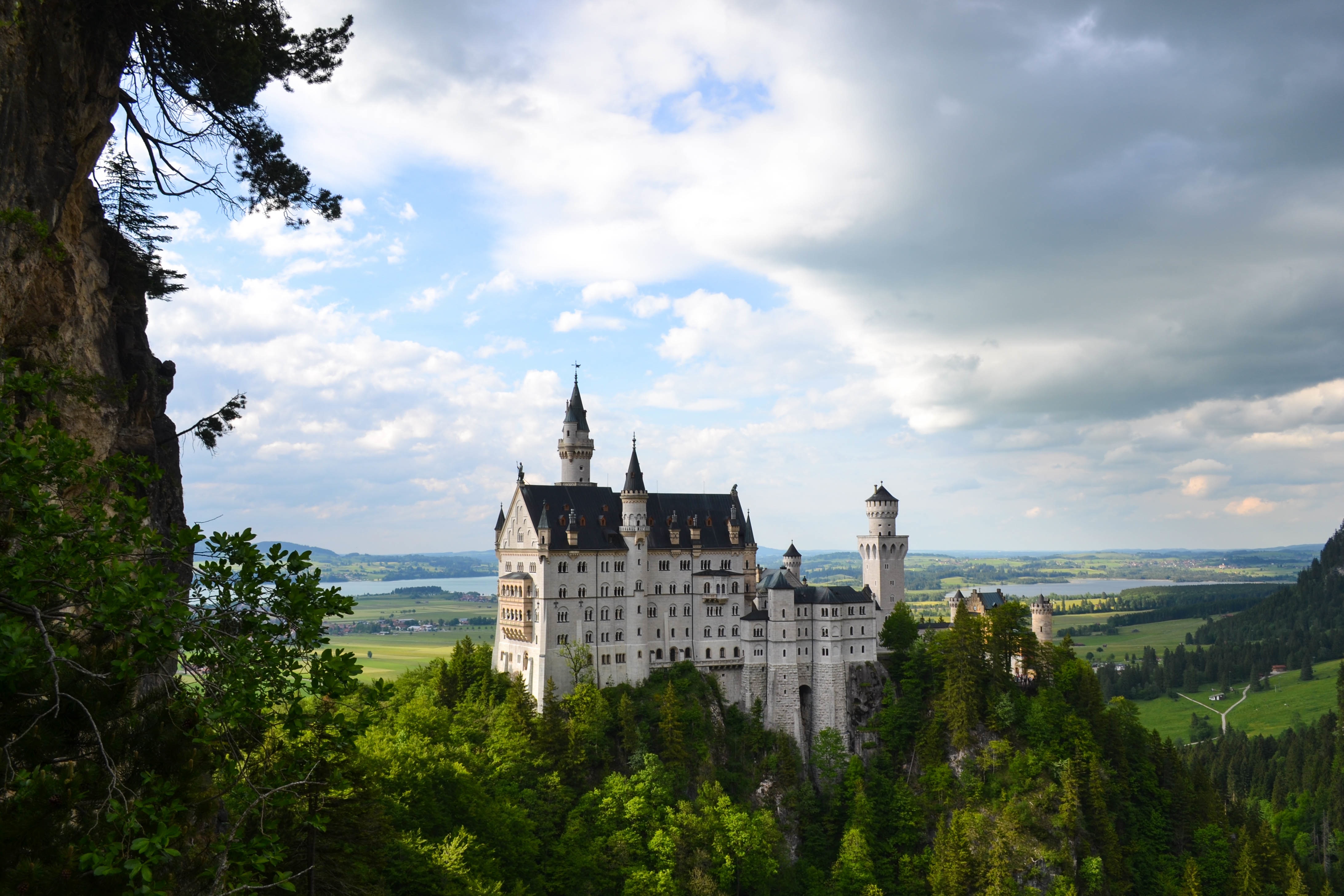
Neuschwanstein's modern history cannot be separated from tourism. Visitors arrive with an image already formed by photographs, illustrations, films, and popular ideas of fairy-tale castles. That repetition has made the building durable in public memory. Tourism can flatten the castle into a simple postcard, but it also shows how powerful its composition is. A building that was designed around scenic effect became especially suited to an age of image circulation.
The mountain setting became historical evidence
The landscape is not just a place where history happened. It is part of how history is remembered. The Alpine setting allows the castle to perform isolation, romance, and distance from everyday urban life. That helps explain why the building's story has lasted. The ridge, forest, and horizon make the royal fantasy visible to people who know little about Ludwig II or nineteenth-century Bavaria. Landscape carries historical meaning because it makes the narrative immediately legible.
Authenticity is the central debate
The main historical debate is not whether Neuschwanstein is real or fake. It is what kind of reality architecture can create. The castle is not an authentic medieval fortress, yet it is authentically a nineteenth-century expression of romantic historicism. That distinction is important. Calling it fake ends the discussion too early. The richer interpretation asks why a deliberately staged building became more influential in modern castle imagery than many older defensive structures.
The legacy moved beyond Bavaria
Neuschwanstein's legacy spread because it offered a compact visual formula: remote setting, pale walls, towers, steep roofs, and a sense of inaccessible romance. That formula travelled into tourism culture and popular imagination far beyond Schwangau. The building now shapes how many people picture castles before they ever study medieval architecture. Its historical importance lies in that influence. It shows how a late historicist building can redefine public memory of a much older architectural category.
Historical reading check
A useful history page should make the famous image less automatic. In Neuschwanstein's case, the important shift is from medieval fantasy to nineteenth-century evidence. The castle records royal imagination, selective historicism, scenic composition, public tourism, and the modern power of images. Once those layers are visible, the building becomes more interesting than a fairy-tale label. It becomes a case study in how architecture manufactures longing for a past that never quite existed.