guide
Neuschwanstein Castle Design: Romantic Image and Alpine Setting
The design starts with a picture
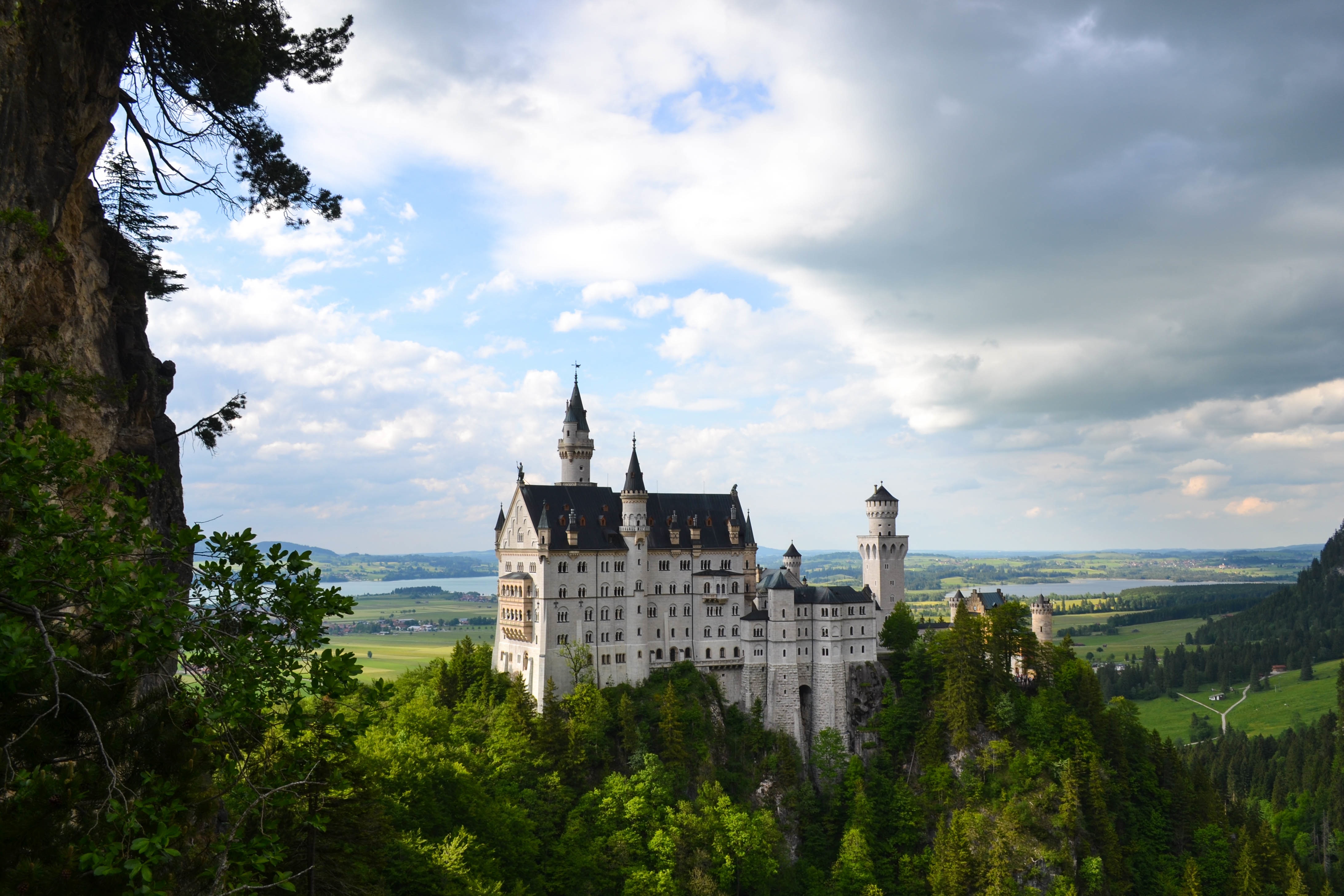
Neuschwanstein Castle is designed to work as a picture before it is understood as a plan. That does not make it shallow. It means the architecture begins with controlled distance, framed approach, ridge placement, and a silhouette that can be remembered after one glance. The building gathers towers, roofs, walls, and forest edge into a single scenic composition. A good design reading therefore starts outside the walls, where the castle first turns landscape into theater.
Asymmetry keeps the silhouette alive
The castle's outline is not a simple symmetrical palace front. Towers rise at different heights, roof pitches vary, and the mass seems to step with the site. This controlled asymmetry keeps the silhouette animated. It suggests age, growth, and narrative complexity, even though the building was deliberately composed. That is the design trick: the castle feels as if it belongs to a layered medieval past while actually expressing a nineteenth-century desire for picturesque effect.
The ridge gives the building a pedestal
The steep ridge is doing architectural work. It lifts the castle above the surrounding landscape, makes the walls seem more dramatic, and turns approach into anticipation. Without the ridge, the towers would still be memorable, but they would lose much of their force. The site gives the building vertical drama before the architecture adds its own vertical accents. In design terms, ground and building are collaborating to produce a single theatrical profile.
Historicist quotation is selective
Neuschwanstein does not copy one medieval precedent with documentary discipline. It selects effects: tower, gate, courtyard, steep roof, picturesque wall, decorated interior, and scenic overlook. Those elements are arranged to create a romantic idea of the Middle Ages rather than a practical fortress. That selectivity is the design's key historical mechanism. The castle borrows from history in order to make a mood, not to reproduce military or civic reality.
Structure and image tell different stories
The castle looks backward, but its construction belongs to a modernizing nineteenth century. This split between appearance and making is central to the design. The visitor sees medieval romance, but the project depends on contemporary organization, engineering, and royal patronage. The building's architecture therefore lives in the space between image and reality. That tension should not be treated as a flaw. It is the reason Neuschwanstein is so revealing as historicist architecture.
Materials sharpen the stage effect
The exterior material palette helps the castle read clearly against forest and mountain weather. Pale walls catch available light, dark roofs draw the profile, and timber and interior finishes support the retreat-like atmosphere. The materials do not simply imitate an old fortress. They support a visual performance in which the castle appears solid, remote, and dreamlike. This is why the building can look convincing in a broad landscape view and still feel deliberately composed up close.
The design depends on viewpoints
Neuschwanstein is unusually dependent on where the viewer stands. From some positions it reads as a vertical castle crown on the ridge; from others the mass is partly hidden by forest, rock, or approach routes. This means the design is not exhausted by a front elevation. It is closer to a sequence of staged views. The best design analysis follows movement: first distant recognition, then rising approach, then close reading of towers and walls.
The design lesson
The design lesson is that architectural authenticity is not the only reason a building can matter. Neuschwanstein matters because it demonstrates how form, site, historical quotation, and public imagination can make a constructed fantasy durable. The castle is not important because it is medieval. It is important because it shows how powerfully architecture can manufacture the feeling of medieval romance. Its success lies in making that feeling spatial, visible, and repeatable through countless views.