guide
Leaning Tower of Pisa Cathedral Precinct Visit Notes
Start with the whole precinct
Begin by stepping back far enough to see the Leaning Tower of Pisa with the cathedral and baptistery. This prevents the visit from shrinking into one tilted object. The open field, pale buildings, and repeated Romanesque forms make the tower's role clear. It is the vertical campanile in a larger sacred and civic composition. The first photograph should show that relationship before focusing on the lean.
Find a view that makes the lean honest
The most useful view is not always the playful forced-perspective shot. Look for an angle where the tower's axis can be compared with nearby verticals, the cathedral wall, or the edge of the frame. That comparison makes the lean architectural rather than comic. A good visit asks why the tilt is visible, how it changes the cylinder, and what surrounding reference points help the eye measure it.
Read the base carefully
Spend time near the base before looking upward. The base is where the tower's relationship to ground, weight, and entry becomes most tangible. Notice how the circular body meets the platform and how visitors move around it. The famous lean can make the building feel almost weightless in photographs, but the base reminds you that the tower is a heavy stone structure negotiating difficult ground.
Use the arcades as a measuring tool
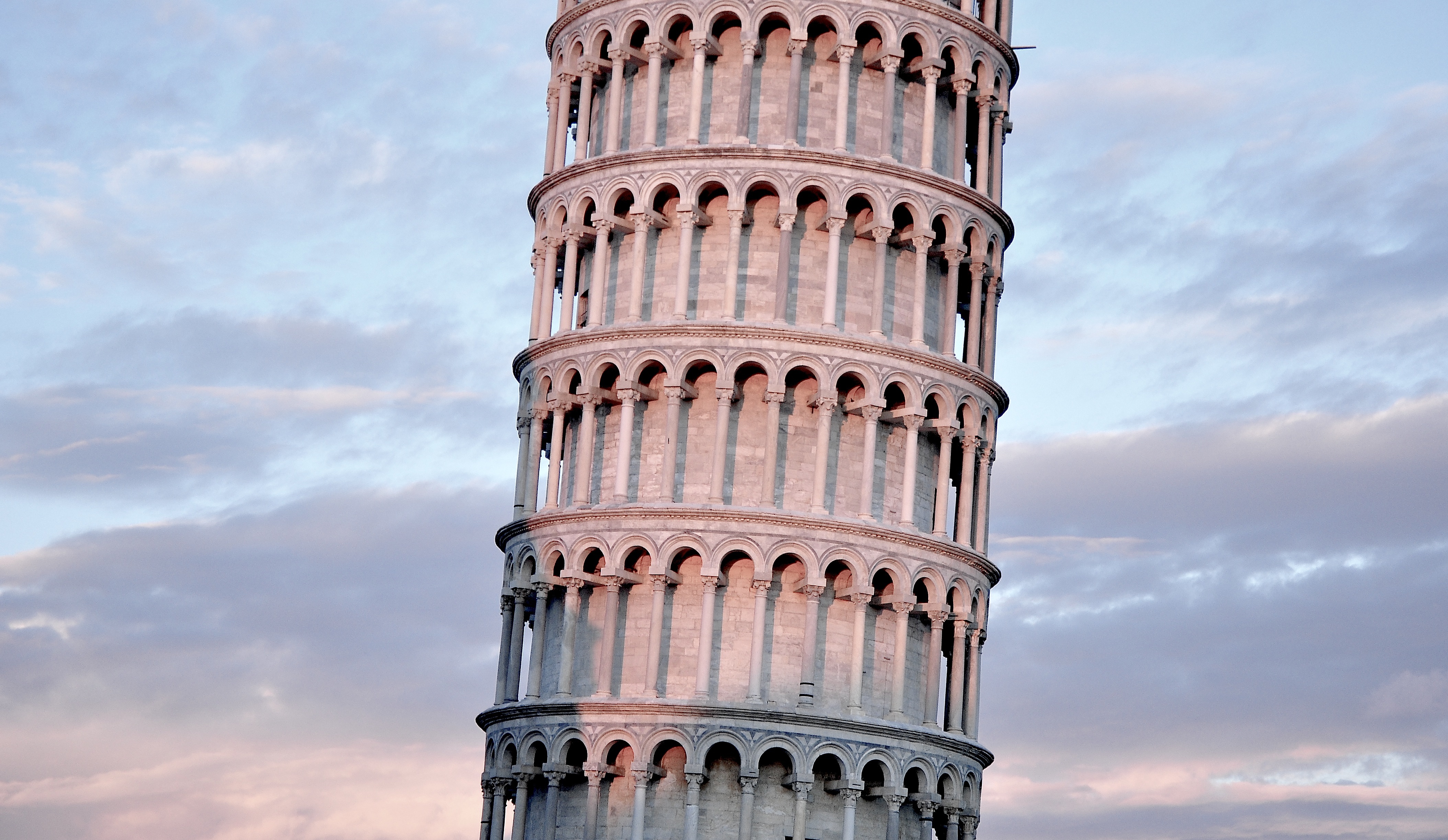
As you move around the tower, follow one arcade level at a time. The repeated arches and columns make the tower legible as a set of rings. Compare the shadows, column spacing, and horizontal bands. This is the best way to turn looking into analysis. The galleries are not background decoration. They are the visual system that lets the tilt, height, and circular plan become readable.
Walk the circumference
Do not settle for one front view. The circular plan means the tower changes as you walk around it. From some angles the lean appears dramatic; from others the stacked galleries and relationship to the cathedral become more important. Walking the circumference also helps visitors understand why a freestanding campanile needs all-around design. The building performs in the round, not as a single facade.
Compare tower, cathedral, and baptistery
After studying the tower alone, turn back to the other buildings in the field. Look for shared pale materials, rounded arches, arcaded surfaces, and the way each building handles mass differently. The tower is vertical and ringed, the cathedral is long and wall-like, and the baptistery is centralized. This comparison makes the tower less isolated and more architectural. It belongs to a family of forms.
Notice the managed monument
A visit today is also a lesson in heritage management. Paths, access rules, crowd patterns, barriers, and restoration traces all shape the experience. Those controls should not be treated only as inconvenience. They are signs that the tower's public image depends on ongoing care. The building is famous because it leans, but it remains visitable because that lean has been monitored, stabilized, and managed.
Make a four-part visual record
A useful photo set should include one wide precinct view with cathedral and tower, one base view showing ground and entry, one close view of stacked arcades, and one comparison view that makes the tilt clear against another vertical reference. These four images tell a better architectural story than a single tourist pose. They capture setting, structure, detail, and the building's famous instability.