why it matters
Why this building matters
Chartres Cathedral helps readers connect Gothic to visible design decisions: rose windows, flying buttresses, unequal tower silhouettes.
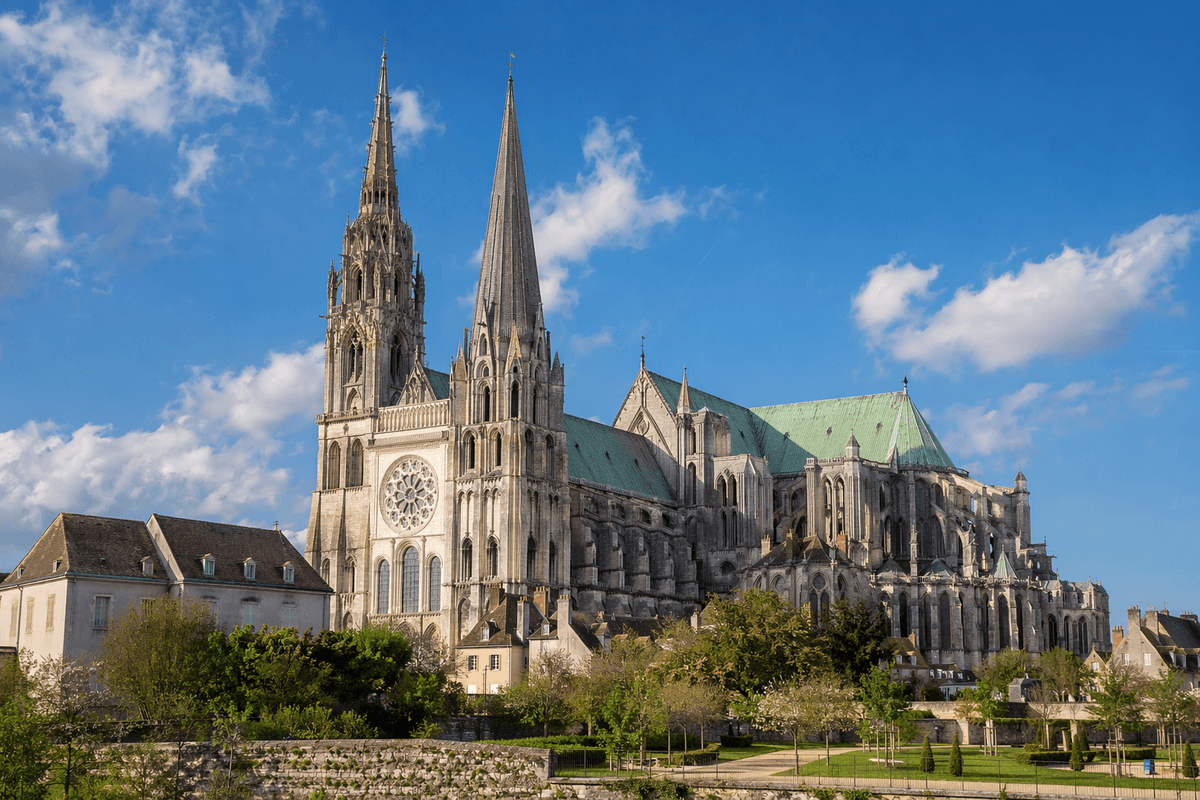
building detail
Chartres Cathedral is a cathedral in Chartres, France, known for its Gothic structure and exceptional stained glass.
why it matters
Chartres Cathedral helps readers connect Gothic to visible design decisions: rose windows, flying buttresses, unequal tower silhouettes.
what to notice
explore by place and style
map notes
Use the coordinates as anchors for reading the buildings in relation to streets, water, skyline, and nearby landmarks.
48.4475, 1.487843.7230, 10.396643.3177, 11.3289Map coordinates are listed with provider attribution handled through the source records.
architecture guide
A fuller reading of the building's history, setting, form, materials, and public role.
Chartres Cathedral is a cathedral in Chartres, France, associated with Gothic Architecture, and completed or begun around 1220. Chartres Cathedral is a cathedral in Chartres, France, known for its Gothic structure and exceptional stained glass. The strongest first reading connects the familiar public image with the physical decisions behind it: rose windows, flying buttresses, unequal tower silhouettes, limestone, stained glass, and the way the building meets its setting. Chartres Cathedral rises above a smaller city fabric, so its towers and high nave are understood as orientation before the glass and sculpture become legible. That combination of location, program, material, and public memory is what keeps the work from becoming only a photograph or a name on a checklist.
Arrival changes the reading before the entrance is reached. Chartres Cathedral is framed by movement, weather, ground level, nearby streets, and the expectations created by earlier images. In Chartres, those conditions matter because the project has to operate as an address as well as an icon. For Chartres it is the dominant civic and spiritual landmark, linking pilgrimage memory, medieval craft, restoration, and everyday orientation. Its coordinates, 48.4475 and 1.4878, place the work inside a real urban field with routes, edges, views, and neighboring activity. Start by watching how the building announces itself from a distance, how it handles approach, and how quickly its familiar silhouette breaks into smaller architectural parts once you stand close to it.
The form of Chartres Cathedral can be described simply, but it should not be flattened into a single silhouette. Its form gathers unequal towers, deep portals, a long nave, rose windows, and flying buttresses into a Gothic composition of height and light. The most memorable buildings usually have a clear diagram that can be remembered after one glance, yet they also contain enough contradiction to reward repeated looking. Here the key visual clues are rose windows, flying buttresses, unequal tower silhouettes. Those details show where the building wants attention, how it controls profile, how it creates rhythm, and how it balances repetition with exception. If the first impression feels immediate, keep looking. The second reading usually reveals the compromises, adjustments, and spatial sequences that made that first impression possible.
Structure is not only an engineering problem. It decides what can be open, what must be solid, what can float, and what has to touch the ground. The cathedral's Gothic system uses pointed arches, ribbed vaults, and exterior buttresses to carry height while opening walls to stained glass. For Chartres Cathedral, that structural reading explains why its image is hard to replace with a generic building of the same program. The relationship between support and expression is especially important: some buildings hide their load paths, while others turn them into the main visual language. Instead of stopping at beautiful, strange, tall, or famous, ask what physical system makes the visual effect possible and where the design allows that system to be seen.
Materials give Chartres Cathedral its close-range intelligence. The primary palette includes limestone, stained glass, but the list alone is not enough. Limestone, stained glass, carved portals, weathered stone, and filtered color make the building feel both massive and luminous. A material can appear heavy from one side and light from another; it can become reflective, matte, rough, transparent, warm, cold, or symbolic depending on time of day and viewing distance. The surface should be read as an active participant in the design. Look for seams, joints, weathering, reflections, shadows, and changes in color. These details often explain why a building looks convincing in person even when a small photograph flattens it. Material choices also reveal the project's era, construction method, budget logic, and attitude toward permanence.
Chartres Cathedral matters because it has a public role beyond its floor plan. Chartres Cathedral helps readers connect Gothic to visible design decisions: rose windows, flying buttresses, unequal tower silhouettes. That role may be cultural, symbolic, infrastructural, commercial, religious, touristic, or several of those at once. For Chartres it is the dominant civic and spiritual landmark, linking pilgrimage memory, medieval craft, restoration, and everyday orientation. A city does not absorb a landmark passively. People use the building as a meeting point, a background, a controversy, a memory device, and a way to explain the district to outsiders. The surrounding streets also push back: traffic, water, plazas, neighboring facades, and skyline views can strengthen or weaken the architectural idea. The useful city question is concrete: did this building clarify a route, intensify tourism, create a public room, alter the skyline, or give a neighborhood a new image?
A practical reading of Chartres Cathedral should move through several distances. Start with the long view, where the building becomes a profile. Move to the middle distance, where entrances, structural rhythm, and surrounding public space become visible. Then use the close view, where surfaces and joints reveal the discipline behind the image. Move from exterior buttresses to portals and then inside to the glass; the building's logic is clearest when structure and light are read together. The best short checklist is rose windows, flying buttresses, unequal tower silhouettes. Do not try to see everything at once. Choose one question at a time: how does the building meet the ground, where does it turn a corner, how does it manage light, what does it hide, and what does it insist on showing?
A deeper study should move from evidence to interpretation. Begin with the map position in Chartres, France, then test the public image against rose windows, flying buttresses, unequal tower silhouettes. From there, separate four questions: what facts anchor the building, how form and structure work, why the history matters, and what a visitor should notice up close. That sequence keeps Chartres Cathedral readable from several angles and helps a reader check each claim against materials, photographs, credits, and nearby architecture instead of relying on a single familiar view. It also makes weak description easier to spot: if a claim cannot be connected to a visible part of the building, it needs a better example.
Important architecture rarely comes without disagreement. Its restoration and conservation history raises questions about surface cleaning, medieval atmosphere, authenticity, and how modern care changes historical perception. The arguments around a building are not distractions from architecture; they are often evidence that the building touches real public questions. Cost, authorship, preservation, accessibility, tourism, skyline impact, religious meaning, commercial programming, and construction risk can all become part of the design's life. With Chartres Cathedral, the useful question is not whether debate makes the project good or bad. The useful question is what the debate reveals about the expectations placed on architecture in its time. A landmark often lasts because it can survive admiration, frustration, technical respect, civic pride, and continued scrutiny.
The legacy of Chartres Cathedral is built from repetition. It appears in photographs, travel plans, school lectures, skyline diagrams, postcards, architectural criticism, and casual conversations about Chartres. Chartres remains a benchmark for Gothic architecture because its structural ambition, stained glass, and sculptural program are unusually concentrated. Legacy does not mean the building has stopped changing. Every restoration, new neighboring tower, altered visitor route, climate concern, or shift in public taste changes how people read it. The continuing value is therefore not only historical. It provides a way to talk about how architecture becomes recognizable, how cities choose symbols, and how design decisions made for one moment keep producing meaning later.
The quickest way to understand Chartres Cathedral more deeply is to compare it with related works rather than treating it as a single isolated masterpiece. Compared with Notre-Dame de Paris, it is less embedded in a dense capital city and more dominant over a smaller urban setting. Useful comparisons include Leaning Tower Of Pisa, Siena Cathedral. They help readers move across shared questions: iconic silhouette, waterfront setting, structural expression, glass and steel, public memory, unusual form, or the tension between tourism and civic value. Comparison also prevents lazy praise. Once two buildings are placed beside each other, their differences become sharper: one may be more structural, another more symbolic; one may be public and slow, another commercial and spectacular. That comparative habit turns browsing into architectural learning.
Notice the unequal tower silhouettes and the rose windows; the asymmetry and glass keep the facade from becoming a flat textbook example. Details are where the building stops being an abstract name and becomes a designed object. For Chartres Cathedral, the important details connect directly to its broader architectural role: Chartres Cathedral helps readers connect Gothic to visible design decisions: rose windows, flying buttresses, unequal tower silhouettes. A visitor should therefore use details as evidence. If a surface seems decorative, ask what it does for light, scale, weather, or orientation. If a structural element seems expressive, ask whether it carries load, frames movement, or simply communicates an idea. If a famous view feels too familiar, find an edge condition or secondary elevation. A final pass should pair rose windows, flying buttresses, unequal tower silhouettes with limestone, stained glass, then compare the result with Leaning Tower Of Pisa, Siena Cathedral. That comparison clarifies whether the detail is structural, symbolic, scenic, or urban. Use that answer to decide which view deserves the longest look. The strongest buildings can survive that slower scrutiny because the small parts keep pointing back to the whole.
continue reading
related buildings
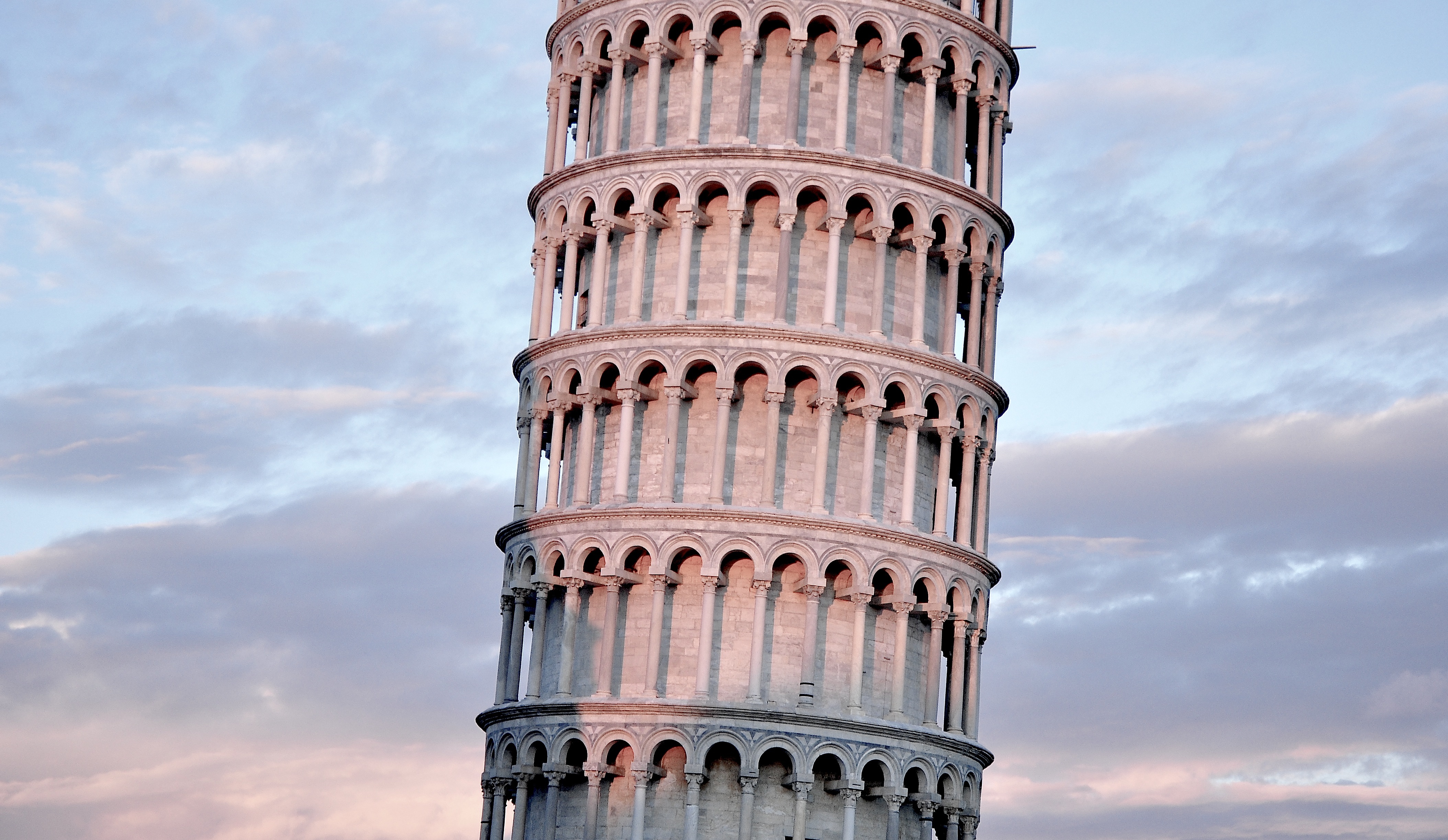
Leaning Tower of Pisa is a bell tower in Pisa, Italy, known for its circular arcades and famous tilt.
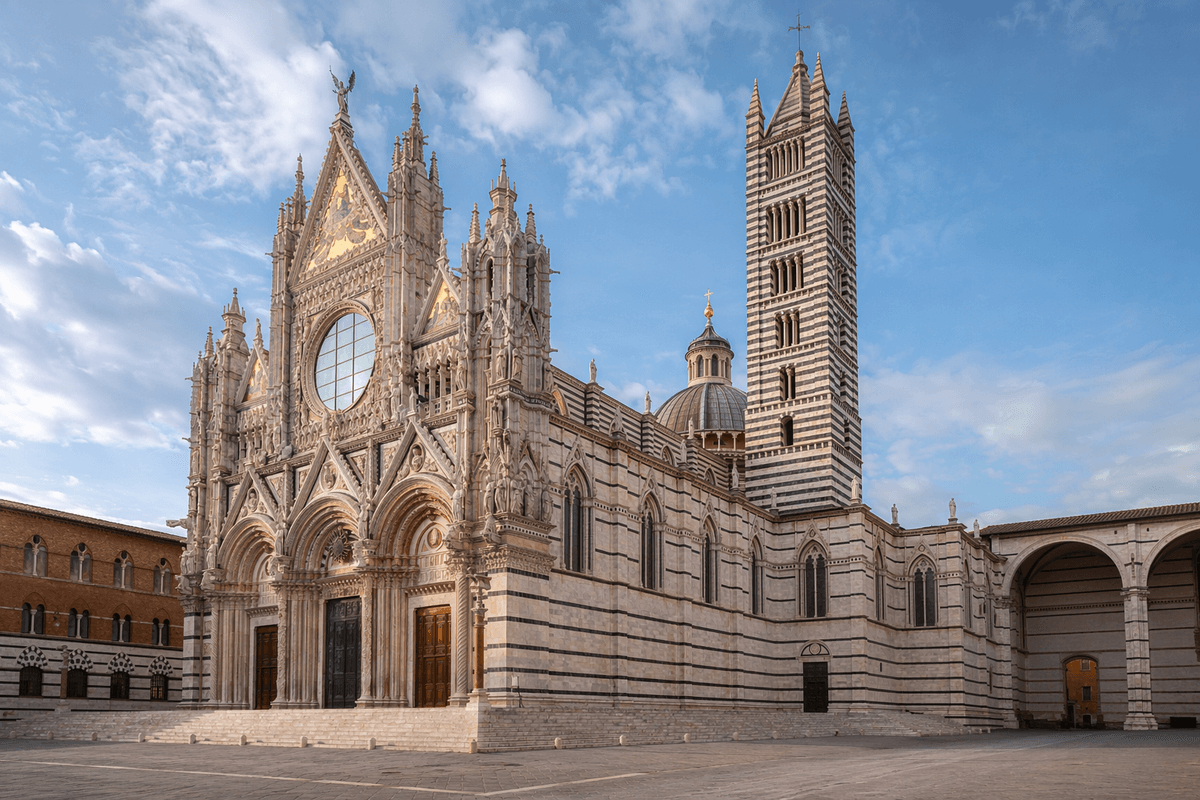
Siena Cathedral is a cathedral in Siena, Italy, known for its striped marble, sculptural facade, and dense civic setting.
References used for facts, location data, image credits, and architectural context on this page.