guide
Leaning Tower of Pisa Facts: Tilt, Arcades, and Bell Tower Role
It is a bell tower before it is a postcard
The Leaning Tower of Pisa is famous for its tilt, but the first useful fact is simpler: it is the freestanding campanile for Pisa's cathedral complex. That role changes the way the building should be read. It is not an isolated curiosity placed on an empty lawn. It belongs to a precinct of religious buildings where cathedral, baptistery, cemetery, and tower create a civic and sacred ensemble in marble, open space, and repeated round forms.
The lean is a structural condition
The tower's lean is not a decorative trick or a designed pose. It came from the relationship between height, weight, foundation, and soft ground. That makes the building valuable as an architectural lesson because the most famous visual effect is also evidence of construction difficulty. Visitors can see a structural problem before they know the dates. The tower turns settlement, correction, and stabilization into public form.
The round plan organizes the image
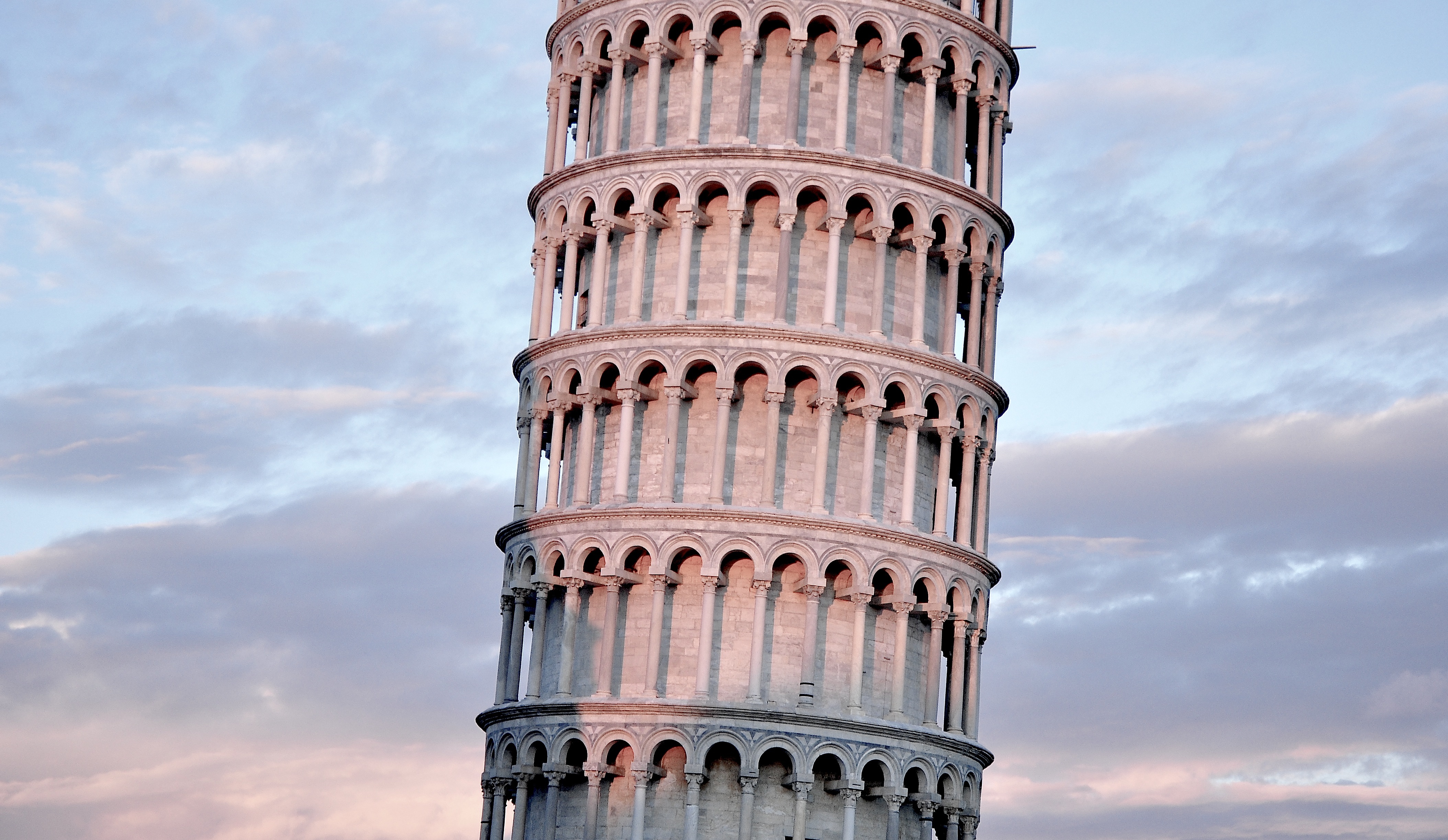
A quick fact sheet should not stop at the angle of lean. The circular plan matters because it gives the tower a continuous body without a single main facade. The stacked galleries wrap around the cylinder, so the building can be read from many directions across the precinct. This circular continuity makes the lean even more legible: the vertical rhythm is clear enough that the deviation from vertical becomes unmistakable.
Arcades make the tilt measurable
The repeated arcades are not only ornamental. They create horizontal bands that let the eye compare level, column spacing, shadow, and rotation. Because each gallery repeats the previous one, the viewer can read the tower almost like a measuring instrument. The lean appears against a disciplined order. Without that order, the building would feel like an irregular mass; with it, the structural drama becomes precise and memorable.
Material ties it to the cathedral field
The pale stone and marble surface help the tower belong to the wider cathedral precinct. The tower does not announce itself through a radically different material language. Its fame comes from a disturbance inside a shared visual order. This matters because the tower's identity depends on contrast: it looks like part of a coherent Romanesque ensemble, yet its body refuses the vertical stability that such order normally suggests.
The completion date hides a long process
The traditional completion date of 1372 can make the tower sound like one finished act, but the more useful fact is duration. The project unfolded across phases, interruptions, adjustments, and later stabilization. Its long life should be understood as part of the architecture. The tower is not just an old building that happened to lean. It is a building whose construction, correction, and conservation became part of its meaning.
The field makes the tower readable
Pisa's open cathedral precinct gives the tower room to be seen from distance and in relation to other forms. The lawn, cathedral wall, baptistery, and paths create comparison points. That field is why the lean is immediately visible to many visitors. The tower depends on surrounding space as much as on its own body. It is an object lesson in how setting can make a structural condition public.
What the facts should help you see
Use the basic facts as viewing tools: campanile role, circular plan, stacked arcades, pale material, unstable ground, and long stabilization history. Together they explain why the tower is more than a novelty. It is a Romanesque bell tower whose public identity grew from the tension between formal order and physical instability. That tension is the fact that makes every photograph and visit meaningful.