guide
Eiffel Tower Ground-to-Summit Viewing Notes
Start farther away than feels necessary
The Eiffel Tower is best read first from a distance. A close view makes the iron members impressive, but a distant view explains the urban role. Watch how the tower rises above roofs, trees, river edges, and avenues. Its value as architecture is not only that it can be climbed. It gives Paris a visible reference point and changes ordinary city views into views with a vertical anchor.
Approach the base slowly
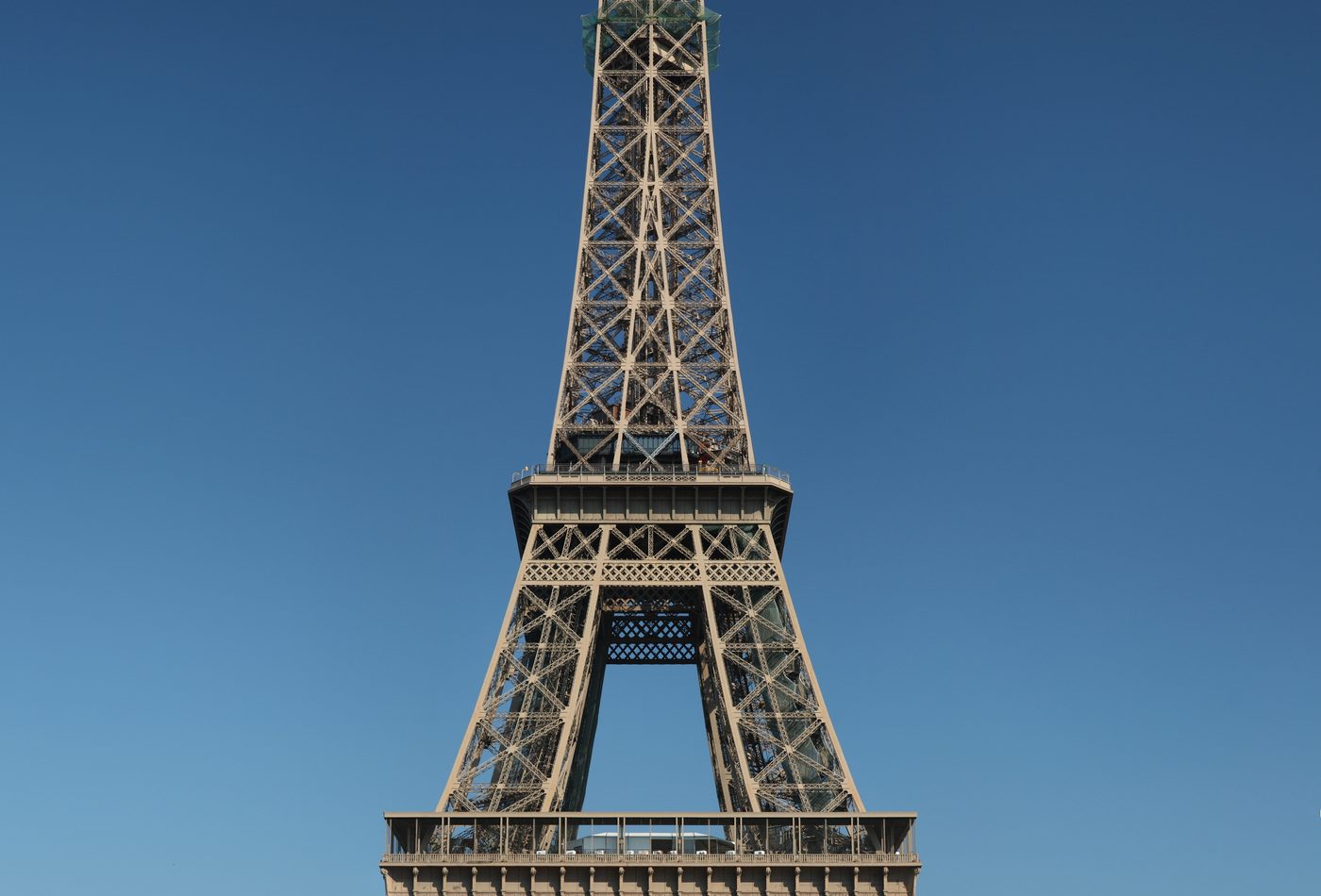
The base is the part to study before the summit. As you approach, look at how the four legs spread, how the lower arches frame space, and how the structure gathers people beneath it. The tower is often imagined as a single needle, but the experience at ground level is broad, heavy, and spatial. That contrast between distant thinness and close mass is one of the most important visiting lessons.
Look through the tower
Do not only look at the tower as an object. Look through it. The lattice creates layers of city, sky, structure, and shadow. From some points the iron almost disappears into air; from others it becomes a dark grid. This changing transparency is easier to understand on site than in a single image. It is also what separates the tower from a solid monument.
Use platforms as architecture, not only viewpoints
The platforms are not just places to take photographs from. They interrupt the tapering structure, give the tower horizontal pauses, and help visitors understand the relationship between height and assembly. Looking back at the structure from a platform can be as useful as looking outward across Paris. The tower teaches through ascent because each level changes the scale of the iron frame.
Make three kinds of photographs
A useful architecture record should include three views. First, a city-distance view showing the tower in the skyline. Second, a base view that captures the spread legs and framed space below. Third, a close structural view of iron members, rivets, or diagonals. Together these views explain public image, structural support, and material detail. One postcard angle cannot do all three jobs.
Compare after the visit
After studying the tower, compare it with Sydney Opera House, Tokyo International Forum, or other exposed-structure landmarks. The question is not which one is more famous. The question is how each turns construction into public experience. The Eiffel Tower's special lesson is that a structure can become loved not by hiding its engineering, but by making that engineering legible, repeatable, and memorable.
Slow-looking route
Give the visit a sequence: skyline first, base second, lattice third, platform fourth, city view last. This order prevents the tower from becoming only a destination checklist. It lets the visitor connect the distant symbol to the physical assembly that makes the symbol possible. The tower is more rewarding when the eye moves from outline to joint and back again.
What not to miss
The detail most visitors miss is the shift in scale. From far away the tower is one sign; from below it becomes a field of parts. Let those two readings stay separate for a moment before connecting them. That pause is where the architecture becomes clearer: the beloved city image depends on thousands of visible structural decisions.